-
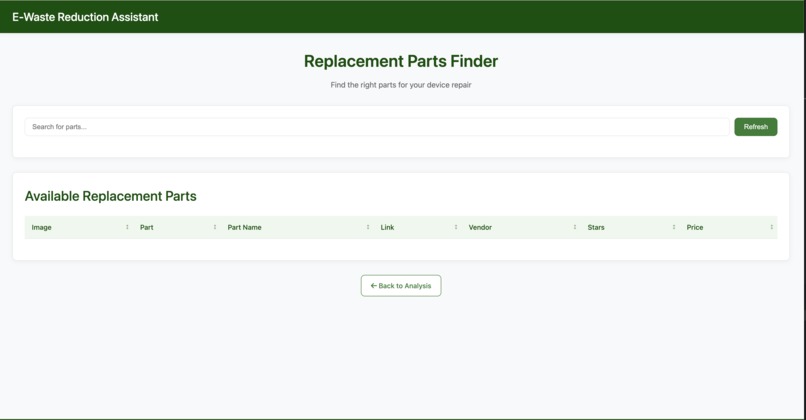
Replacement parts suggestion table for purchasing options
-
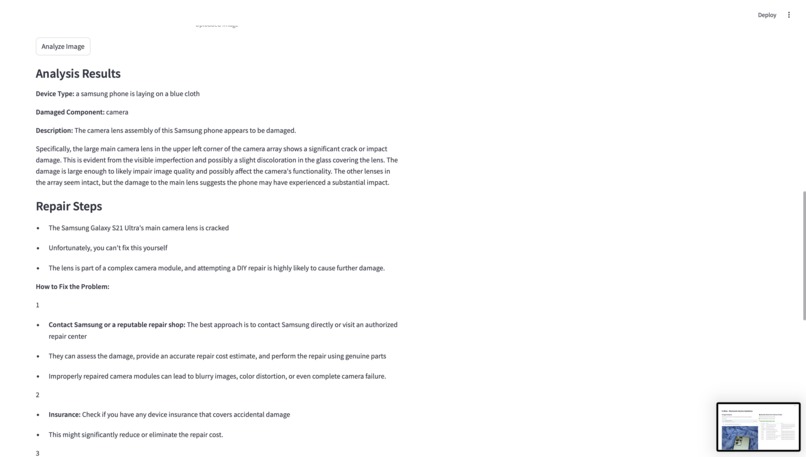
Analysis results
-
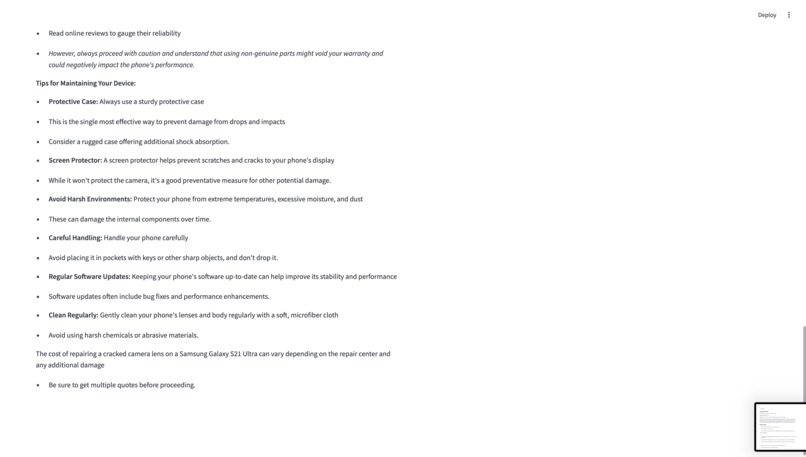
LLM description
-
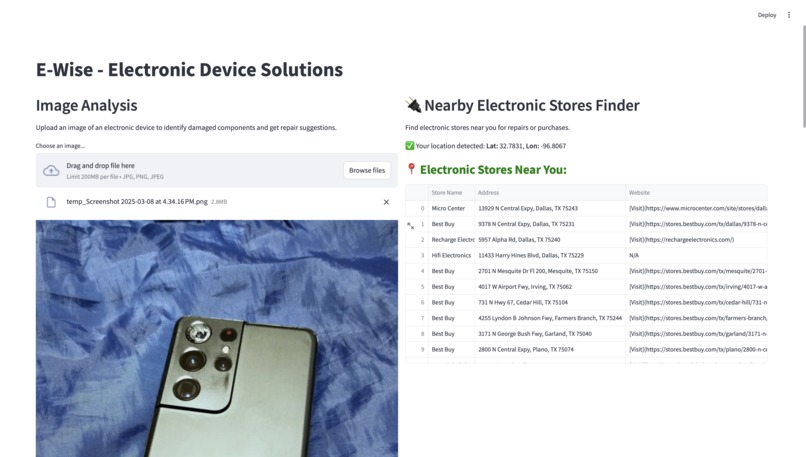
Picture of device and nearby tech store locations search


Inspiration
We were inspired by modern-day chatbots and LLMs, specifically with their ability to provide real-time guidance and advice to a variety of problems.
What it does
Our website takes in a user-inputted image of a broken device. Then, the website will identify the broken components in the image, which it will then feed into the LLM to output a description of the broken component, advice on how to repair/replace it, and a list of nearby recycling locations to promote environmental conservation.
How we built it
We built the UI design of the website using HTML, CSS, JavaScript, and Streamlit. We constructed our backend using Python and 10 APIs, but the most significant of these are SerpAPI, FastAPI, and Google API.
Challenges we ran into
We mainly struggled with integrating our backend functionality with our frontend, as some backend components would cause errors in the existing JavaScript code.
Accomplishments that we're proud of
We successfully integrated AI-powered image analysis to help users diagnose damaged electronic components. We were able to develop a real-time searchable and sortable parts directory, making it easier for users to find replacement components. We created a smooth and responsive UI/UX that enhances accessibility and usability. We implemented dynamic backend processing, enabling accurate damage detection and resource recommendations.
What we learned
The importance of data preprocessing and model training for improving AI image recognition accuracy. How to efficiently manage frontend-backend integration to ensure seamless user experiences and compatibility between frontend and backend. The challenges of handling large datasets dynamically while keeping the application fast and responsive. Best practices for UI/UX design, making the application intuitive for users unfamiliar with e-waste recycling.
What's next for E-Wise
We plan to further refining the model with more diverse training data to improve component identification. We also plan to expand our database by adding more vendors, part suppliers, and recycling centers to provide better repair options. We will implement user authentication through login functionality to allow users to track their uploaded images and saved parts. We will plan for mobile deployment by improving the UI for better performance on mobile devices. Finally, we'll introduce rewards for users who choose to recycle responsibly or repair their devices instead of discarding them.
Built With
- css
- fastapi
- html
- javascript
- python
- serpapi
- streamlit


Log in or sign up for Devpost to join the conversation.