-
-
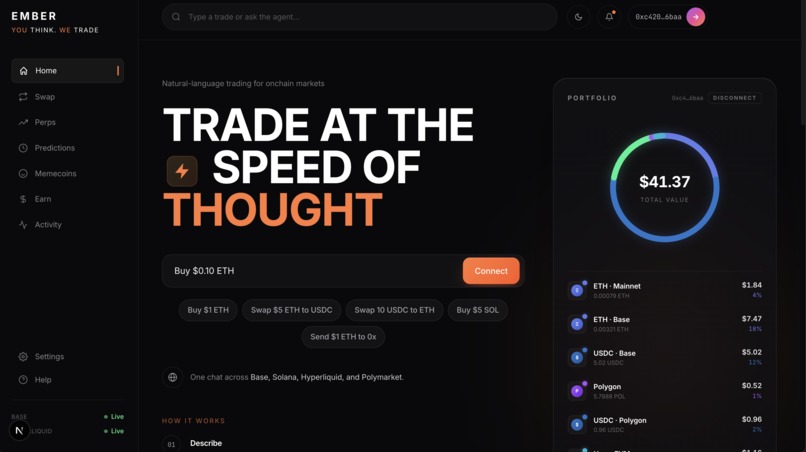
Home page
-
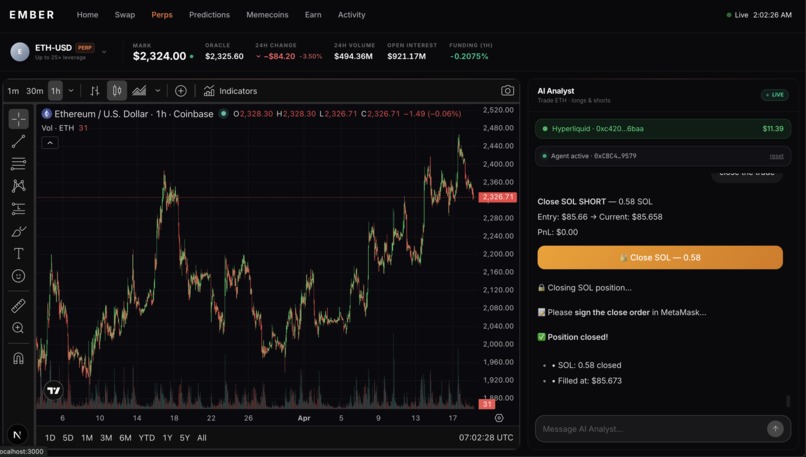
Perps Page Via Hyperliquid
-
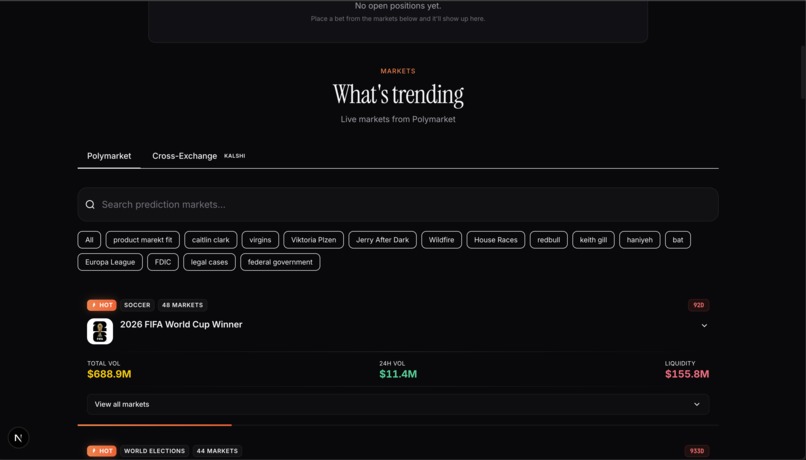
Prediction Markets via Polymarket
-
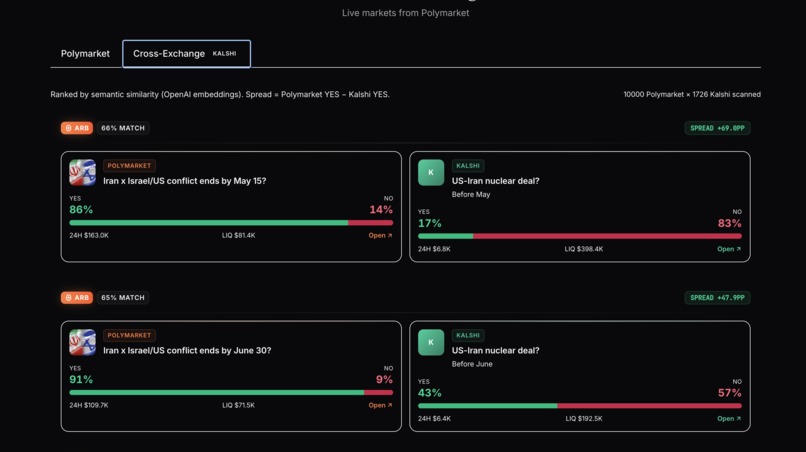
Arbitrage Cross Exchange Via Polymarket + Kalshi
-
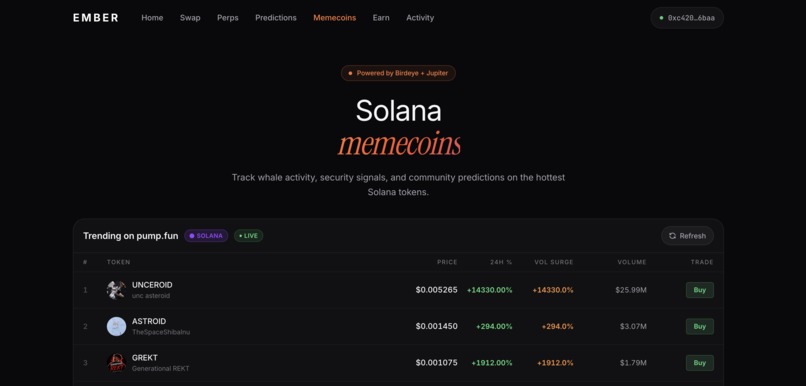
Memecoins through Solana (Pump.fun)
-
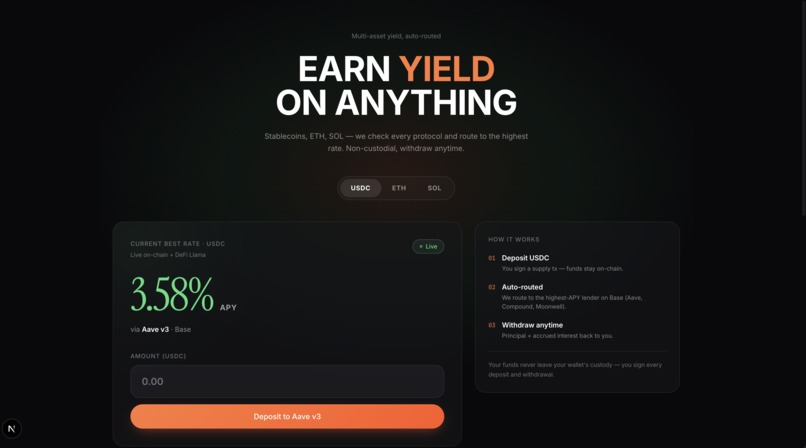
Yield Rotator (Moonwell, Aave, etcC)


Inspiration
We wanted to get deeper into Crypto, Web 3.0, and DeFi — but found that executing trades across all these systems required jumping between 5+ different platforms. Want to swap tokens? Go to Jupiter or Uniswap. Trade perps? Go to Hyperliquid. Earn yield? Go to Aave or Compound. Bet on prediction markets? Go to Polymarket or Kalshi. There was no single consolidated interface for all of it.
That's what inspired us to build Ember — a unified DeFi trading terminal that lowers the barrier of entry for anyone wanting to participate in crypto. Instead of learning the UI of every individual protocol, you just type what you want in plain English. Ember figures out the best route, executes the trade, and handles everything under the hood.
What it does
- Our product implements five features -
1) Easy Buy -> Which takes colloquial language and executes simple trades like "buy $100 of bitcoin"
2) Hyper-liquid -> Implements short and long trades, where users can bet against the market (using Hyper-liquid platform)
3) Prediction Markets
- Arbitrage: takes prices across markets like Kalshi and Polymarket -> and then finds the lowest to
prices to buy and then uses the difference to make sure the user is always generating profit
- Whale Dashboard: shows how the biggest traders are moving throughout the platform in real-
time, allowing for more insight for less experienced users
- Insight: The model brings back information like news and recent searches which can influence
trade decisions, allowing for more informed moves
4) Solana Integration
- This applies similar prediction market procedures, and also incorporates a whale dashboard for
the highest meme-coins, and provides information like Axiom's dashboard does
5) Staking with yield rotation - Analogous to how high-yield savings accounts work at banks like PNC, Chase, and BofA — except instead of a fixed rate locked to one bank, Ember continuously scans across DeFi lending protocols (Aave, Compound, Moonwell for USDC; Lido for ETH) and automatically routes your funds to whichever protocol is offering the highest APY at that moment. As rates shift, so does your allocation — so your money is always working at peak efficiency. This is supported across USDC (on Base), ETH (on Ethereum mainnet), and SOL (on Solana).
How we built it
- We built it using javascript, typescript and next.js - we also utilized anthropic to evaluate our code, and integrated various features such as solana, uniswap and executions through polymarket.
Challenges we ran into
- We ran into numerous challenges when integrating tools for Solana. In addition to this, it was difficult to implement shorts into the platform, as well as the tool in the model which provided insight to the user about what trades to make.
Accomplishments that we're proud of
- We are proud that we were able to integrate all of these features into our platform, making it an all in one site for crypto trading.
What we learned
- We learned about integrating multiple protocols into one platform with each having different workflows like Uniswap, Jupiter and Hyperliquid as well as different APIs, format and transaction handling.
- Arbitrage logic is difficult in execution. Finding price differences between Polymarket and Kalshi was difficult, especially ensuring profit and executing it in a reasonable amount of time.
What's next for Ember
- Scale and edit the product so that it is ready for market, and commercial usage through further analysis and testing with everyday users.
Built With
- aave
- anthropic
- compound
- ethereum
- javascript
- lido
- moonwell
- next.js
- polymarket
- solana
- sqlite
- three.js
- typescript
- uniswap


Log in or sign up for Devpost to join the conversation.