-
-
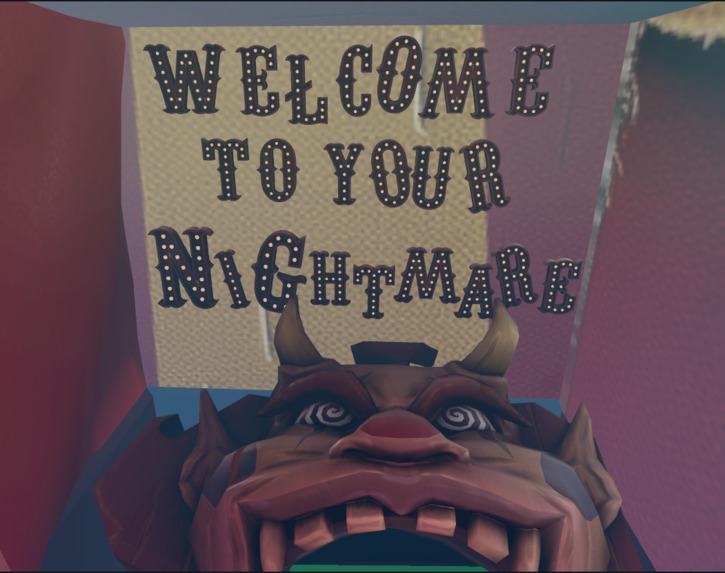
welcome to your nightmare
-
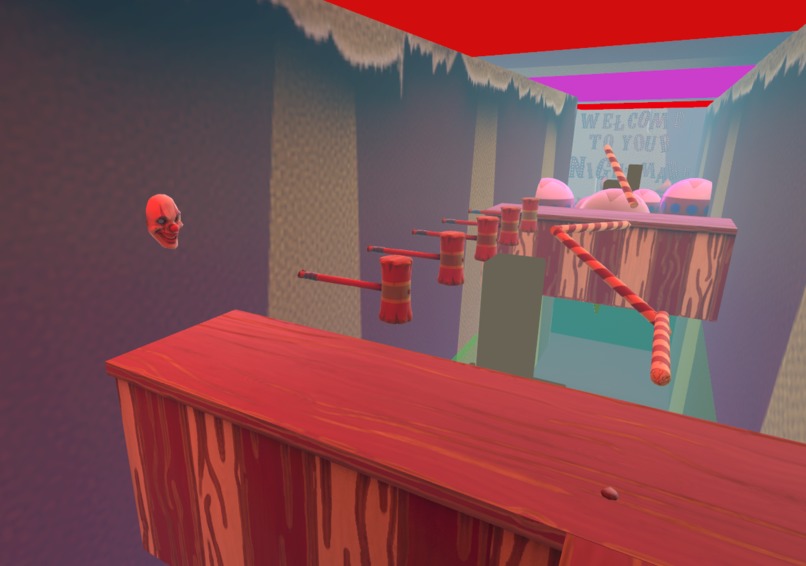
checkpoint
-
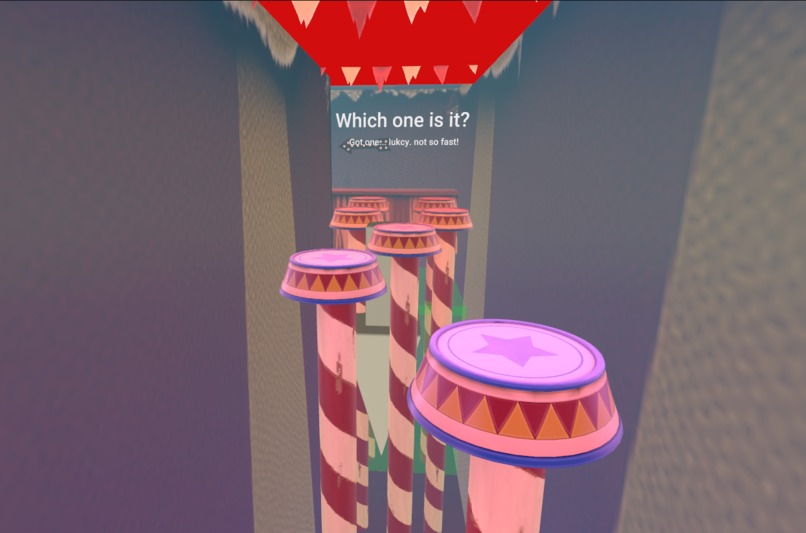
first trap
-
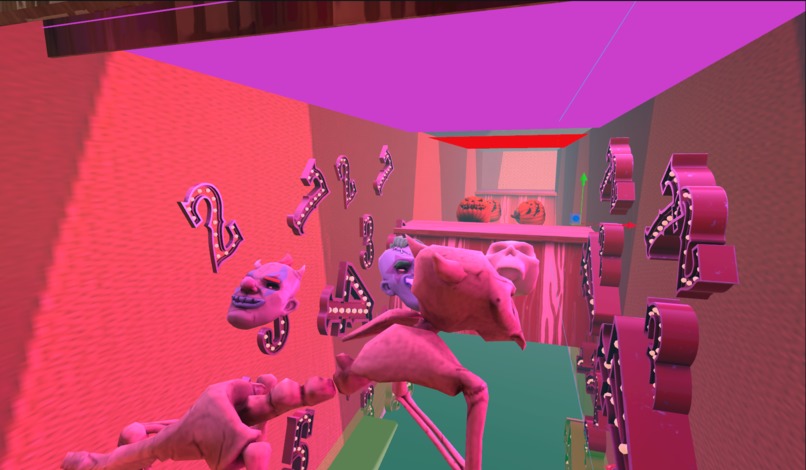
level example
-

monster
-
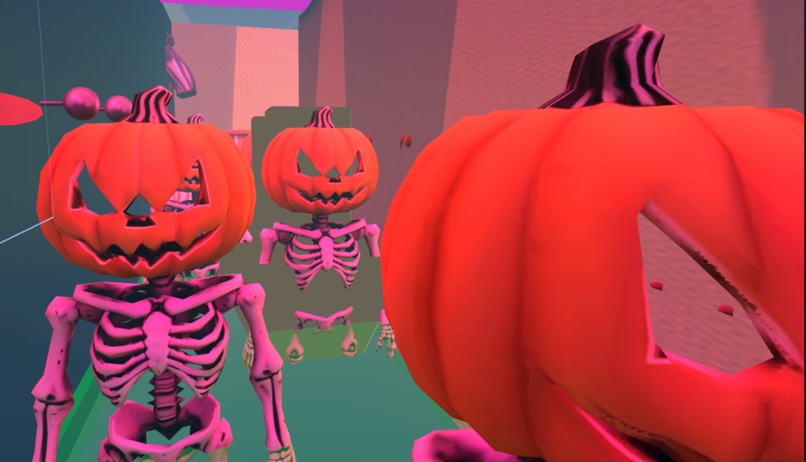
pumpkin field level
-
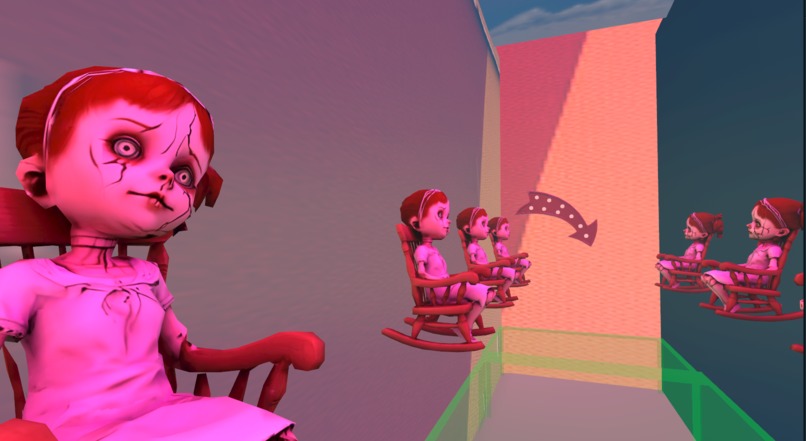
last-level
-
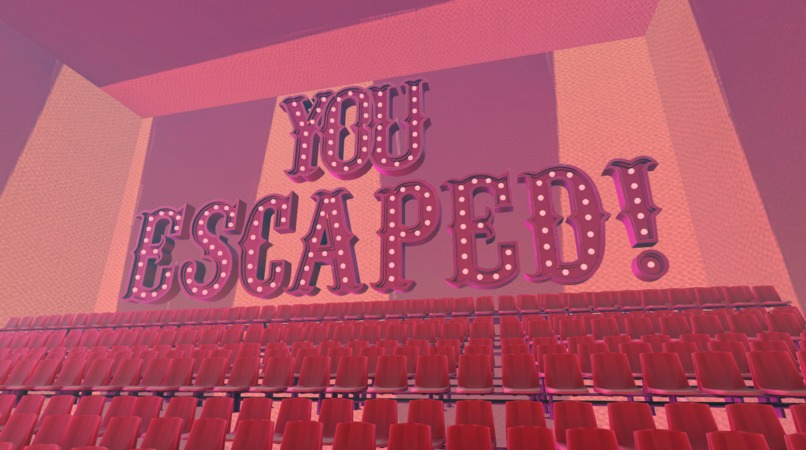
Escaped!


Escaping A Nightmare: The Surreal Psychology of a Haunted Mind
🎭 Inspiration: The Fear of Waking Up
The laughter stops, the tent lights flicker, and you realize the monsters aren't outside—they're inside your head.
Escaping A Nightmare was born from a terrifyingly vivid dream: being trapped in a haunted circus that was both familiar and fundamentally wrong. The true horror wasn't the jump scare; it was the chilling, profound uncertainty of whether you'd ever truly wake up.
This VR experience captures that razor-thin line between dream and reality. We rejected cheap thrills to build a psychological tension experiment around the primal human instinct to escape the unknown self. The game invites the player to confront a nightmarish landscape that is, in fact, the living, breathing architecture of their own subconscious mind.
How GenAI was used
We used GenAI to create many things! 3d models, textures, sound effects, music, and even scripts.
🔮 Core Experience: Immersion Over Violence
Escaping A Nightmare is a groundbreaking, immersive VR psychological horror experience set within a surreal, ever-shifting circus—the ultimate symbolic maze.
Our core innovation is the focus on Discovery and Tension over combat:
- No Weapons, No Enemies: Your only tools are your courage, focus, and memory. Fear is generated through sound, light, and a constantly deteriorating environment, resulting in a mature, deep psychological narrative.
- Dream Logic & Environmental Morphing: The environment is an antagonist. As the player explores, reality around them morphs seamlessly—revealing fragmented memories and illusions hidden within the nightmare.
- Reactive Spatial Audio (FMOD): Silence is our loudest weapon. We use hyper-detailed 3D audio that is not just spatial but reactive, responding in real-time to the player's fear level and attention, turning a whisper into an overwhelming threat.
🛠️ Technical Breakdown: Engineering Immersion
Our development was focused on one mandate: Flawless Immersion on VR Hardware. We prioritized performance and VR comfort to prevent motion sickness while maximizing visual quality.
| Component | Detail | Impact / Tech Innovation |
|---|---|---|
| Engine & Language | Unity (2022 LTS) & C# | Robust, high-performance foundation tuned for VR. |
| VR Framework | XR Interaction Toolkit | Customized locomotion and camera behaviors for optimal VR comfort. |
| Audio | FMOD Custom Spatial Soundscapes | Delivers narrative-driving, reactive sound design. |
| Lighting | Mixed (Baked & Real-Time) | Performance-focused technical achievement: maintaining high framerates despite dynamic lighting effects. |
| Art Direction | Dark Surrealism | Realistic textures blended with distorted, dream-like visuals. |
| Key Achievement | Seamless Dream Transitions | Zero loading screens while the environment constantly morphs, keeping the player fully present. |
| Platforms | Meta Quest + PCVR (Oculus Link) | Optimized for current-generation VR hardware. |
🏆 Accomplishments & Future Visions
Accomplishments We're Proud Of
- Built a fully interactive, atmospheric VR world that feels alive and reactive.
- Achieved immersive horror without violence, relying entirely on sound, light, and environmental storytelling.
- Created dynamic environmental morphing to simulate lucid dreaming effects in real-time.
- Developed a smooth, optimized experience for VR hardware that minimizes motion sickness.
What's Next for Escaping A Nightmare
We plan to deepen the narrative and replayability by:
- Adding branching narrative paths that change based on player actions and discoveries.
- Introducing subtle voiceover narration and ambient whispers tied to player proximity for enhanced psychological immersion.
- Expanding the world with new circus "tents," each representing a different layer of the subconscious (e.g., anxiety, loss, aspiration).
Built With
- genai
- meta-horizon-world-desktop-editor
- oculus


Log in or sign up for Devpost to join the conversation.