-

-
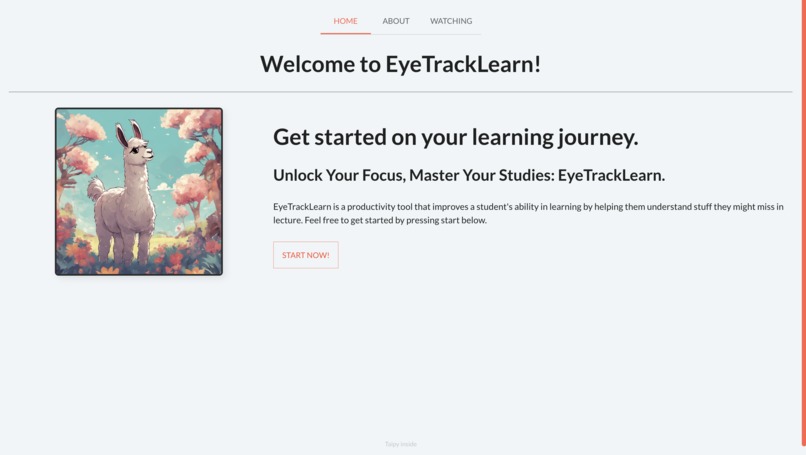
Landing page!
-
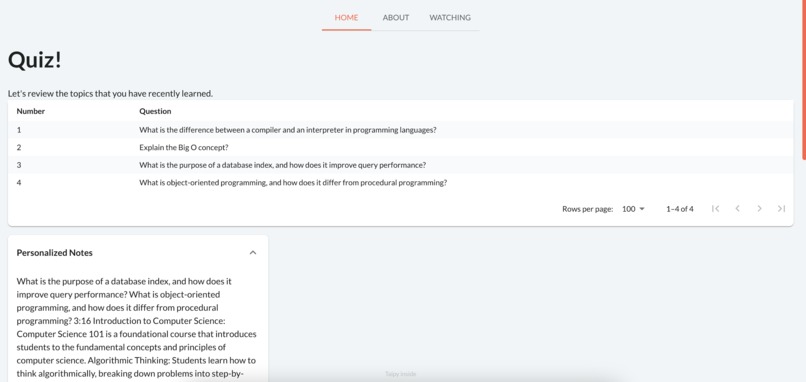
Notes summary section
-
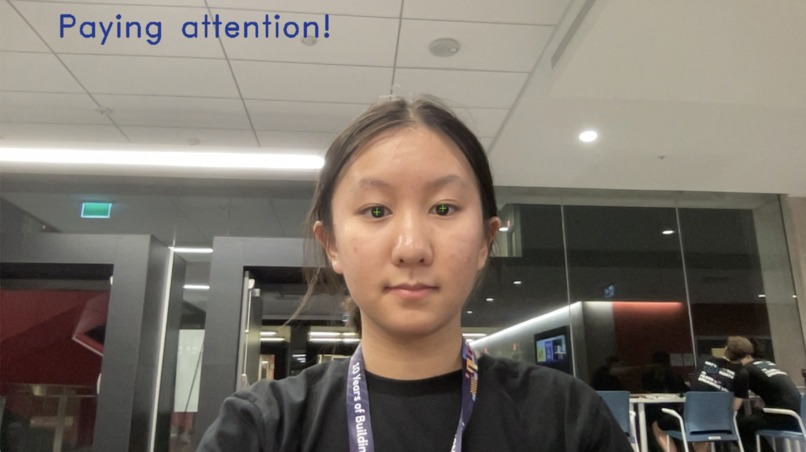
Real-time eye tracking


Inspiration
The inspiration for EyeQ arose from a problem faced by many students -- the struggle to maintain focus during studying sessions, leading to reduced comprehension and retention of course materials. With the belief that technology could offer a transformative solution, we saw potential in using computer vision to track eye movements and from them determine if a person is paying attention or not.
What it does
Monitors Your Attention: EyeQ uses advanced computer vision and eye-tracking technology to continuously monitor your eye movements while you study (watch lecture videos). It can detect when you look away from your screen which is likely a sign of you losing focus.
Compiles Personalized Notes: When EyeQ detects moments of inattention, it automatically compiles notes with emphasis placed on the material you missed during those periods. This ensures you don't miss crucial information.
Provides Quizzes: To reinforce your understanding of the material and fill in any knowledge gaps, EyeQ offers quizzes related to studied content. Questions are tailored to the specific sections that were detected as less focused, helping you identify subject areas that need further attention.
Enhances Learning: By continuously tracking your eye movements, EyeTrackLearn offers a data-driven approach that empowers you to optimize your learning process and stay engaged with your coursework.
How we built it
- The frontend was built revolving around the Taipy framework along with HTML/CSS and Markdown.
- The backend was built with Python and incorporated a few APIs including: OpenCV, Cohere, and CockroachDB.
Challenges we ran into
Taipy was a framework all of us were unfamiliar with, but we nevertheless took on the challenge of developing said web app with it. Learning and using a new framework to develop a project in such a short time was difficult. For example, we found out that there was no simple way around writing JavaScript or using the JavaScript library -- React to incorporate functionality into our web app. Thus, we had to come up with alternative ways to make our web app well... function like how a web app should!
Accomplishments that we're proud of
We as a team were able to successfully integrate a diverse set of technologies into the project, including computer vision (OpenCV), natural language processing (Cohere), and a distributed SQL database (CockroachDB). And despite facing challenges with the Taipy framework, we were able to demonstrate adaptability by finding alternative ways to make the project functional.
What we learned
- Identification of a Real Problem: We identified a problem faced by many students alike —difficulty maintaining focus during study sessions, which adversely affects comprehension and retention of course materials. This played a crucial part in the ideation of our solution.
- Technology Stack: We learned and used Taipy, HTML/CSS, and Markdown for the frontend. On the backend, qw employed Python and integrated several APIs, including OpenCV, Cohere, and CockroachDB. In the end, we were able to successfully leverage a variety of different technologies to get our solution to work!
What's next for EyeQ
We hope to integrate an AI chatbot into the EyeQ platform. This chatbot can serve as a virtual companion, providing real-time assistance, and offering study tips. In addition, we believe that continuous usability testing and gathering user feedback is essential for refining and enhancing the platform based on a user's personalized needs and preferences.


Log in or sign up for Devpost to join the conversation.