-
-
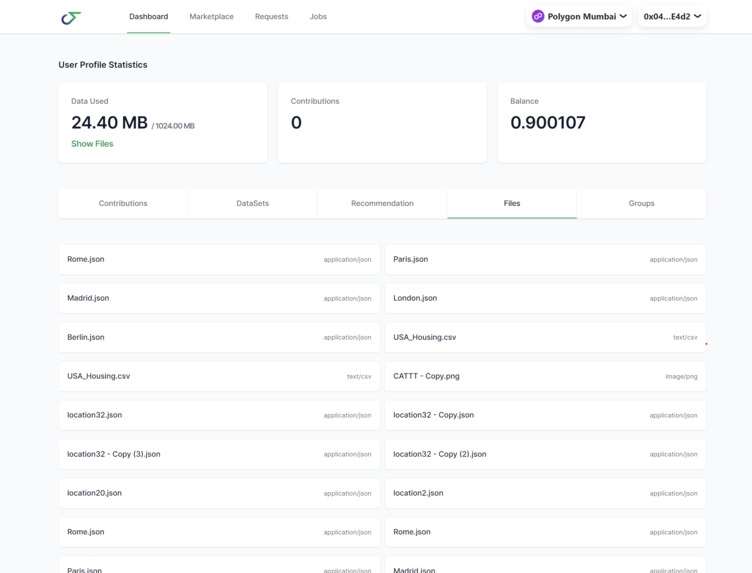
Dashboard With all the user files created DBs , contributions on DBs, Owned NFT DBs and private repositories
-
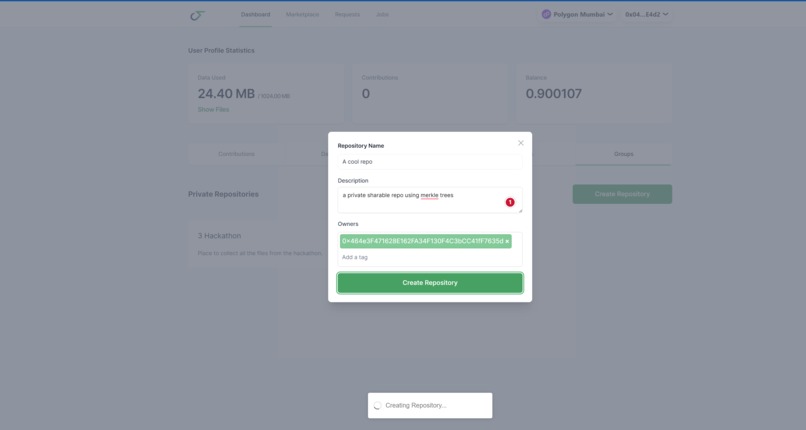
Creating a private repo using merkle trees stored on tableland. The first file addition to the repo gives access to decrypt the repo files
-
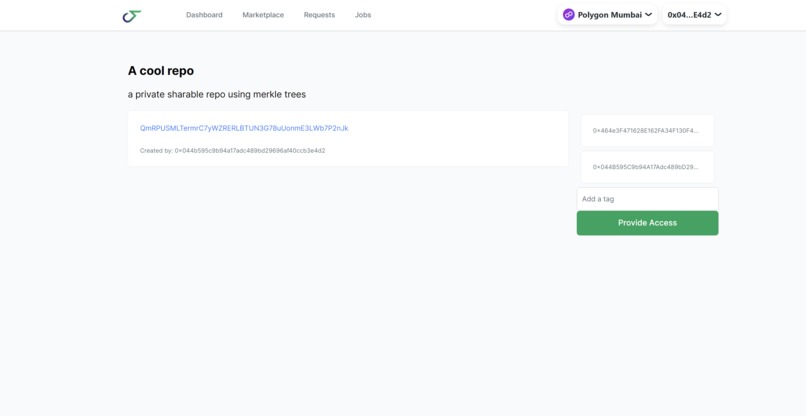
The repo page. Repo contents are only showed to the allowlisted addresses using lighthouse custom access control conditions.
-
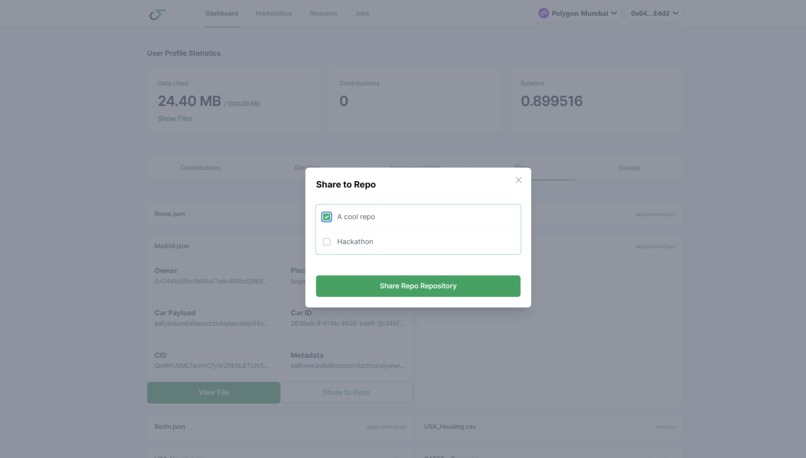
Sharing a file to a repo from the user dashboard. The first share unlocks access to the repo contents. Only allowlisted addresses can share!
-
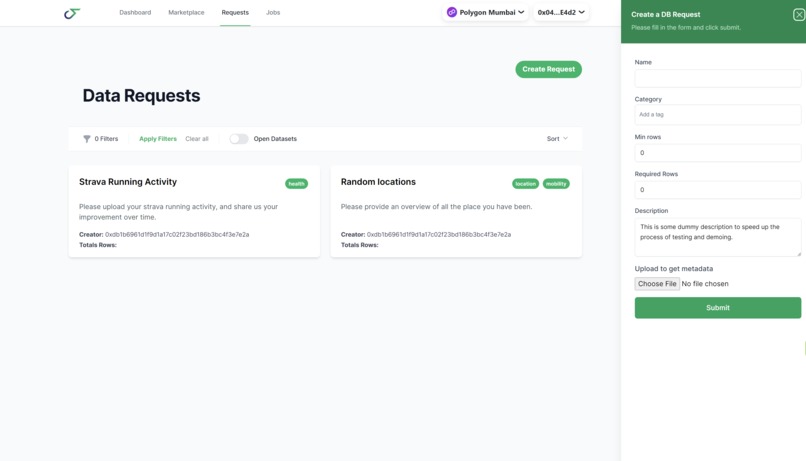
Create a DB request
-
Contribute entries on a database request.
-
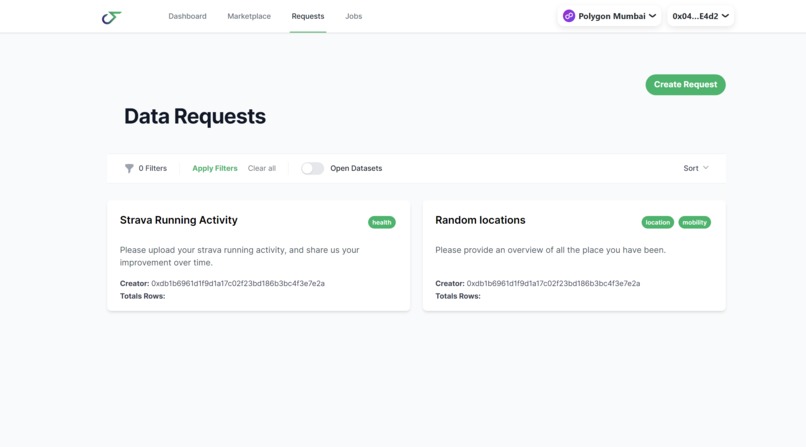
All the dataRequests where people can contribute and gain shares from mints after the DB will be an NFT.
-
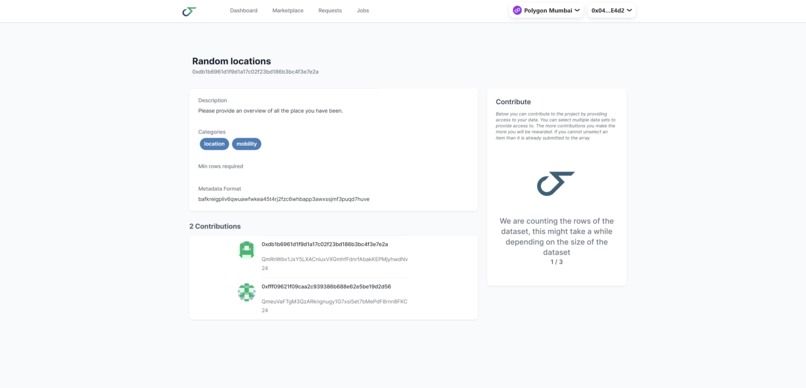
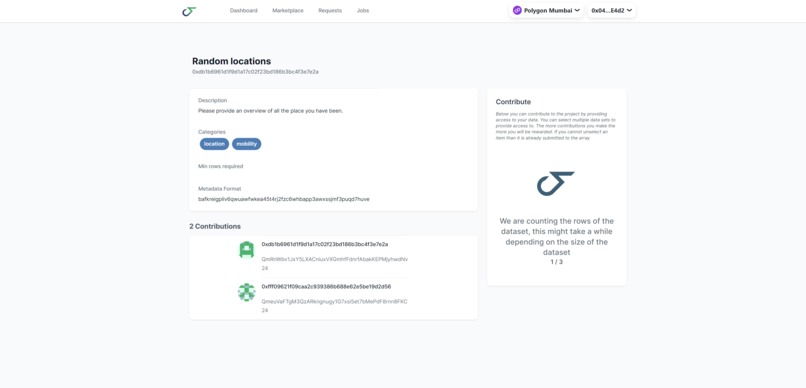
Counting the contribution entries from the provided CID and signing to allow the contribution if the requested DB format is matched.
-
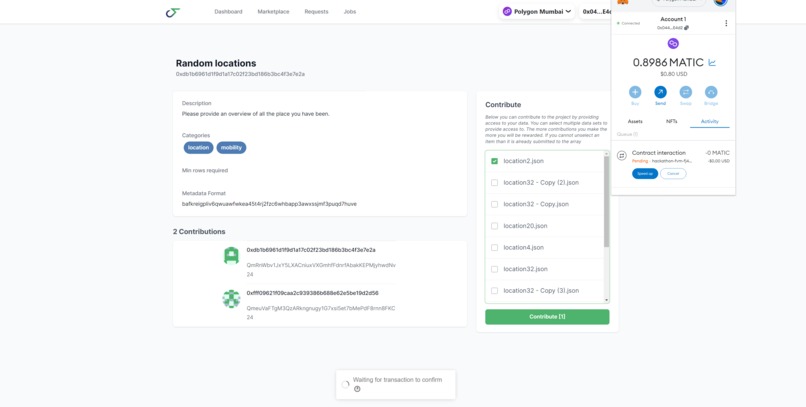
Making a contribution to a DB request
-
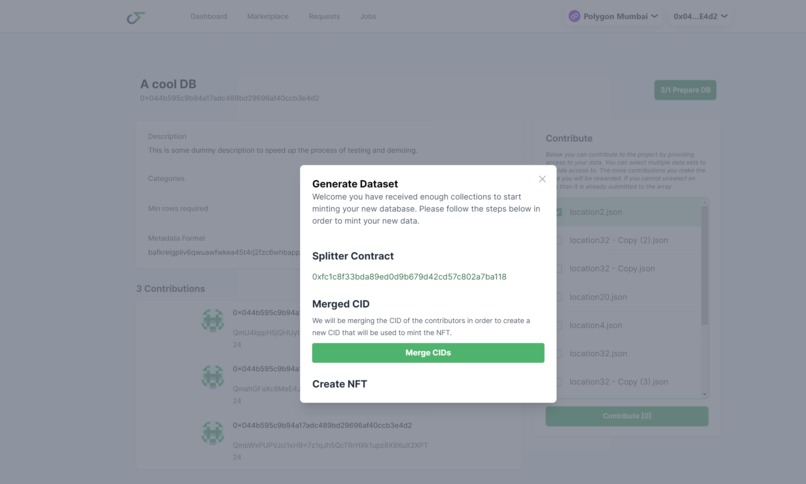
Create DB NFT by creating a splitter contract using the thirdWeb factory and giving fair shares to the DB contributors from the mint prices
-
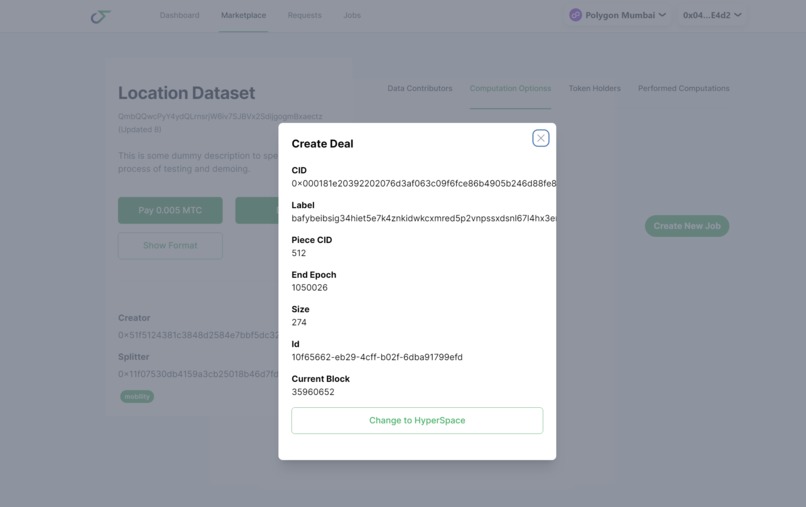
Replicate the a file or a DB on filecoin using the tableland x deal client contract
-
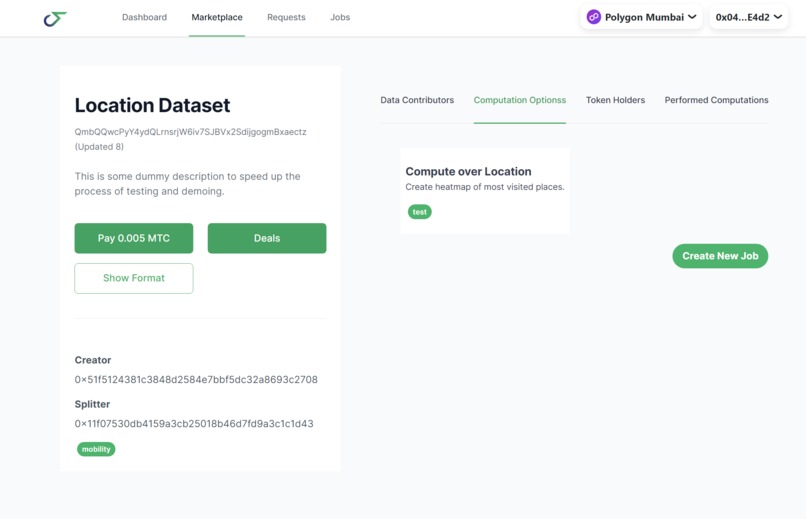
Available computations that can get performed on this database we are checking the computation input format to be the same with the DB ones.
-
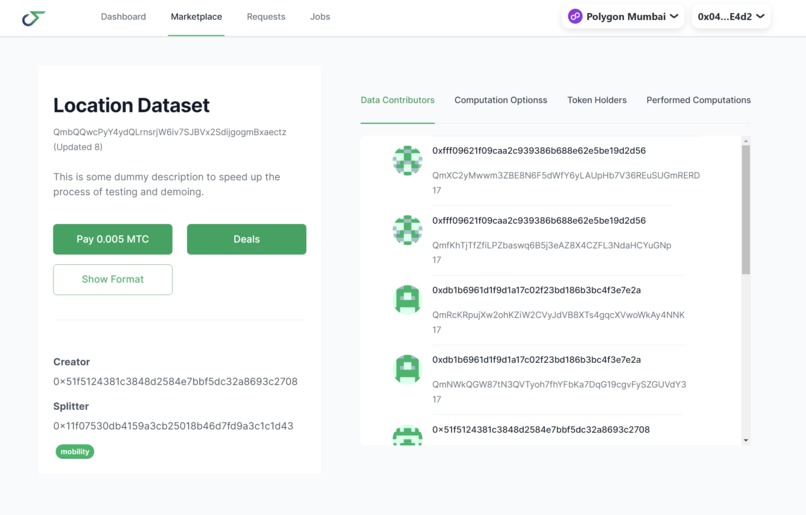
DB page where users can replicate them on filecoin. Mint them to get access to the database contents and perform available computations.


Inspiration
Our inspiration for the DataBridge platform came from the need to revolutionize data management, collaboration, user empowerment, and low-cost permanent files in a decentralized manner. We recognized the growing demand for a secure and efficient solution to curate, collaborate, and create decentralized valuable datasets. Additionally, we saw the opportunity to bridge the gap between centralized data pools and the decentralized Filecoin network, allowing users to seamlessly onboard valuable data onto a secure and transparent platform.
What it does
DataBridge is a decentralized application (DApp) designed to fulfill these needs it functions as a database aggregator. DataBridge empowers users to create decentralized databases (DBs) and request contributions from others. Once a DB reaches a predetermined threshold of entries , the requestor can create a DB NFT. To ensure fair distribution of token minting revenues to DB contributors, our platform utilizes a splitter contract created using the thirdWeb splitter contract factory. The backend signs and gives to the user the ability to create a fair splitter contract by generating contributors shares from querying tableland. That way we provide an incentivised place to submit correct data.
With DataBridge, users can leverage verifiable computations over data through the Lillypad oracle and facilitate deal-making using Filecoin proposed contracts. Onboard open datasets into IPFS and Filecoin through the DataBridge platform while maintaining your own private repository of encrypted files. Additionally, create sharable private repositories with secure access control, where only whitelisted addresses have the privilege to add files and access encrypted contents. To enhance security and efficiency, DataBridge incorporates Merkle trees for access control.
How we built it
To onboard all the platform files, to create the filecoin deal required information, and for the encryption and decryption of the files we used the Lighthouse SDK. We also used polybase to keep the required platform information to make it more user-friendly.
The platform uses the Hyperspace network for these contracts ( Tableland x DealClient, Tableland x BountyRewarder, Tableland x ComputeOverData Lillypad oracle) and uses Polygon Mumbai for the Tableland x DB_NFT contract. We integrated Tableland on each contract to allow us to perform efficient cross-chain table queries to connect each file and DB filecoin deals and the computations performed on them and display that information efficiently in the UI using SQL queries. We also used Tableland to create a Decentralized Merkle tree-based access control mechanism for the Private repos so only the allow listed addresses can add files to the repo and decrypt them.
Challenges we ran into
During development, we faced challenges such as optimizing the dealClient contract size and making it more dynamic using Tableland, Moreover integrating the dataDepot lighthouse service into our backend was a challenge, moreover ensuring cross-chain compatibility, and addressing the complexities of decentralized database creation. We also had to implement secure file encryption and decryption using JWT tokens and establish a decentralized access control system for private repositories using Merkle trees and contract-based custom access control conditions to get used with the lighthouse SDK.
Accomplishments that we're proud of
We're proud of several accomplishments in the DataBridge Platform development. We successfully optimized the dealClient contract reducing the contract from 33k bytes to 25k bytes and integrated Tableland for efficient data management and to get files deal status with just a URL SQL query. We achieved cross-chain compatibility and integrated popular platforms like Strava, enabling users to store and monetize their data securely and also to contribute to DB_NFT data pools fain revenue and help others to create valuable insights using Bacalhau. Additionally, we implemented dataDepot integration, JWT token-based encryption and decryption, and a decentralized access control system. Finally, we achieved the first step of a unique platform that has the potential to bridge valuable data into the Filecoin network.
What we learned
Building the DataBridge Platform provided valuable insights into optimizing smart contracts, integrating protocols, ensuring cross-chain compatibility, and providing user-centric features. We better understood decentralized data management and collaboration challenges and opportunities.
What's next for DataBridge
We plan to expand the platform's connections beyond Strava like FaceBook and platforms from different fields, allowing users to integrate and securely store data from various sources add them on others DB requests, and get rewarded for that. We aim to facilitate the onboarding of verifiable data onto Filecoin for permanent storage and empower users further. Additionally, we will focus on improving the platform's scalability, and user experience by adding DB likes and comments using polybase. We have also introduced a token and a reward mechanism to allocate tokens to platform users based on their DB contributions, Computations performed, and Bacalhau job creations and to establish a DAO where token holders can participate in platform governance and decision-making. We need to support more file formats to merge DB cid contributions and make that process faster.
Built With
- bacalhau
- bountyrewardcontract
- datadepot
- dealclientcontract
- filecoin
- ipfs
- lighthouse
- lillypad
- nextjs
- polybase
- solidity
- tableland




Log in or sign up for Devpost to join the conversation.