-
-
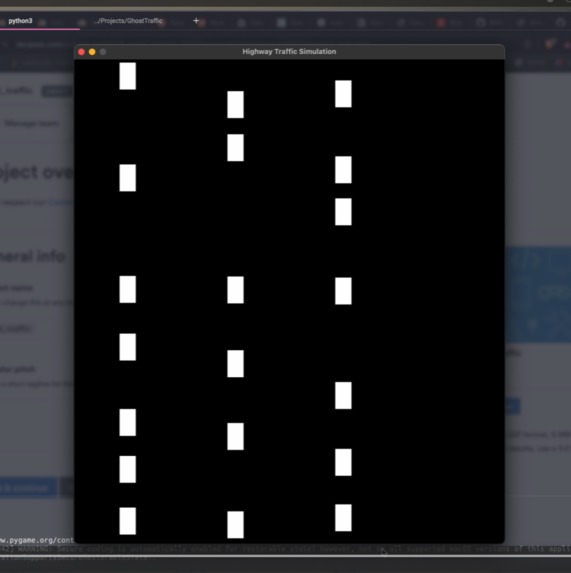
main_simulation
-
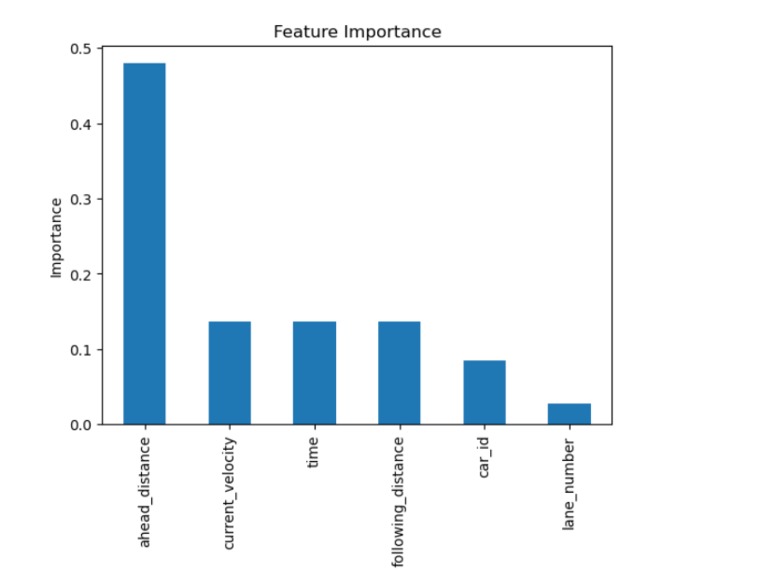
feature importance
-
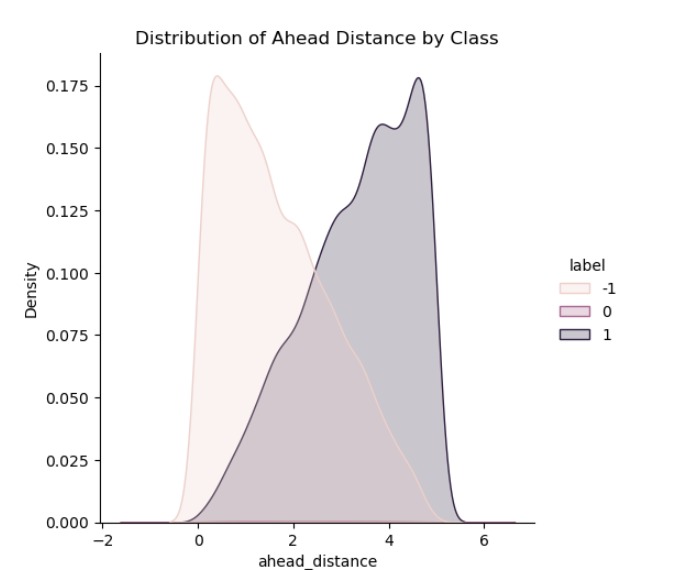
distribution
-
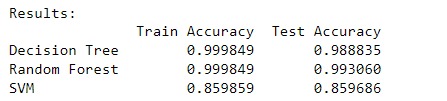
test results
-
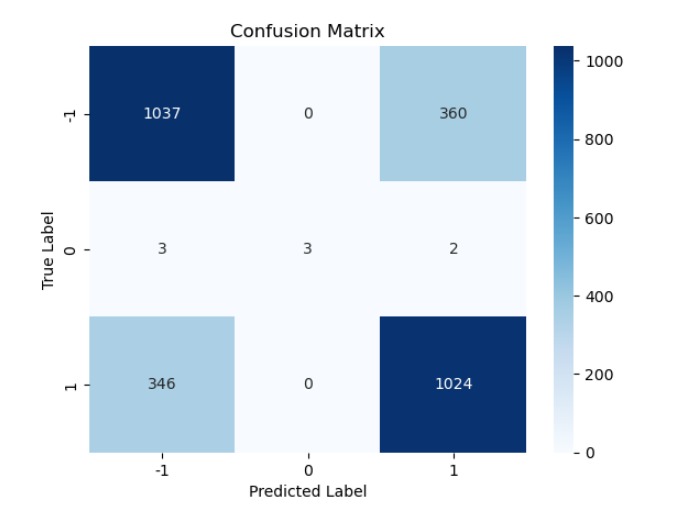
confusion matrix
-
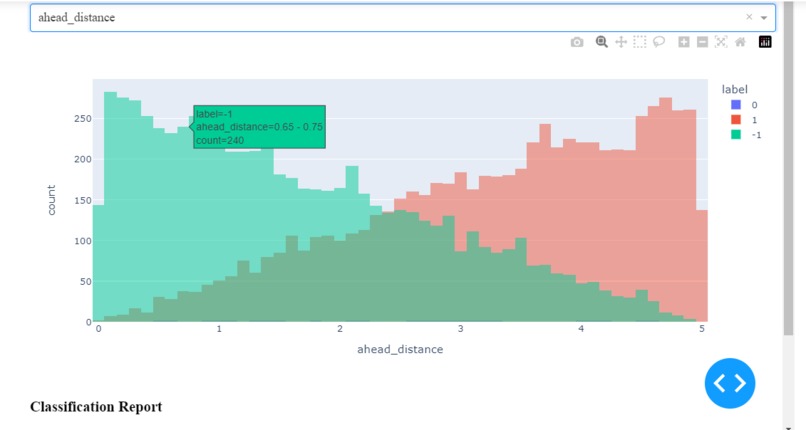
analysis of ahead distance
-
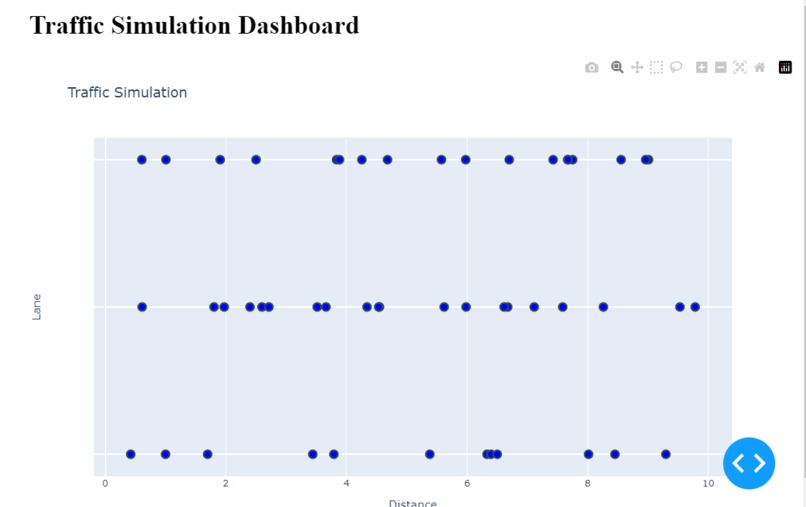
syn_data simulation


Inspiration
Bored Youth from Chennai Coming from a populated place in south India, traffic has been a pressing issue since my childhood days. It includes missing important lectures till delayed emergency treatment! I even tried to solve the problem through a few citizen-centric initiatives, but it all went in vain.
Fast-forwarding 5 years, I got the same amount of involvement when I heard Google is working on the Ghost Traffic . of course, Tom (Tom Cruise) mentioned it : ] so no backsies this time. In this project, we tried to address the potential cause of ghost trafficking by leveraging AI and mathematical techniques as a proof of concept.
Our sole inspiration is to develop a prototype that is ready to be pilot-integrable with G-Maps.
Towards a Traffic-Free Toronto
What it does
A novel approach to comprehending and reducing traffic waves disturbances in the arrangement of vehicles on roadways that worsen traffic is called GhostTrafficAI. GhostTrafficAI aims to understand the fundamental dynamics of traffic waves by utilizing methods similar to fluid dynamics. By utilizing this knowledge, it aims to enable drivers to minimize the need for braking and change vehicle headways in order to lessen the impact of traffic waves. It does, however, recognize the complexity of traffic dynamics, as some models indicate that capacity limits may result from growing headway. However, GhostTrafficAI draws attention to the possibility of interventions, comparing it to the management of sheep herds, and imagines a time when thorough route planning and destination knowledge reduce traffic jams in human traffic streams.
How we built it
GhostTrafficAI works by keeping track of the separation between vehicles and their velocities. It then uses a classifier to determine whether a vehicle should slow down, pick up speed, or stay at its present level. GhostTrafficAI removes the need for real-time data by simulating traffic patterns, including the presence of ghost waves, through data simulation that produces trustworthy outcomes. In addition to taking the place of actual inputs, this simulated data allows for extensive testing and model improvement across a range of traffic circumstances. GhostTrafficAI enhances its predictive powers by utilizing this synthesis data, opening the door for more successful traffic management tactics free from the limitations of real-time data collection.
Challenges we ran into
Our traffic simulation development journey presented several opportunities for learning and refinement:
Data Acquisition Hurdle: The ideal scenario would have involved leveraging a pre-existing real-world traffic simulation dataset. The absence of such data necessitated the creation of a custom traffic environment from scratch. While this approach allowed us to progress with development, it inevitably limited the simulation's ability to fully capture the complexities and nuances of real-world traffic patterns. Incorporating real-world data points or partnering with traffic data providers would significantly enhance the simulation's accuracy and applicability.
Visualization Shortcomings: The current iteration of the simulation effectively depicts situations where vehicles abruptly change lanes. However, a key challenge emerged in rendering smoother lane-changing maneuvers. Ideally, the simulation should showcase a spectrum of lane-changing behaviors, ranging from cautious and gradual adjustments to more urgent maneuvers. Further development efforts will focus on refining visualization techniques to achieve a more nuanced and realistic portrayal of lane-changing behavior.
Braking Model Limitations: The current braking model, implemented using cubic Bezier functions, represents a valuable starting point. However, its reliance on these functions introduces limitations in replicating the full range of realistic braking behavior observed in the real world. Future iterations will explore more sophisticated braking models, potentially incorporating physics-based simulations, to enhance the simulation's accuracy and adaptability.
Pygame Learning Curve: As this project marked our first attempt at using Pygame for simulation development, we encountered a learning curve associated with the framework's coordinate system. The intricacies of this system may have introduced unforeseen effects on how vehicles move within the simulation environment. Investing additional time in mastering Pygame's coordinate system and exploring alternative visualization libraries will allow for a more intuitive development process and potentially lead to a more visually appealing and functionally accurate simulation.
Accomplishments that we're proud of
Creative Stimulation Creation: We were able to create a custom stimulation that could replicate ghost patterns after overcoming the difficulty of creating accurate traffic data simulations. This accomplishment demonstrates our capacity for creativity and the creation of specialized solutions for challenging issues.
Community Involvement: To get opinions, suggestions, and support for GhostTrafficAI, we have been actively involved in the local communities. Through promoting cooperation and inclusiveness, we have increased the significance and effect of our project on the communities it benefits.
Potential for Real-World Implementation: GhostTrafficAI is ready for practical use, with its improved model and verified outcomes providing a workable way to reduce traffic jams and improve city mobility. Reaching this milestone is a big step in the right direction toward solving a major social issue.
What we learned
Traffic simulation offers a powerful tool to study and improve traffic systems without the need for real-world testing. This translates to two key benefits:
Faster and Cheaper Testing: Simulations allow us to experiment with new traffic management ideas in a virtual environment, saving time and money compared to real-world trials.
Data Generation for Machine Learning: Simulations can create vast amounts of customized data, essential for training machine learning models that can optimize traffic flow in the real world.
What's next for Ghost Traffic
Enhanced Model Refinement: In order to increase the accuracy and prediction power of the GhostTrafficAI model, we are dedicated to continuously improving it. To better evaluate and forecast traffic patterns, this entails optimizing algorithms, applying cutting-edge machine learning approaches, and fine-tuning the classifier.
Integration with Smart Infrastructure: We want to make GhostTrafficAI work with both current and upcoming smart infrastructure projects, like linked car systems, variable speed limits, and intelligent traffic signals. Through this integration, various traffic management components will be able to collaborate and exchange data in real-time, increasing overall efficacy and efficiency.
Scaling and Deployment: In order to implement GhostTrafficAI in more expansive urban regions and other geographic places, we intend to expand it up. To achieve seamless integration and widespread adoption, this expansion will need working with local governments, transportation authorities, and technological partners.
Built With
- google-colab
- numpy
- pandas
- pygame
- python
- scikit-learn


Log in or sign up for Devpost to join the conversation.