-
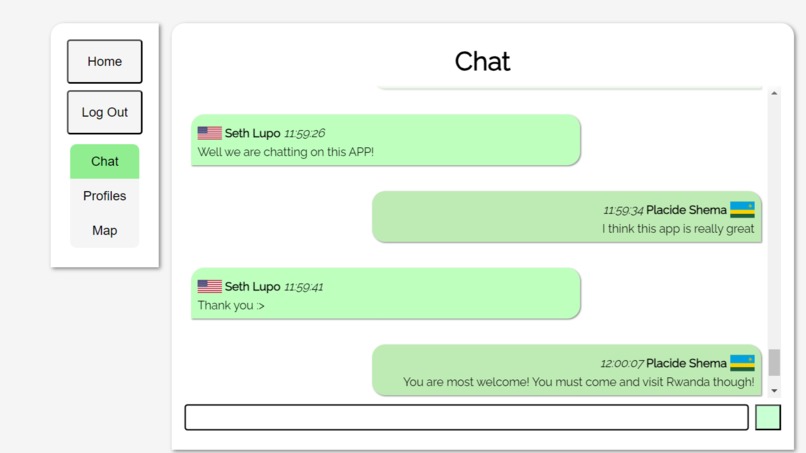
Chat
-
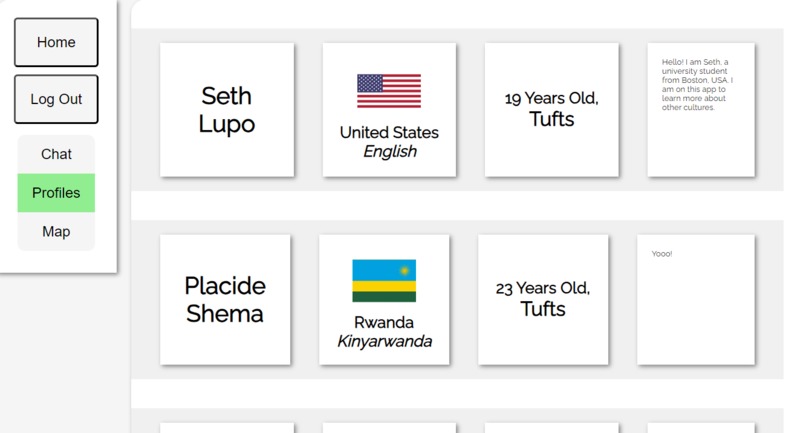
profiles
-
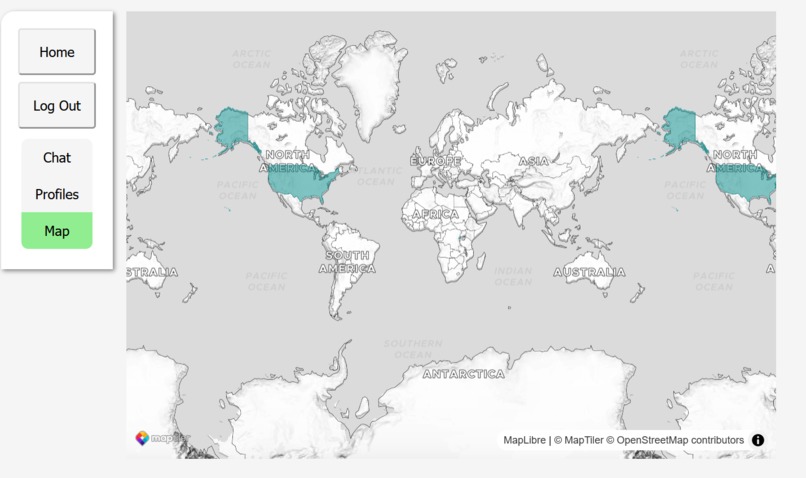
Participant's location


Inspiration
The inspiration behind Global Chat stems from the realization of misinformation and the crucial need for understanding and learning from diverse cultures and histories. Recently, one of our teammates, Placide, encountered a striking example of cultural misunderstanding in Washington DC. While outside a nightclub with friends, someone approached and asked, "Hey, guys, are you Tutsi?" This encounter highlighted the importance of dispelling stereotypes and fostering genuine cultural understanding. Tutsi has been one of the tribe during Genocide against them, however, it no longer exists. Global Chat aims to provide a space for open dialogue where people can share their stories, dispel misconceptions, and learn from one another's experiences, ultimately promoting empathy, mutual respect, and cross-cultural learning.
What it does
Global Chat provides a dynamic virtual space for students worldwide to connect, share experiences, and explore diverse perspectives through discussions on various topics. Global Chat gives a dynamic user interface for students to communicate in languages across the globe. The chat automatically puts the student into a new room once every week as part of giving students a broader perspective. With that being said, users can still view old chat rooms.
How we built it
We built this app using Sveltekit, a modern fullstack JS library similar to Next.js. We also used Google’s Firebase for a real time database. We also used the Google translate API for chat translation. We also used Maplibre for geographic visualization. In turn, our Sveltkit App relies on a multitude of services to contain so much functionality.
Challenges we ran into
We ran into many difficulties working with our database. Firebase was a new technology and it still had a learning curve. React did not agree with what our project intended to do, so our team opted for SvelteKit, an equivalent language to Next.js.
The MapLibre API was quite difficult to work with, as certain layers were not possible to implement. While highlighting the countries did not appear complicated and was only a small feature of the final product, it was an essential feature in our eyes to provide the user with a visual representation of the location in which global students reside.
Accomplishments that we're proud of
Live chat app Translates shit Applicable to the plethora of misinformation that occurs in the world.
Our team was most proud of the ability to translate. Incorporating the translator within the chat feature was not a feature that we expected to implement since it requires importing Google translate API for chat translation, yet it is a crucial feature to our user interface. One of our main goals in this project is to help bridge the language barrier and prevent misinformation, and the use of Google Translate API is an essential feature of this project. Incorporating the MapLibre API was also an interesting feature as it really provides the user with a visual representation of the different countries around the world. Many Americans are unaware of the exact location of Rwanda on a map. MapLibre API gives the user a definitive location of every country, and highlights the countries of relevant users, providing the user with a visual representation of the students you are communicating with.
What’s next for Global Chat
Our team was very satisfied with the initial product of Global Chat. We were able to create a coherent chat feature with a built-in translator. Students all across the world can easily customize their profile, and while we were not able to add unique features to each account, the chat feature is very robust and displays a variety of essential information for the user. While our implementation was fairly successful for a weekend challenge. We want to implement user friendly text-to-speech, a more streamlined interface, facilitating better communication for the user.
Built With
- css
- html
- javascript
- maplibre
- next.js
- sveltekit


Log in or sign up for Devpost to join the conversation.