-
-
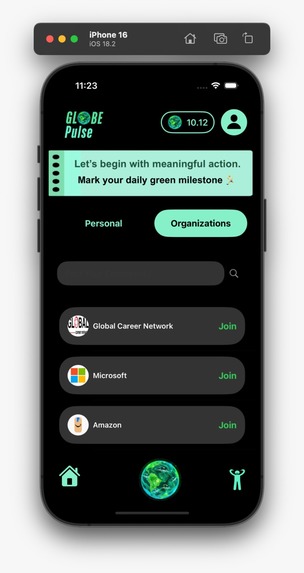
Searching for Organization
-
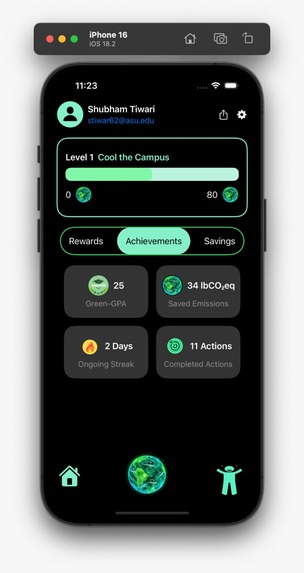
User Dashboard
-
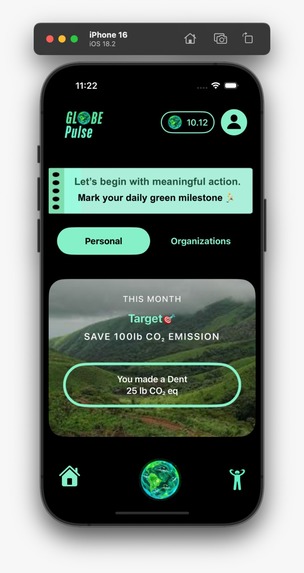
First Page
-
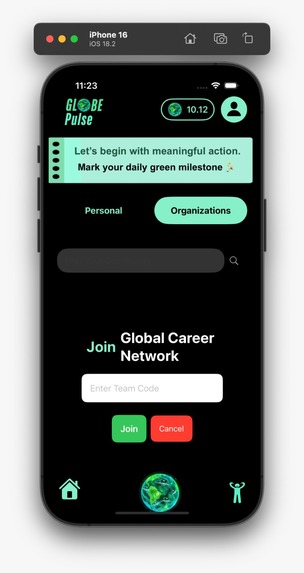
Joining Organization
-
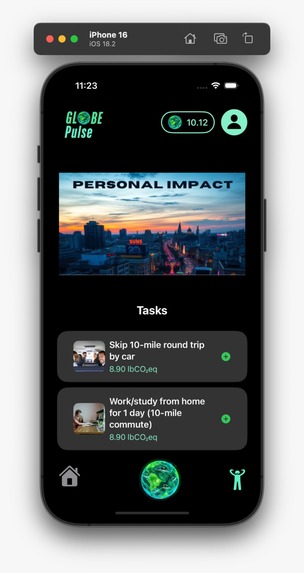
Personal Challenge page


Inspiration
The rise of greenwashing has made it harder for people to trust companies’ claims about their sustainability efforts. At the same time, many individuals, especially students, struggle to find the motivation or rewards to live more sustainably. The inspiration behind Globe Pulse came from a desire to solve these issues. We wanted to create something that not only helps individuals make a real impact on the environment but also holds companies accountable for their green initiatives. Our goal was to build a platform that makes sustainability feel achievable, engaging, and truly effective.
What it does
Globe Pulse is all about creating real, measurable change. It has two main parts:
Corporate Sustainability Track: Companies use Globe Pulse to track their employees' eco-friendly actions, helping them go beyond just talking about sustainability. Businesses can set challenges, get real-time insights into their environmental impact, and even sponsor student-led green projects that make a difference.
Campus Engagement Track: Students at universities get involved in fun, gamified sustainability challenges—like reducing waste or saving energy—and earn rewards and recognition for their efforts. It’s a great way to get students motivated and create a culture of sustainability on campus.
At the heart of it all, Globe Pulse uses AI to provide personalized, practical tips for individuals based on their daily habits. It suggests realistic actions that can make a real difference, like taking the stairs instead of the elevator or choosing the train over a plane—tailored to each person’s life and needs.
How we built it
We built Globe Pulse with a mix of tools and technologies to create a seamless and engaging experience for users:
SWIFT: We used Swift to develop the iOS app, making sure it’s intuitive and easy to use on Apple devices.
GROQ API: This helped power the AI behind the app, analyzing user behavior and giving personalized suggestions based on their habits.
FLASK App: The backend was built with Flask to handle user data, tasks, and sustainability tracking.
Python: We used Python for processing data and making sure the sustainability recommendations were accurate and meaningful.
XCODE: Xcode was essential for building and optimizing the app’s performance on iOS devices.
CANVA: Canva made it easy for us to create eye-catching images and graphics that make sustainability tasks more engaging.
ChatGPT: We integrated ChatGPT for a friendly, conversational experience, helping users understand sustainability better and answering their questions.
AWS Lambda: To make our Flask app serverless, we leveraged AWS Lambda. This allowed us to run backend functions without the need to manage servers, ensuring scalability and cost-efficiency.
Challenges we ran into
Personalization: One of the biggest challenges was making sure the AI suggestions were really relevant to each individual. We didn’t want to suggest things that didn’t apply to users—like asking non-drivers to think about car-related actions. Finding that sweet spot of personalization took a lot of tweaking.
Accurate Data: We had to make sure the environmental impact of each task was accurate. Whether it was saving water, reducing energy, or cutting down on waste, we worked hard to gather reliable data and build models that could calculate the real carbon savings of each action.
Keeping Users Engaged: We wanted the app to feel like fun, not a chore. Getting the right balance between gamification and real-world impact was tricky. Too many tasks would overwhelm users, so we had to keep it simple without losing the impact.
Tech Integration: Since we were using multiple technologies (Flask, Python, Swift, Xcode), integrating everything smoothly was a bit of a puzzle. It took time to make sure the app ran well across different platforms and devices.
Accomplishments that we're proud of
Personalized AI: The AI-powered recommendation engine is something we’re really proud of. It doesn’t just give random eco-tips; it tailors suggestions based on what users actually do, making sustainability feel more accessible and relevant.
Dual Focus: We’ve created a platform that serves both businesses and students, and that’s something we’re really proud of. The corporate track helps businesses go beyond greenwashing, while the campus track gets students actively involved in sustainability.
User-Friendly Experience: We’ve made sustainability simple and fun. By combining gamification with practical tips, we’ve made it easier for people to stay engaged without feeling like they’re being lectured about the environment.
Visually Appealing: Thanks to Canva, we’ve been able to make sustainability tasks look cool and approachable. The graphics and images add an element of fun and clarity to what might otherwise be dry topics.
What we learned
AI’s Power to Drive Change: We learned that using AI to suggest real, personalized sustainability actions is a game changer. When the recommendations align with users’ lives, they’re much more likely to make a real impact.
Empathy is Key: Building an app that users will actually want to use means understanding their lives and struggles. We had to design the platform with empathy, making sure we weren’t just throwing tasks at them but offering something that felt achievable.
Collaboration Between Tech Stacks: Working across different tools and technologies (Swift, Flask, Python) taught us a lot about how important it is to have everything work seamlessly together. Communication and planning were crucial in making sure everything functioned smoothly.
Sustainability Can Be Fun: We learned that sustainability doesn’t have to be hard or boring. By gamifying tasks and rewarding users, we’ve proven that small eco-friendly actions can be enjoyable and feel good.
What's next for Globe Pulse
Better AI, More Tasks: We plan to enhance the AI’s ability to suggest even more personalized, impactful actions for users—especially as we get more data on habits and preferences.
Global Reach: We want Globe Pulse to go global. Expanding the platform to different countries means adapting sustainability challenges to local needs, which will make it even more relevant for users everywhere.
Partnerships with More Companies and Universities: To make a bigger impact, we plan to partner with more companies and universities to grow the user base and expand the reach of our challenges.
Real-Time Feedback: We’re planning to add features that let users track their environmental impact in real time, so they can see the tangible difference they’re making every day.
More Rewards: We want to give users even more incentives to stay engaged. Whether it’s through discounts, donations to eco-causes, or virtual rewards, we’re working on making the experience even more rewarding.


Log in or sign up for Devpost to join the conversation.