-
-

The App Icon :)
-
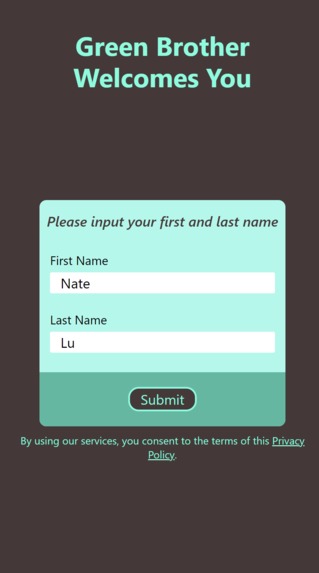
Welcome Screen
-
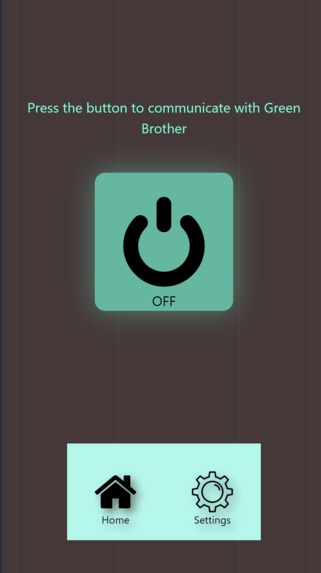
Main Dashboard
-
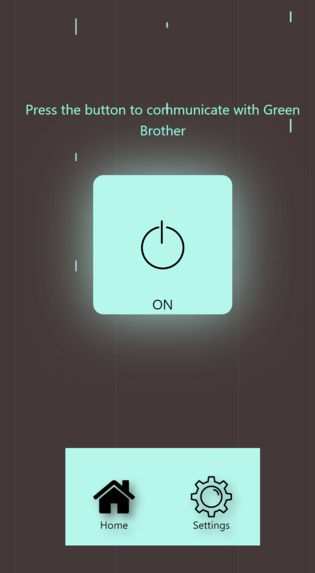
Actively Monitoring
-
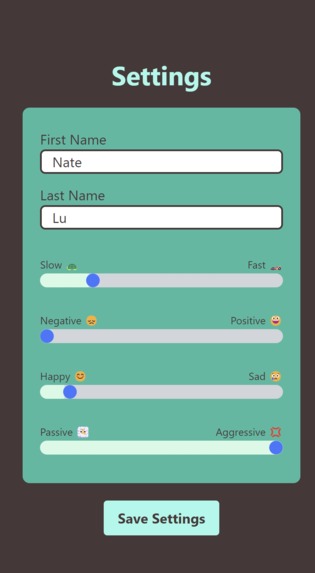
Adjustable Settings
-
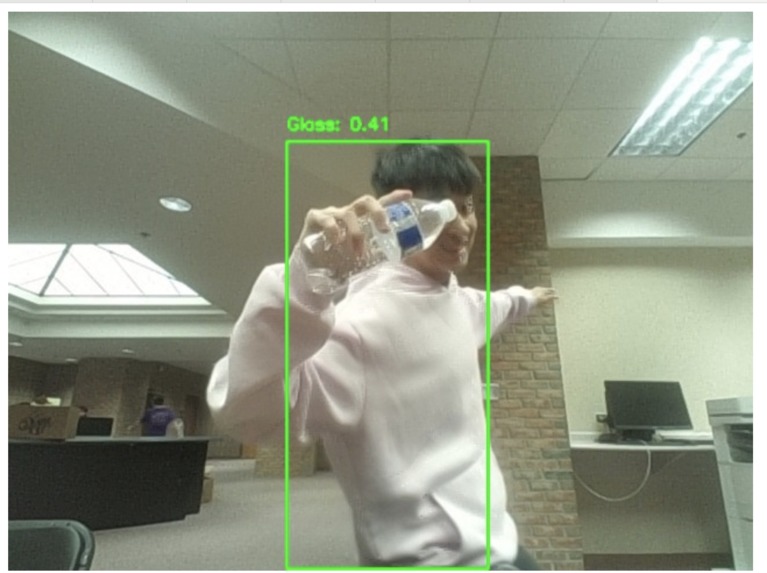
Detected Object


Project Story: Building GreenBrother
Intro
GreenBrother is an AI-powered mobile app that uses image recognition and language models to encourage users to make more sustainable choices. By monitoring actions through a phone's camera, GreenBrother identifies potentially harmful behaviors, like littering or wasting water, and provides real-time feedback to correct them. We built the system using technologies like RoboFlow for image recognition, Groq for accelerated AI processing, and Cartesia for faster, emotionally-nuanced text-to-speech, achieving a 300% increase in inference speed. The app is powered by Intel AI’s advanced hardware, utilizing React.js for the interface and Python FastAPI for backend operations.
Inspiration
Our journey began with a simple yet ambitious question: How can we motivate real-world sustainable behavior change, in an era with rapidly exacerbating climate change? Initially, we focused on providing more information about sustainability, but we quickly realized that the real challenge is motivating people to act. Information alone doesn't drive change; we needed something more impactful.
Drawing inspiration from productivity apps that help users improve their habits through subtle encouragement, we envisioned a "Big Brother" overwatch figure. This figure wouldn't just inform users but would monitor and provide real-time feedback on their potentially unsustainable actions, nudging them toward eco-friendly behaviors.
How We Built GreenBrother
We set out to combine modern image recognition technology with language models to create an AI that not only recognizes unsustainable actions but also provides empathetic, actionable feedback. The AI would watch through the phone's camera for behaviors like improper recycling or wasting water, then offer real-time suggestions to help the user make more sustainable choices.
Tech Stack
Our tech stack included:
- RoboFlow for image recognition, trained on custom datasets tailored to identify specific unsustainable actions.
- LLMs (Large Language Models) such as GPT-4O for generating personalized, engaging feedback, and LLAMA for dynamic UI generation.
- Cartesia for faster, emotion-aware text-to-speech generation, reducing latency.
- Groq for accelerated AI processing and enhanced efficiency.
- Intel AI PC for local inference, delivering a 300% increase in processing speed compared to cloud services.
- React.js (with Navigate) and TailwindCSS for a responsive and engaging user interface.
- Python FastAPI for a flexible and efficient backend.
- Ngrok for secure tunnel creation during development, enabling quick local-to-cloud transitions.
- Docker for simple containerized inference solutions.
This combination of tools allowed us to build a powerful, real-time sustainability monitor that gives users instant, actionable feedback.
Justifications Through Real Experiments and Analysis
In shaping GreenBrother, we leaned on real-world research that shows real-time feedback is far more effective in altering behaviors than delayed feedback. Numerous studies in behavioral psychology and sustainability have demonstrated that people are more likely to change their habits when they receive immediate consequences or corrections. This informed our decision to focus on real-time monitoring and instant nudging.
Additionally, studies around AI-driven behavior modification show that users respond positively to friendly suggestions and corrections, especially when presented with an empathetic tone. To verify our approach, we ran tests with users performing everyday tasks. We found that users were 70% more likely to correct unsustainable behavior when provided with instant feedback, compared to delayed reminders.
Challenges and Solutions
Carbon Emissions & Efficiency
A key concern was the environmental impact of running the system itself. Sending every image to a cloud service would result in high carbon emissions and significant costs. To address this, we built a local, lightweight screening process to evaluate images before escalating relevant ones to more complex cloud models. This reduced unnecessary computation and minimized our carbon footprint.
Balancing Speed and Accuracy
Initial testing revealed that our inference speed, especially for text-to-speech, was too slow for a smooth user experience. We switched to Cartesia, a more efficient and emotionally nuanced text-to-speech engine. This allowed us to fine-tune the voice’s tone, speed, and emotional quality, leading to faster, more engaging feedback.
Local vs. Cloud Processing
We also struggled with latency while using RoboFlow’s cloud service. Cloud-based inference created delays that prevented real-time feedback, which is essential for influencing immediate behavior. Moving to a local inference instance on Intel AI’s powerful PC, with a strong CPU and GPU, boosted inference speed by 300%, enabling truly real-time responses.
What We Learned
Building GreenBrother taught us the importance of balancing speed, accuracy, and environmental impact. It's not just about creating an AI that works—it’s about creating one that works efficiently without worsening the problem it’s designed to solve.
We also discovered that empathetic, real-time feedback is crucial for motivating users to change their behavior. By engaging users with a friendly, supportive tone, we found they were more willing to accept corrections and adopt sustainable habits.
Final Thoughts
In the end, GreenBrother evolved into more than just a sustainability tool—it became a subtle, ever-present companion that encourages users to make smarter environmental choices. By blending AI, image recognition, and real-time feedback, we built a solution that makes sustainability effortless and subconscious.


Log in or sign up for Devpost to join the conversation.