-
-
Banner
-
App Icon
-
Title Screen


Inspiration
Mental health in the Muslim community is something usually brushed under the rug. Many Muslims deal with mental health problems but tend to keep it to themselves for fear of backlash from their family or community. Many Muslims deal with mental health disorders but they are hesitant to seek counseling for various cultural, familial, and/or societal reasons. Especially for high schoolers like ourselves, mental health is an issue that is quite prevalent in our age group and we have noticed that although there are ample secular resources for mental health available, there are few resources specific to Muslims that exist. We wanted to create a simple video game available to Muslims all over the world that can help Muslims feel confident in themselves and their faith, and understand and cope with the issues they may deal with daily.
What it does
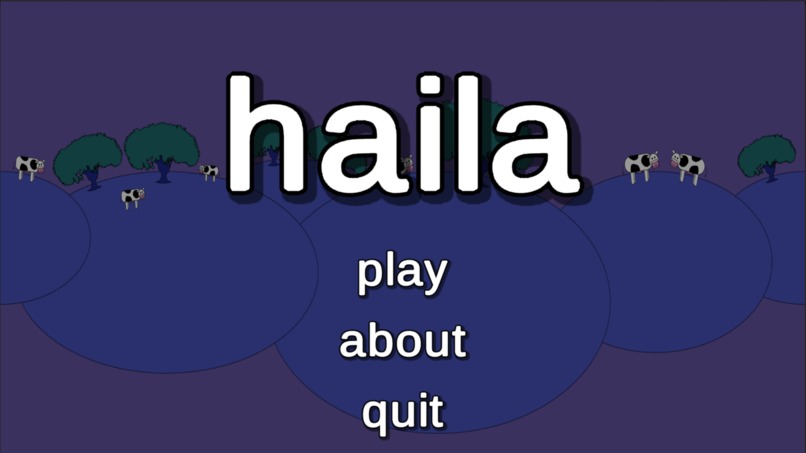
Through simple tasks the player needs to do to keep their sanity meter high, the game encourages them to start thinking more positively about themselves and their abilities. They have to reach the end of each level, where they will encounter many different areas that each present a unique challenge that needs to be overcome. The game is still in active development and we are constantly improving each level to create something truly unique and incredible that can help Muslims worldwide.
How we built it
We built the game from the ground up using the Unity engine and wrote mechanics in C#. We used Adobe Illustrator to create all graphics and Photoshop to modify assets. We used Slack and Zoom to communicate our ideas and Google Drive to have a central place for all project assets.
Challenges we ran into
This was the first 2D game any of us have developed, so naturally, we had a few setbacks. As far as programming goes, the animation provided a surprising amount of work that needed to go into it, especially with the walk cycle. There were minor issues that were constantly popping up which Sara had to scan several different scripts to find the root of the problem. Tedious little tasks like those kept us very aware of deadlines, since we realized that the time we spent on those minor bugs would add up. Parallax also presented some difficulties while working on the player, since it would move relative to the camera, which in turn would move relative to the player. We didn't have any major issues since we had brainstormed relatively realistic mechanics that would be possible to implement, although we did not have sufficient time to implement as many as we would have liked. Incidentally, the time zone difference between our international group of members proved inconvenient, which added a separate layer of difficulty onto our project.
Accomplishments that we're proud of
Similar to the challenges, this was the first 2D game we have developed. Some aspects of the game that we are proud of are the dialogue, parallax effect on the background, menu mechanics, scene management; the integral foundations of the game that we are not only happy to have achieved but also extremely excited to explore further. The communication between team members (given time differences) was brilliant, and we are all very committed to bettering the community and coming together for a mutual, important cause such as mental health. We are also appreciative of the approach we chose regarding the topic of mental health. It is controversial and taboo in many cultures. There is little understanding and acknowledgment of the importance of mental health in many Muslim communities. We realize that Islam and the guidance of the Quran and Sunnah are exceptionally helpful in the understanding of mental health in an Islamic context. We are pleased with the basis of the project - a game illustrating the importance of mental health in an Islamic context - as well as the technical outcome of the project itself.
What we learned
Aakef learned a great deal about digital art as he learned how to use Adobe Illustrator and combined with his knowledge of Photoshop created many different illustrations for the game, all with a consistent art style and design. Additionally, he learned how to create sprites in Unity and was able to develop all necessary parts for sprites so that Sara could take them and animate them easily.
Sara learned about the fundamentals of game development, and largely increased her knowledge of C# and Unity.
Omran increased his knowledge of Islam by finding connections between mental health and Islam, as well as creating a list of visual imagery contained within the Qur'an, such as fig trees and cows, based on Al-Teen and Al-Baqarah respectively.
All 3 of our team members learned about teamwork, coordination, and communication. We learned how to effectively present our ideas to the team and build off of each other's ideas, and how to combine our skills to create a video game. We learned that we could do the improbable: we communicated with each other from opposite sides of the world and still felt like we were in the same room. We adapted to the small time gap between start and finish, and most importantly, we developed understanding. We understood our goal and worked together to achieve it. Frankly it’s one of those unique experiences, building a game with others. We built a special bond while making this game, and we can't wait to keep working on this game to create something extraordinary together!
What's next for Haila
Adding audio and sound effects, implementing additional features, developing the second and third levels and storylines, porting to mobile, and releasing on mobile (Insha'Allah).






Log in or sign up for Devpost to join the conversation.