-
-
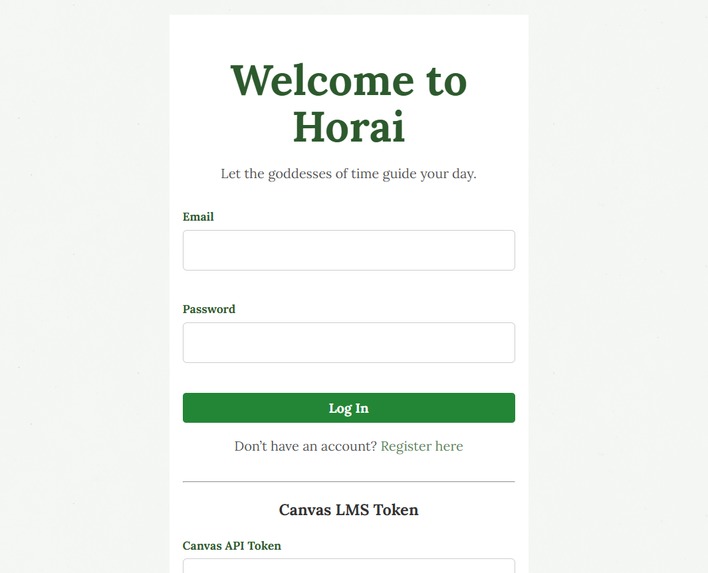
Login
-
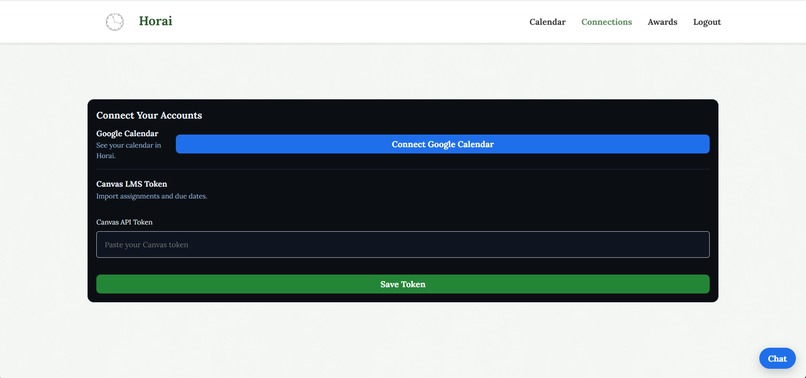
Connecting to Google and Canvas LMS
-
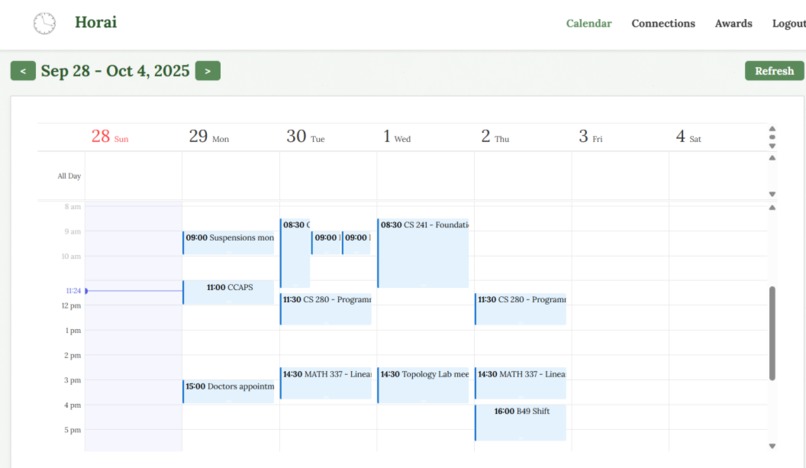
Calendar


Inspiration
In Greek mythology, the Horae were the goddesses who personified time, the seasons, and the natural order of the world. Inspired by their role in bringing balance, we created Horae to act as a guardian of your most valuable asset: your time.
What it does
Horae is an intelligent calendar companion that automates your schedule management. It seamlessly consolidates tasks from Google Calendar, Canvas, and manual entries into a single, unified view.
From there, it analyzes your fixed commitments and automatically schedules your flexible tasks like studying or projects into the optimal open time slots. Horae transforms a chaotic to-do list into a clear, manageable, and actionable plan for your day.
How we built it
The web app is powered by a Flask backend and a Vite frontend, with MongoDB serving as our flexible database for user and task data.
The core of our project is the Google Gemini API, which acts as the brain for all task management, from parsing user requests to intelligently rescheduling tasks. To pull in real-world data, we authenticated users via Google OAuth for calendar access and built a custom integration for the Canvas API to fetch academic assignments and deadlines.
Challenges we ran into
Our biggest hurdle was managing authentication for two completely different services.
Google Calendar events and Canvas assignments come in vastly different formats. We had to engineer a robust backend layer to normalize these disparate data sources into a single, consistent model that our application could understand and manage.
Accomplishments that we're proud of
We are incredibly proud of how seamlessly Horae integrates a user's academic and personal life. With a single login, the app automatically pulls a student's entire semester of assignments from Canvas and their events from Google Calendar, requiring zero manual setup. This provides immediate, tangible value from the very first use.
What we learned
We learned the intricacies of modern API security, successfully implementing the full OAuth 2.0 flow for Google Calendar. This taught us the importance of handling access and refresh tokens, managing user consent, and securing sensitive credentials.
What's next for Horae
We plan to add a timer system which will track the expected minutes vs. actual minutes taken. This data will be used to create a feedback loop, allowing our AI model to learn a user's personal work pace and provide increasingly accurate scheduling predictions over time.
The timer would also facilitate a more detailed rewards and leveling system based on task completion and consistency. This will make productivity feel fun while giving users an incentive to keep coming back to and using Horae, ultimately helping them use their time efficiently and achieve their goals.


Log in or sign up for Devpost to join the conversation.