-
-
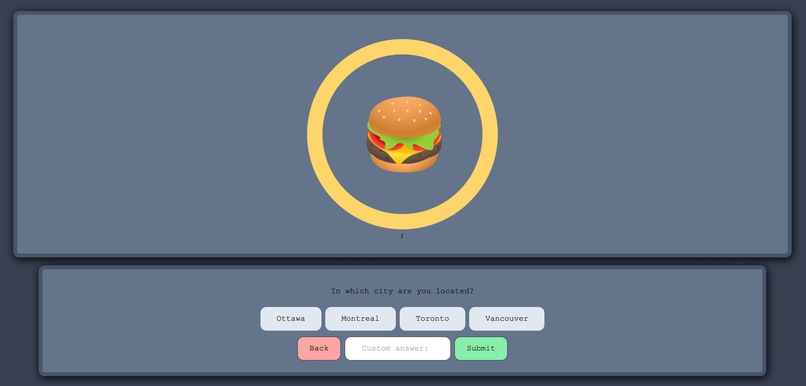
Landing Pad
-
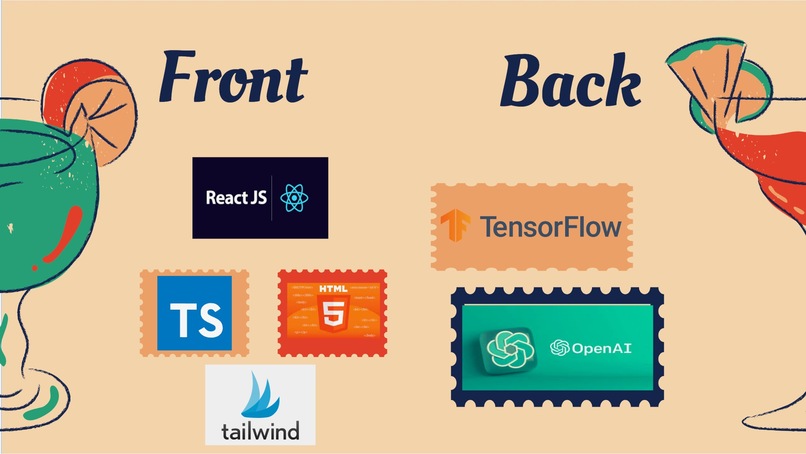
Stack
-
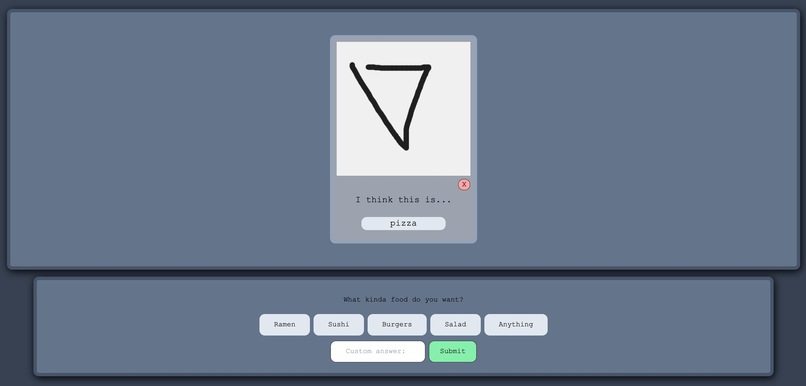
Drawing board
-
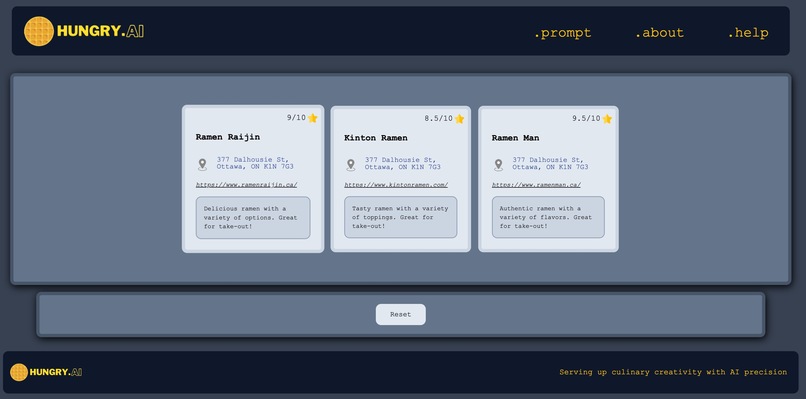
Result page


Inspiration
There is a high demand in the culinary market, but a continued growth in indecisiveness haunts us every time time we need to make a decision on what, where or how much money we are ready to spend to eat. We end up wasting too much time looking for an ideal place. This inspired us to make a web app that helps make that choice for our users.
What it does
Our website helps the average user decide where they can go out to eat by asking them a few simple quick fire questions, so instead of wasting their time trying to find the perfect place, we do it for them in an instant using Ai generated answers.
How we built it
By using Open.Ai as the base of our project, we took the answers given to us from the user to create a customized prompt that is sent to openAi for it to provide the perfect answer for the users question. We used React.js for the front end and to incorporate the everything together. We used tailwind css to style the web-app.
Challenges we ran into
- Figuring out Open.Ai **and how to incorporate it with our **React.js environment.
- Managing state across components became very challenging as our app grew in size
- Coordinating different parts of the project across many complex component trees
- Building a seamless and intuitive user experience for all customers -Choosing the right machine learning algorithm or architecture was also a very big challenge for us, since we didn't had much experience working with machine learning before -The machine learning model is trained on a small sample of google's "Quick-Draw!" dataset.
Accomplishments that we're proud of
- Integrating Open.Ai API in the project
- Using Machine Learning for the first time
What we learned
-We explored the process of fine-tuning Open.Ai models on our specific dataset to adapt them to a particular task or domain. We were able to see to which point Ai was able to generate answers to a specific question with seamless precision and little to no time.
-We learned the fundamentals of Machine Learning, which was incorporated in our doodle board why used a trained model on a sample dataset from Google's "Quick-Draw!"
- This doodle board used image detection and pattern recognition.
What's next for Hungry.Ai
Integrating a Google Maps API into our website could enhance the user experience by providing convenient and accurate directions to restaurants. Using Google Maps, can enable users to search for their desired restaurant, view its location on an interactive map, and obtain step-by-step directions from their current location.
Built With
- css
- machine-learning
- openai
- react
- tailwind
- tensorflow
- typescript


Log in or sign up for Devpost to join the conversation.