-
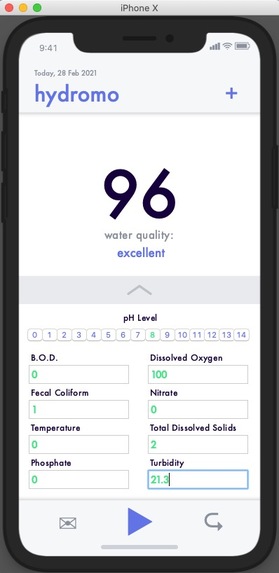
Part 1: Mobile App
-
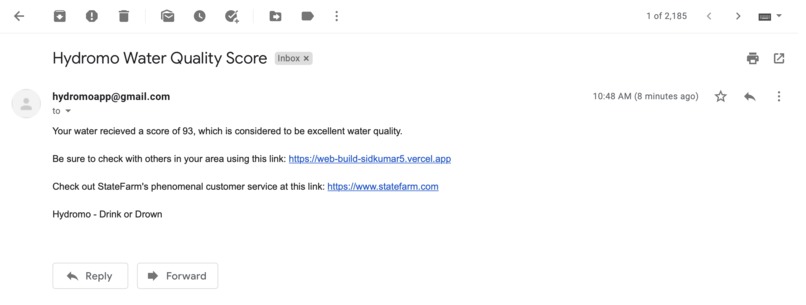
Part 1a: Automatic Email Confirmation
-
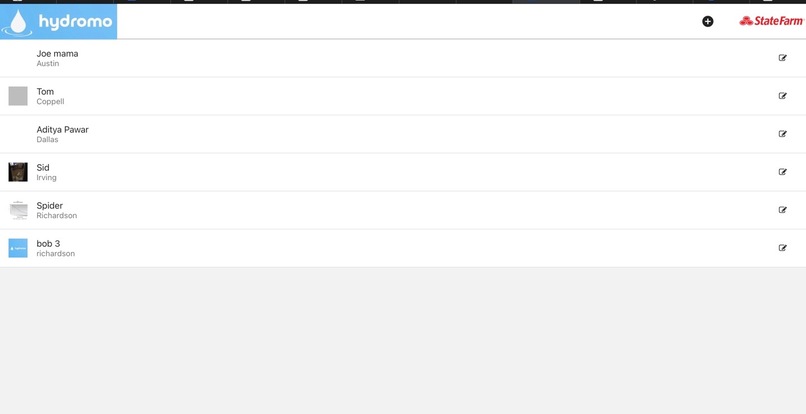
Part 2: Website
-
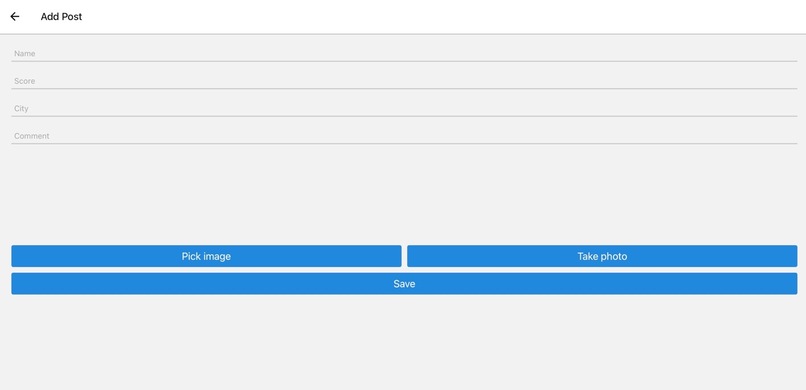
Add a Post
-
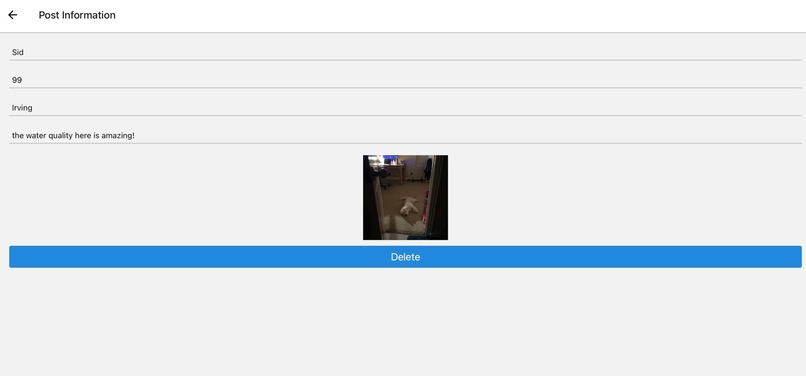
View a Post


Inspiration
The Texas winter storm saw many widespread outages. According to the BBC, 13 million Texans faced some kind of water disruption. One of these disruptions, which proved to be deadly, was that many people were consuming toxic water. The power outages caused blackouts in the water treatment facilities, pumping untreated water into Texas homes. After conducting our research, it was apparent that upwards of 34,000 claims were filed through State Farm where many faced unbearable situations. We strove to create a platform where customers could easily read the quality of their water given a number of values conducted through tests on their water source and share their water quality on our forum sorted by city. Not only would this give users the ability to gauge if their water is clean, but officials will then be able to pinpoint which regions are most affected.
What it does
Meet Hydromo. A system that uses two products to protect the community.
The first product is a mobile application that would allow users, after collecting data with a testing kit, to enter levels of nine ambient pollutants/indicators such as pH, turbidity and dissolved oxygen. Through the utilization of regression analysis and algorithmic calculation, the program generates one “Water Quality Index” score rated out of 100 and tells the user what that score means. The user is also given the option to email themselves a summary of their score as well as post their score onto a forum to compare their scores with others around them. Not only can the user automate their posting, but they can also receive customer support with State Farm’s 24/7 Claim Hotline.
The second product is a forum that the user can go to post about the water quality in their area. We strove to mimic a Reddit-style feed where individuals all over the state can go in and make comments about their score, as well as provide images for the condition in their respective areas. This website complements the mobile app as once the score is calculated, the user is instantly redirected to the forum where their information is entered automatically and shared with the public. The forum provides a sense of security and awareness as State Farm customers can know whether or not the tap is safe.
How we built it
The mobile application was developed using Python and Selenium. Additionally, its framework was developed with one of Python’s many built-in libraries: Tkinter UI. To calculate the singular water quality score, our program had to calculate a “Q-Value” for each indicator. Through regression analysis, an equation was formed for each indicator to more accurately convert raw data to Q-Values. We then compared them to one other by multiplying each Q-Value by a unique weighing factor to consider the more impactful indicators. Once our process is complete, the user receives an accurate reading for their water.
On the other hand, the website was made using React Native, with Expo to deploy and Google Firebase to store relevant information. We chose React Native and Expo because it offers us, the developers, the most freedom in deploying where the application can run (iOS, Android, or Web). Google Firebase was useful in holding the information of each user, their pictures, and the comments they made about their conditions. Lastly, Vercel was utilized in order to make the Expo application available to everybody on the internet and provide us with a free web-deployment.
Challenges we ran into
The process of calculating the Q-Values was initially quite tedious and ineffective due to the limited availability of data points. Our solution was to use the given data to generate regressive equations (x^4 and Logarithmic) for each indicator that considers every potential value entered. In addition to the lack of data, it was a tough decision to chose which frameworks would best suit our idea. We ended up choosing a myriad of platforms that made interconnectivity easy for the user and provided features that could not be done on one platform alone. With extensive Java and C++ practice done in school, writing in these newer languages like Python and Javascript did not come easy. Hours were put in to ease the transition from the school curriculum to mobile and web development.
Accomplishments that we're proud of
One aspect of our product that made Hydromo unique was the interconnectivity and instant confirmation of a post on the forum. Once a score was calculated, all work was done behind the scenes and the user would receive an email confirmation about their post on the forum. We were proud of utilizing the Selenium WebDriver as it made the user’s experience and transition from one phase to another a lot smoother. Additionally, we were proud of dissecting the limited number of data points that we had to generate a fairly accurate model for the quality of water. Lots of graphing and regression was used to make the user as safe as possible - something we are proud of. Lastly, it was a first for everybody on the team to deploy a website and this is a milestone that we are all proud of. We found the free hosting service (Vercel) and now have a link that can be used state-wide to make a post on the forum.
What we learned
In addition to the exploration of new tools, we also learned how to optimize limited data sets with regression analysis and implement interconnectivity through different platforms. Not only did the team flourish technically, but teamwork was something that we learned despite being separated. Especially in an online setting, it becomes increasingly important to communicate ideas and set goals to efficiently develop the project.
What's next for Hydromo
In considering the future, we would approach Hydromo through scalability and further polishing. To start, we’d work to bring in a larger userbase to grow the community on the forum. This could be through growing the presence of the forum individually or both concurrently through promoting the app. Because the two complements each other, traffic on one platform, in turn, promotes the other. Secondly, to improve upon the app, we would polish the user interface for an even smoother experience. We may also work to implement the option of user accounts to provide better cohesion with the app and forum. These accounts could be linked to the same database to provide a seamless transition from one to the other. Lastly, we would work to add better interconnectivity through social media. The app would have features to allow users to share their score on various social medias such as Twitter, Facebook, and Instagram.
To improve upon the forum we would work to include features such as a login/account component and more interactive features such as upvoting and commenting on others’ posts. We would also look to incorporate a google maps API feature to help visualize/display the locations of current claims/claim hotspots both statewide and in the general area of the users. These features would help to expand the utility of the forum to serve more purposes. Over time, we would like to develop the forum into something that measures more than just water issues by eventually incorporating other claims/statuses being filed by users such as hail damage, flooding issues, supply shortages, and other issues. As the forum would expand in utility and in its userbase, we would work to expand it past Texas and into other states. Hydromo at this point would grow into a large-scale platform connecting users with information and direct access to State Farm’s resources.




Log in or sign up for Devpost to join the conversation.