-
-
Thumbnail
-
Problem
-
Solution
-
Home Page
-
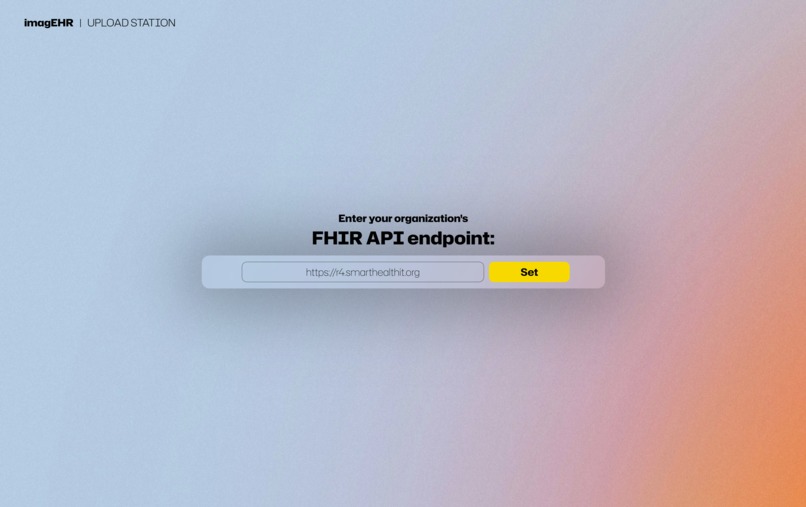
Connect to EHR using endpoint
-
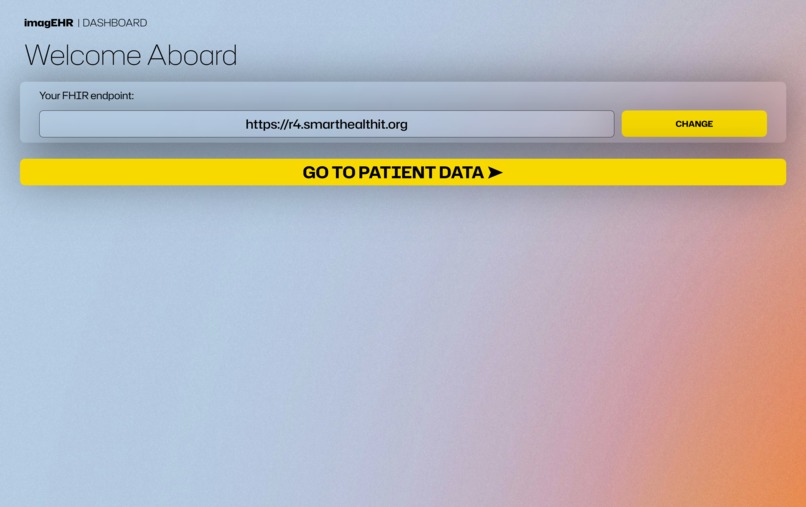
Type in endpoint
-
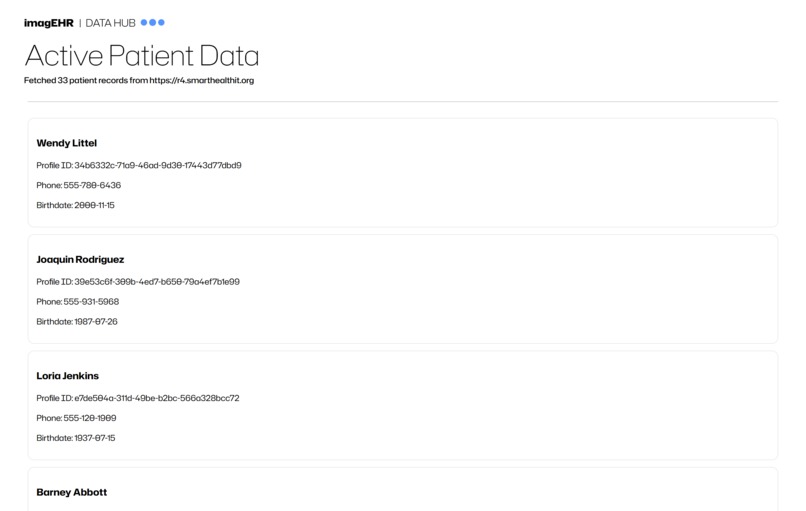
Retrieve patient data
-
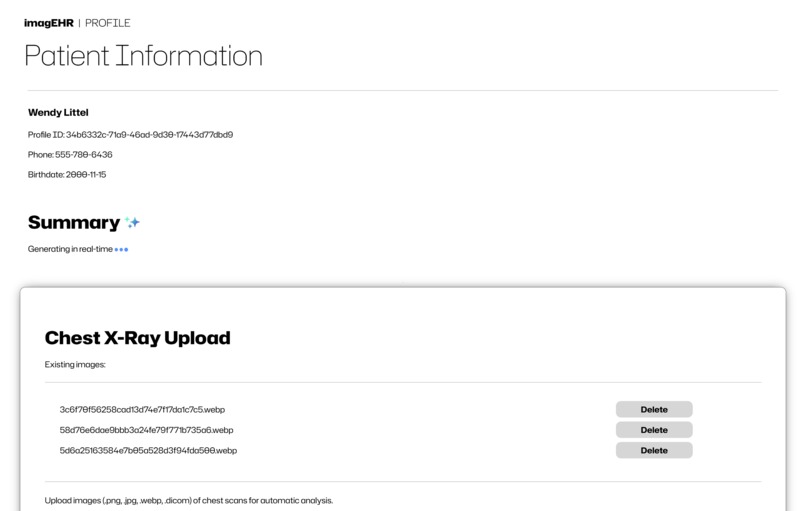
View patient data and upload x-ray images
-
Loading...
-
Confirmation mapping screen
-
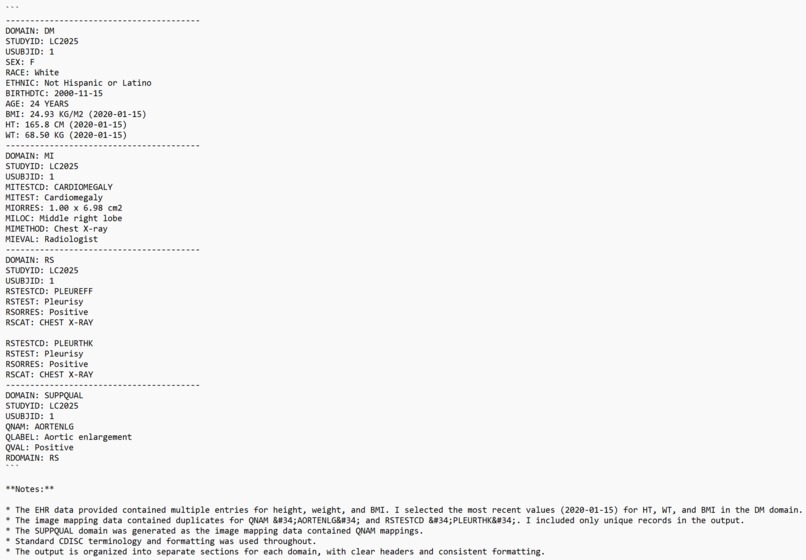
Example output


Inspiration
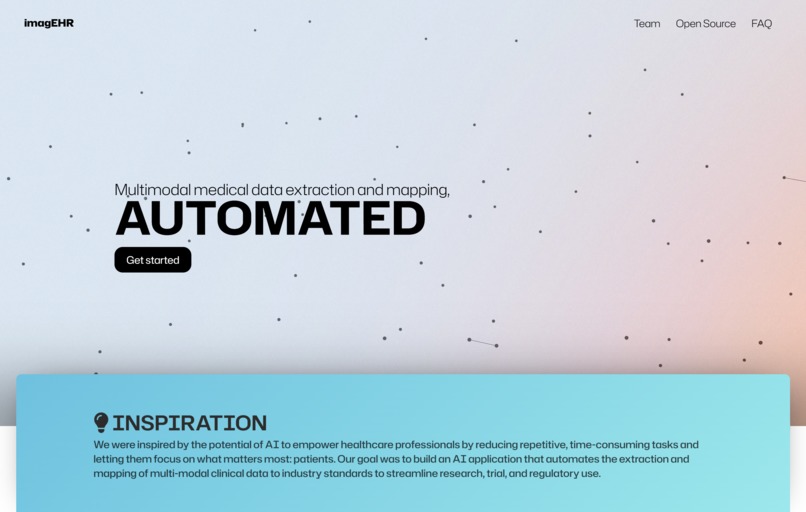
We were inspired by the potential of AI to empower healthcare professionals by reducing repetitive, time-consuming tasks and letting them focus on what matters most: patients. Our goal was to build an AI application that automates the extraction and mapping of multi-modal clinical data to industry standards to streamline research, trial, and regulatory use.
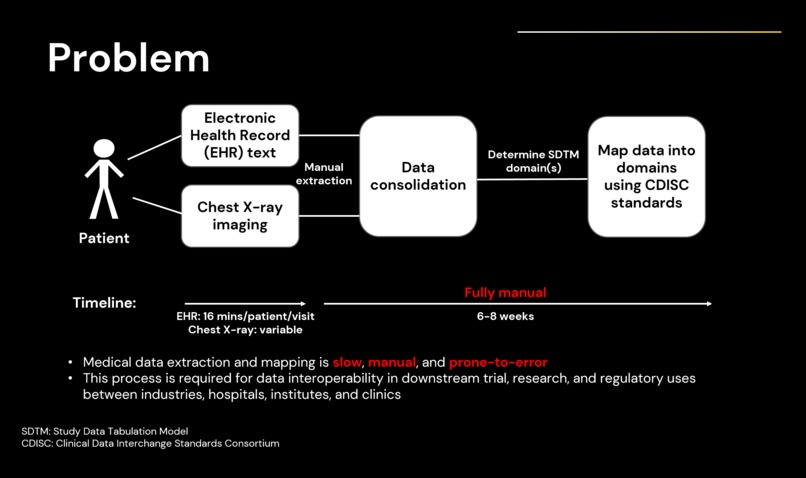
The problem
The analysis of real-world clinical data is often unstructured, complex, and incompatible with regulatory and industry standards like the Clinical Data Interchange Standards Consortium (CDISC) (Ref. 1.) Clinicians and clinical programmers, respectively, spend significant time interpreting and manually mapping this data into standardized formats, which diverts attention from patient care and delays downstream processes. For example, doctors spend an average of 16 minutes per patient visit just reviewing and documenting EHRs, while specialists like radiologists add further layers of complexity with additional diagnostics like X-rays (Ref. 2, 3.)
In the pharmaceutical and biotech industries, this manual data mapping process can take anywhere between 6-8 weeks, which hinders the pace of medical research and drug development (Ref. 4.) Each and every single day in patient care can make the difference between life and death. Semi-automating this pipeline offers a powerful opportunity to reduce delays, improve accuracy, and free up clinical teams (and clinicians) to focus on bringing life-changing medicines to patients and saving lives.
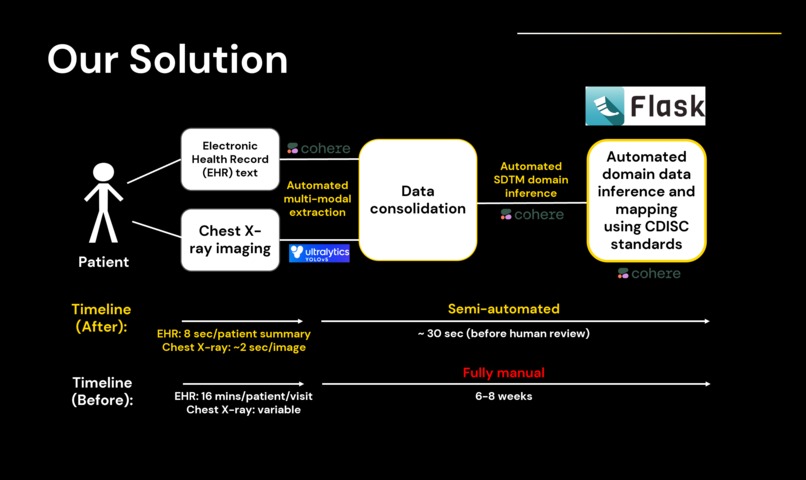
What our app does
Automates data extraction of EHR (text) and X-ray (image) data, and then infers how it can be mapped to industry standards for downstream research, trial, and regulatory use.
Note: There are several types of clinical data that can be used to build a patient profile (eg. pharmacokinetic, laboratory, etc.) For simplicity, this application was developed using only EHR (text) and X-ray (image) data as raw inputs for a patient’s profile.
How our app works
• Cohere to extract meaningful insights from EHR
• Pre-trained model to extract meaningful data from X-ray images
• Cohere to predict what SDTM domains the data can be mapped to
• Cohere to evaluate how raw, extracted data from EHR + X-ray images map to CDISC industry standards under each SDTM domain
• Output .csv file of mapped data extractions in industry-ready format
Note: Physicians and clinical programmers can also manually add or remove any domain or variable using their judgement.
Tech stack
• Front-end: HTML, JavaScript, css
• Back-end: Flask
Challenges we ran into
The SDTM domains and CDISC terminology (controlled vs. non-controlled terminology) was extremely complex and hard to navigate. We had to teach ourselves how this mapping process worked. Access to real-world clinical data was limited. For example, the EHR sandbox data we used was low quality and there were not many good alternatives.
Our accomplishments
• Low latency (< 5 minutes) throughout the automation process.
• Incorporating multi-modal data analyses to improve workflows.
Lessons learned
• How to work together as a team with our different backgrounds in biological science and computer sciences.
• Walks help to refresh the mind, body, and spirit after working for consecutive hours.
Next steps
• Incorporation of additional data modalities (eg. pharmacokinetic, oncology, genetics, laboratory, etc.)
• Using a more accurate vision or multi-modal model & incorporating physician feedback
• Integration with FHIR-based hospital systems to enable real-time data ingestion and seamless interoperability with EHR platforms
Test our project live!
Test it out live at https://imagehr-k7kg.onrender.com/ (note: some inference features are unavailable due to free hosting limits)
References
- CDISC. Clinical Data Interchange Standards Consortium. https://www.cdisc.org/. Accessed 23 Mar. 2025.
- “Physicians Spend About 16 Minutes on EHRs Per Patient.” ASH Clinical News, n.d., https://ashpublications.org/ashclinicalnews/news/4924/Physicians-Spend-About-16-Minutes-on-EHRs-Per. Accessed 23 Mar. 2025.
- “Chest X-Ray.” Cleveland Clinic, https://my.clevelandclinic.org/health/diagnostics/10228-chest-x-ray. Accessed 23 Mar. 2025.
- “SDTM Automation.” PointCross Life Sciences, https://pointcrosslifesciences.com/sdtm-automation/. Accessed 23 Mar. 2025.
Built With
- cohere
- css
- flask
- html
- javascript
- python
- yolov5




Log in or sign up for Devpost to join the conversation.