-
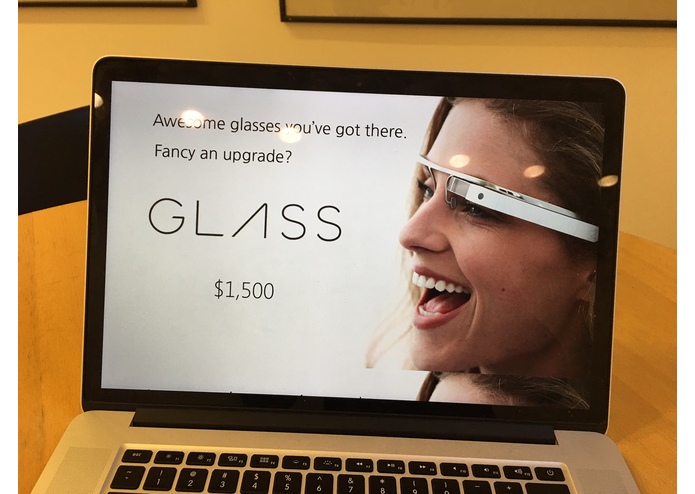
Billboard in action!
-
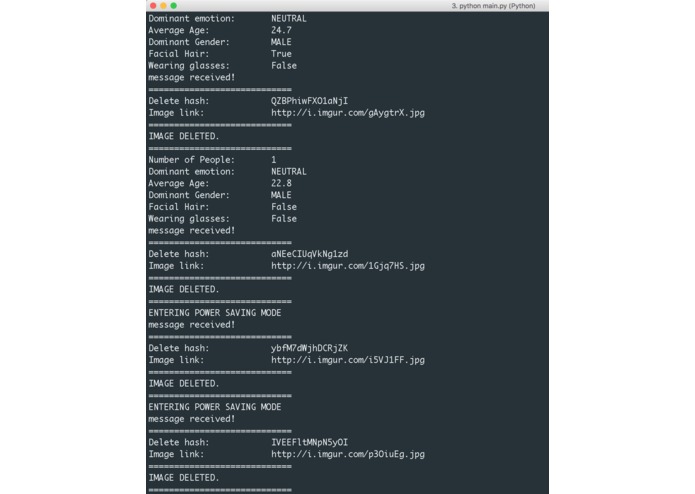
Console output for debugging
-
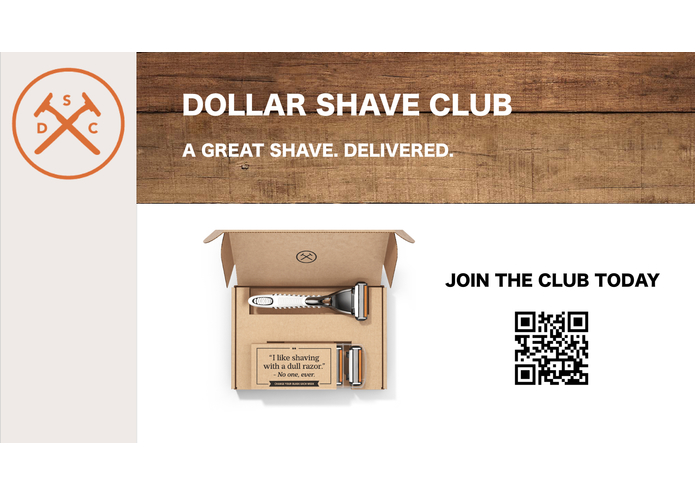
If I see beard from you, you'll probably get this ad
-

Oh no! You look sad. But don't worry, help is on the way!
-
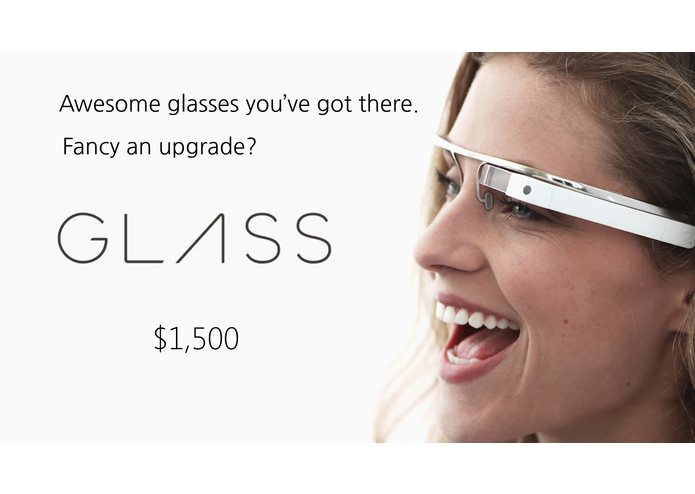
Oh are you wearing glasses? Time to go retro with Google Glass
-

Power saving mode to save energy :)
-

Ladies get female clothing ads
-

Gentlemen get male clothing ads


Inspiration
You see a TON of digital billboards at NYC Time Square. The problem is that a lot of these ads are irrelevant to many people. Toyota ads here, Dunkin' Donuts ads there; it doesn't really make sense.
What it does
I built an interactive billboard that does more refined and targeted advertising and storytelling; it displays different ads based on who you are (NSA 2.0?)
The billboard is equipped with a camera, which periodically samples the audience in front of it. Then, it passes the image to a series of computer vision algorithm (Thank you Microsoft Cognitive Services), which extracts several characteristics of the viewer.
In this prototype, the billboard analyzes the viewer's:
- Dominant emotion (from facial expression)
- Age
- Gender
- Eye-sight (detects glasses)
- Facial hair (just so that it can remind you that you need a shave)
- Number of people
And considers all of these factors to present with targeted ads.
As a bonus, the billboard saves energy by dimming the screen when there's nobody in front of the billboard! (go green!)
How I built it
Here is what happens step-by-step:
- Using OpenCV, billboard takes an image of the viewer (Python program)
- Billboard passes the image to two separate services (Microsoft Face API & Microsoft Emotion API) and gets the result
- Billboard analyzes the result and decides on which ads to serve (Python program)
- Finalized ads are sent to the Billboard front-end via Websocket
- Front-end contents are served from a local web server (Node.js server built with Express.js framework and Pug for front-end template engine)
- Repeat
Challenges I ran into
- Time constraint (I actually had this huge project due on Saturday midnight - my fault -, so I only had about 9 hours to build this. Also, I built this by myself without teammates)
- Putting many pieces of technology together, and ensuring consistency and robustness.
Accomplishments that I'm proud of
- I didn't think I'd be able to finish! It was my first solo hackathon, and it was much harder to stay motivated without teammates.
What's next for Interactive Time Square
- This prototype was built with off-the-shelf computer vision service from Microsoft, which limits the number of features for me to track. Training a custom convolutional neural network would let me track other relevant visual features (dominant color, which could let me infer the viewers' race - then along with the location of the Billboard and pre-knowledge of the demographics distribution, maybe I can infer the language spoken by the audience, then automatically serve ads with translated content) -
I know this sounds a bit controversial though. I hope this doesn't count as racial profiling...
Built With
- computer-vision
- express.js
- imgur
- machine-learning
- microsoft-api
- microsoft-cognitive-services
- node.js
- opencv
- pug
- python
- websockets


Log in or sign up for Devpost to join the conversation.