-
-
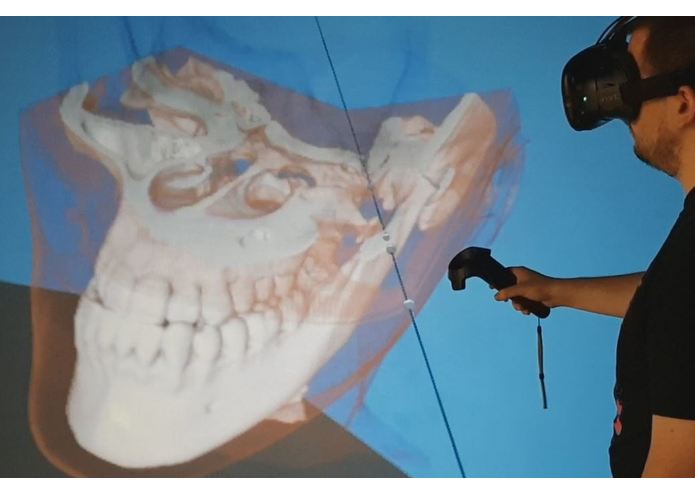
General view of the interaction is projected behind the user for demo purposes only.
-
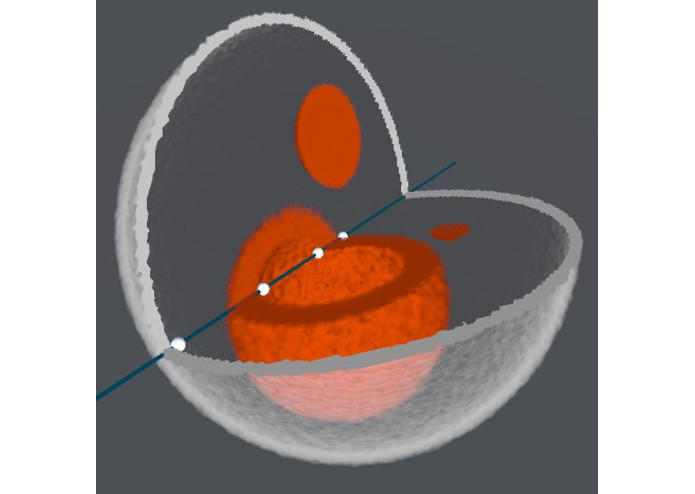
A view of a simple volumetric model and some points placed in the surfaces. Notice the semi-transparent section to explore the model.
-
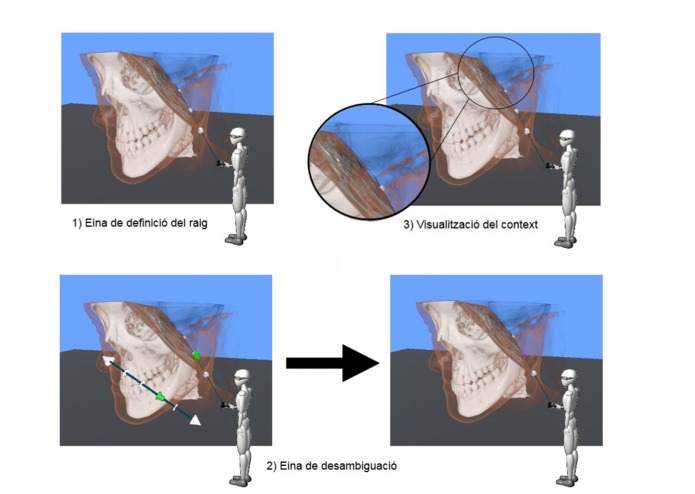
Components of the interaction.
-
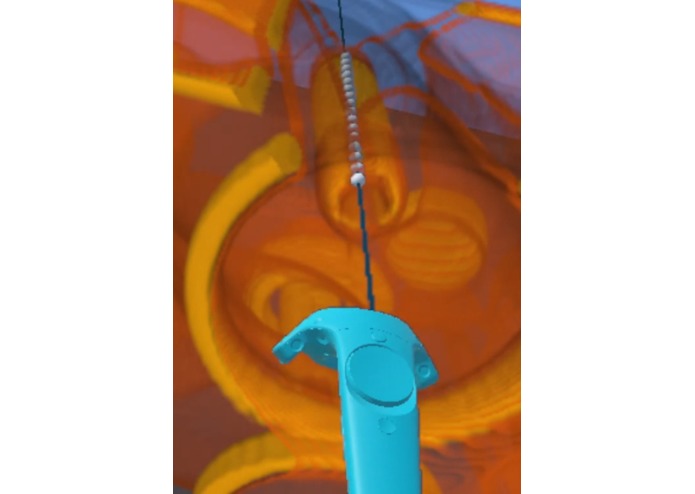
Precision mode to allow a more precise ray definition. The controller turns blue in this mode.
-
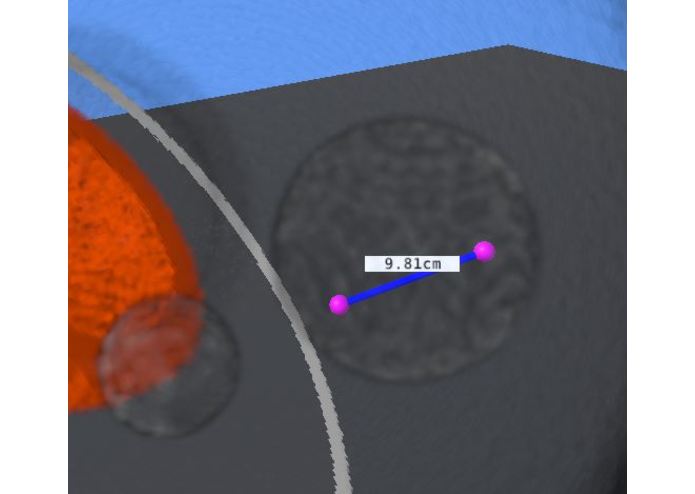
Calculating distances.
-
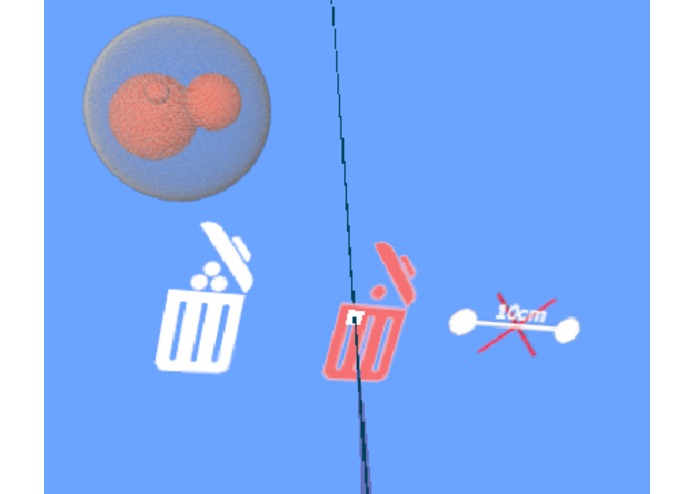
Virtual menu to erase points and to show or hide distances.
-
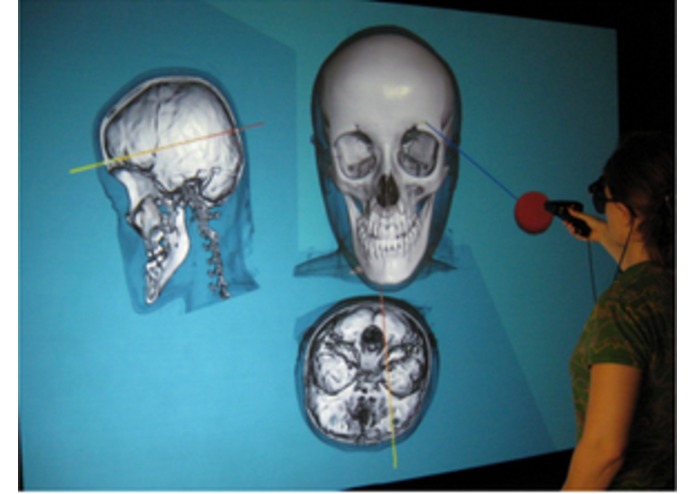
DAAPMed interaction technique, one of our inspirations.


Inspiration
This was my end-of-degree project, made in collaboration with the Visualització, Realitat Virtual i Interacció Gràfica (ViRVIG) research group inside Universitat Politècnica de Catalunya (UPC).
Interaction techniques that place points into the surfaces of volumetric models already exist for semi-immersive VR environments for medical purposes, but none exists for a totally immersive VR environment, like the HTC Vive. We created a new interaction technique for this specific VR environment, named Interaction for Point Selection in Immersive Environments for Medical models (IPSIEM), inspired by similar techniques in semi-immersive environments like the Data Aware Anchor Point selection for Medical models (DAAPMed).
What it does
The technique allows the user to place points and calculate distances in a precise and intuitive way. Using the HTC Vive controller, the user can define a ray that intersects a model and candidate points are placed in the intersection of the ray and the surfaces of the volumetric model. Next the user has to use the controller to select which of the candidate points is to be placed into the model. The user also has the possibility of erasing already placed points and showing or hiding the distances created between points.
How I built it
I built it mainly in Unity3D (so basically c#) but I also touched shaders (HLSL). The rendering of the volumetric models was already done in a previous project.
Challenges I ran into
Designing and implementing a good interaction from scratch in an environment I was not familiar with at the start (VR) proved to be difficult, but I am very satisfied with the end result.
Accomplishments that I'm proud of
This project received a 9.3 mark out of 10, a result which I am very proud of.
What I learned
I learned a lot about VR and good practices in interaction, as well as what kinds of problems you have to face when using VR interactions to do precise things.
What's next for the IPSIEM technique
This technique is going to be tested with the end user comunity (specialists in medicine) so that we can improve this techinque with their feedback and the results might get published in a graphics publication or conference.



Log in or sign up for Devpost to join the conversation.