-
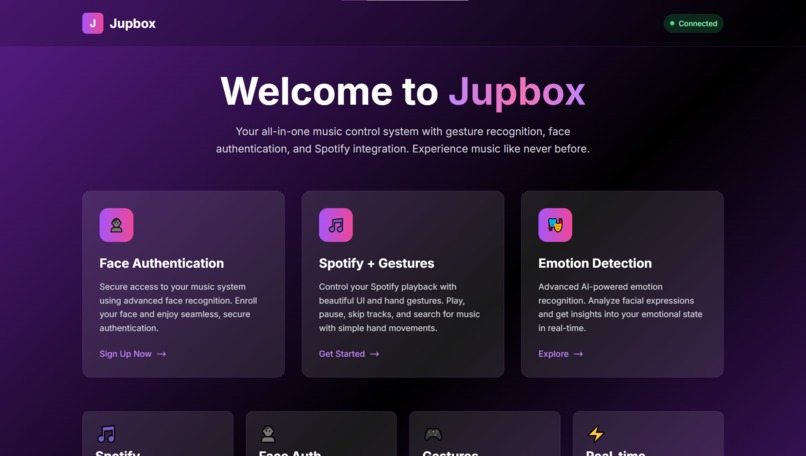
Landing page
-
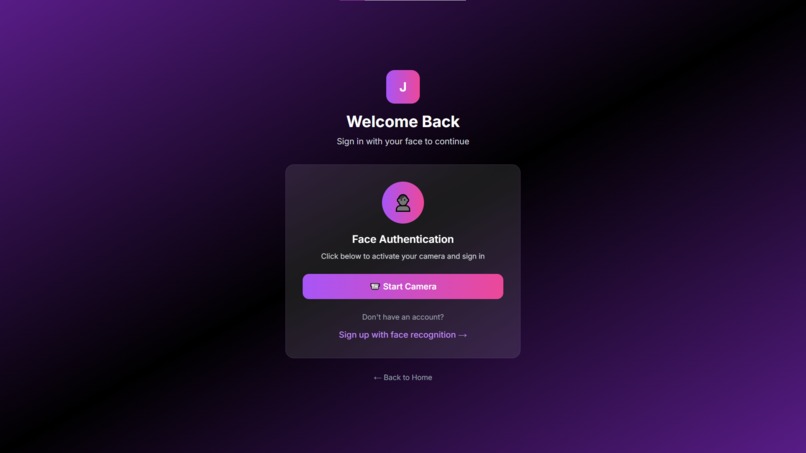
Sign-in prompt
-
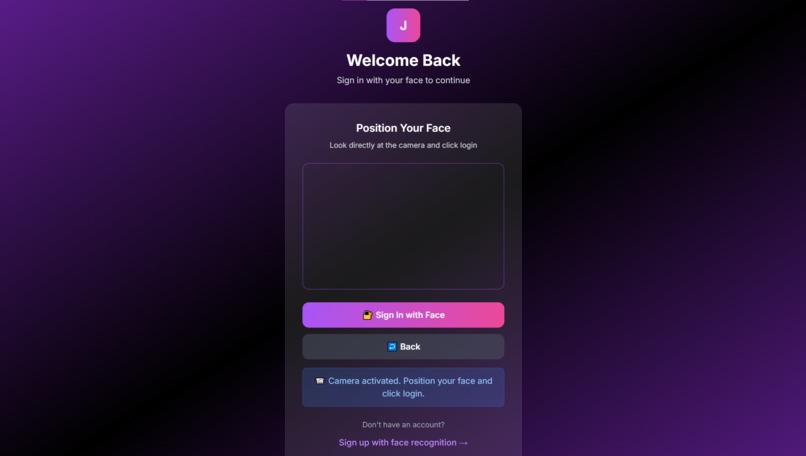
Sign-in page
-
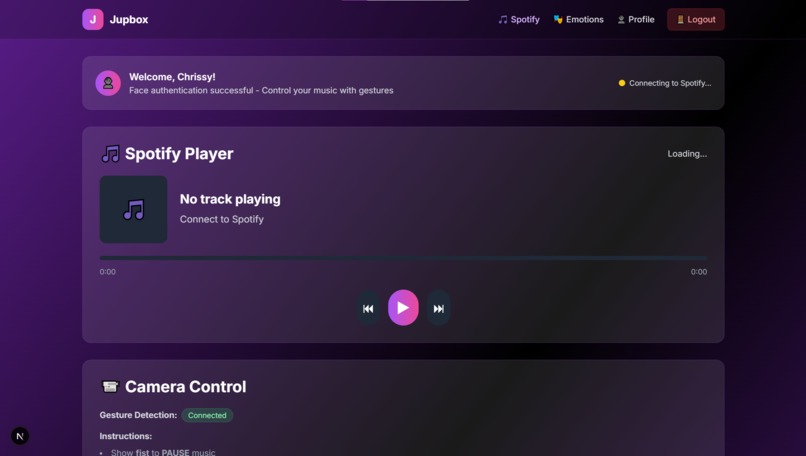
Dashboard
-
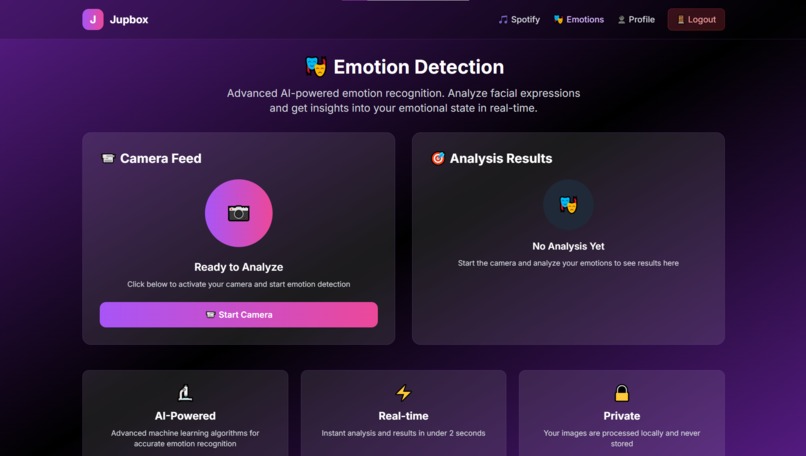
Emotions
-
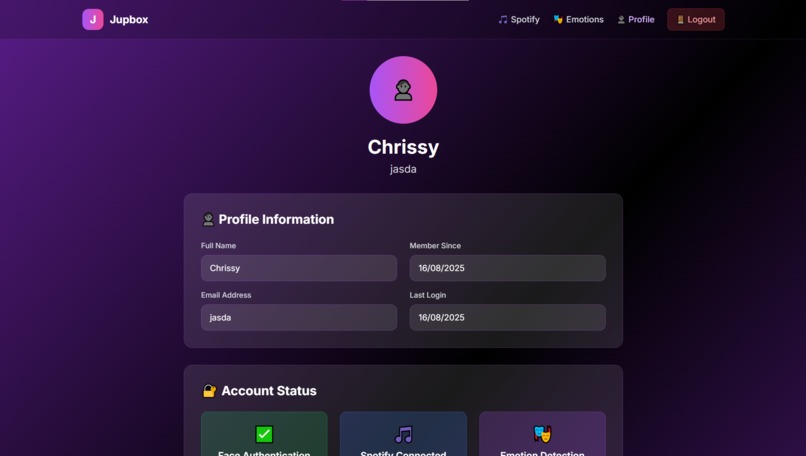
Profile


Inspiration
One of the hardest parts of hosting parties or events is knowing what music to play. Everyone has different tastes, and even the same person’s vibe changes throughout the night. Sometimes you want hype tracks, other times chill background music.
That’s what inspired us to build Jupbox, an AI-powered DJ that adapts to the people in the room. By reading faces, moods, and even objects around the party, it picks music that matches the collective vibe in real time. No more arguing over the aux cord.
What it does
- Recognizes faces to know who’s in the room
- Detects emotions and expressions to adjust playlists (happy → upbeat, tired → chill)
- Supports gesture controls (hand closed for pause, hand open for play)
- Blends multiple people’s tastes into a shared soundtrack
- Keeps a “Mood Map” of the event, showing how the music shifted with the crowd
- It’s like having a personal DJ that actually pays attention to everyone in the room
How we built it
- Roboflow for computer vision models → facial emotion recognition, hand gesture recognition.
- Face recognition APIs to identify individuals and personalize playlists.
- Spotify API to fetch and play music based on detected moods.
- Web app interface for live visualizations → showing who’s in the room, their mood, and what track is playing.
- Python + JavaScript for integrating the vision models with the music API in real time.
Challenges we ran into
- Training accurate models in a limited dataset/time window.
- Keeping the pipeline real-time without lag (video → recognition → song selection).
- Handling multiple people at once and deciding how to “blend” their moods.
- Making sure the app wasn’t just technically working, but also fun and engaging to demo.
Accomplishments that we're proud of
Building a working prototype in just 24 hours that reacts to faces, moods, and objects in real time.
What we learned
- How powerful Roboflow is for quickly training and deploying vision models without needing weeks of prep.
- That user experience matters as much as technical accuracy, the magic moment is seeing the music adapt instantly.
- The complexity of group personalization, combining multiple preferences is a fascinating challenge.
What's next for Jupbox
- Expanding beyond parties → classrooms, gyms, offices, even retail stores that want adaptive music.
- Integrating with more music services and better recommendation engines.
- Adding mood history features (e.g., a “Soundtrack of Your Night” recap).
- Improving personalization so Jupbox learns individual users’ music tastes over time.
- Packaging for edge devices (like a Raspberry Pi with a webcam) for portable, plug-and-play setups.


Log in or sign up for Devpost to join the conversation.