-
-
1
-
2
-
3
-
4
-
5
-
6
-
7
-

8
-
9
-
10
-
11
-

12
-
13
-
14
-
15
-
16
-
17
-
18
-
19


🌙 A Universal Problem
Every night, millions of families and groups of friends ask the same question:
"What are we watching tonight?"
According to Nielsen’s 2023 "State of Play" report, this isn’t just a feeling — it’s a measurable crisis:
🕰️ Viewers now spend over 10.5 minutes per session just deciding what to watch.
😩 1 in 5 people give up entirely, overwhelmed by too many choices.
This problem, already frustrating for an individual, becomes a major source of friction for families and groups.
What if technology could turn this moment of indecision into a moment of connection?
🟡 Kurius
One Choice. All In.
Because finding something to share shouldn't be a compromise. It should be a connection.
🤖 Powered by Qloo
Kurius is a cultural assistant that uses the Qloo Taste API to transform individual preferences into intelligent consensus.
It doesn’t settle for compromise; it finds the one story everyone will truly love.
🏂 My Story: From Cultural Mediation to Code
My background is in cultural mediation, working in underserved communities where the generational gap is a real challenge, and stories are often the last bridge still standing.
My first app, built during a previous hackathon, taught me how to work with an AI copilot.
Kurius, my second app, was a deliberate personal challenge:
Could I build a full-stack, cross-API mobile application in just three weeks, without a traditional development background, as a solo founder using only AI tools?
While exploring Qloo’s API, something clicked:
What if this technology could become one of my mediation tools?
That’s how Kurius was born. And everything you see — from the interface to the backend orchestration — was generated, assembled, and debugged using AI tools like Gemini, under my direction.
I wasn't the developer. I was the director.
🧪 How I Built It
I started with a detailed product brief and user flows, then used LLMs (Gemini, GPT-4) as my expert pair programmers.
I directed them to generate the full-stack code — from React Native components to the Supabase schemas and RLS policies.
This is a fully functional, custom-coded application, built entirely through AI orchestration, under human supervision.
💡 What It Does
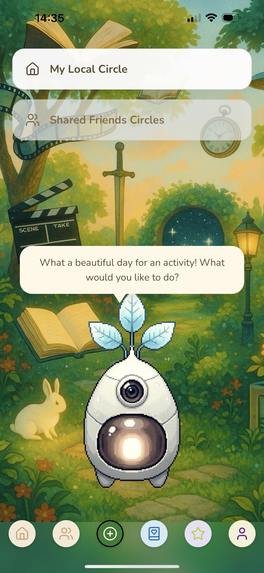
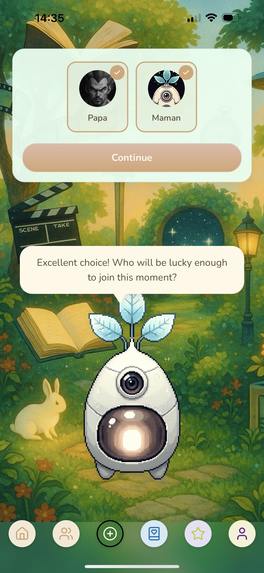
Kurius is a mobile cultural cocoon that helps families and friends find the perfect movie, series, or book to enjoy together.
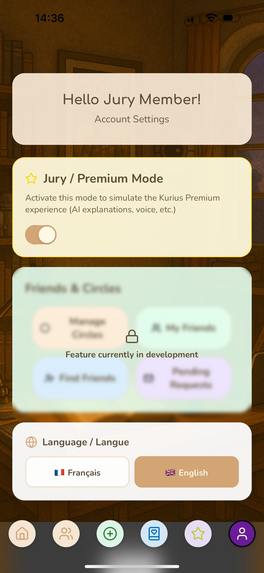
For the full demo experience, you can either create an account, or use the ‘Jury Mode’ login to instantly unlock all Premium features.
Step 1: A Conversation, Not a Form
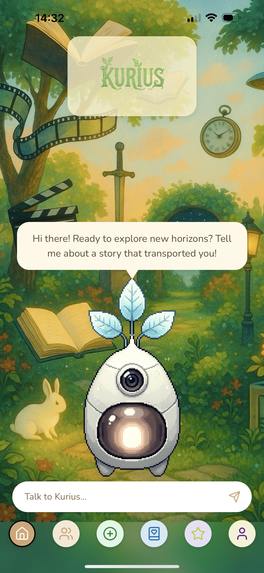
Chat with Kurius on the home screen.
As you talk about your favorite stories, Kurius uses the Qloo API in the background to instantly convert each title into rich taste vectors, mapping your cultural DNA.
Step 2: Map Your Cultural DNA
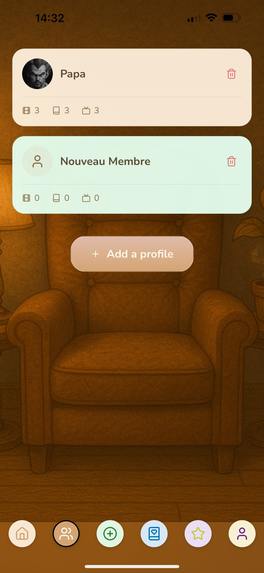
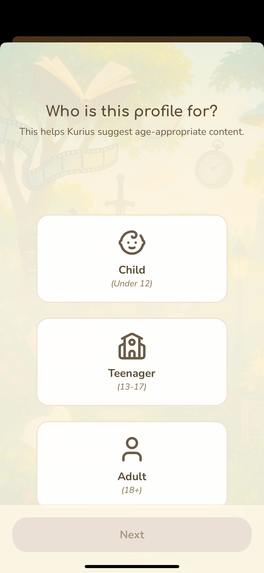
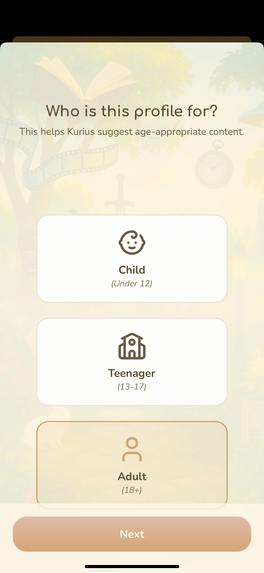
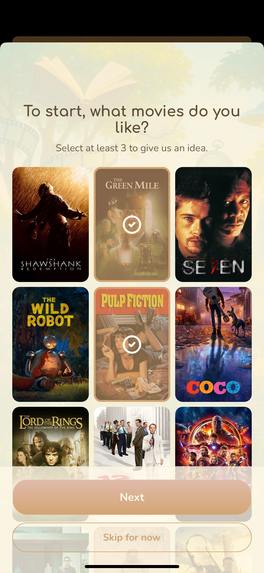
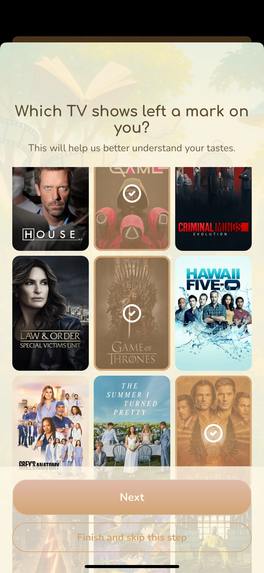
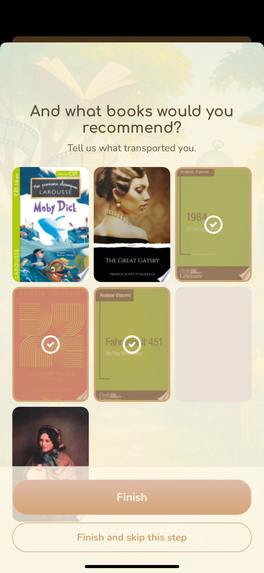
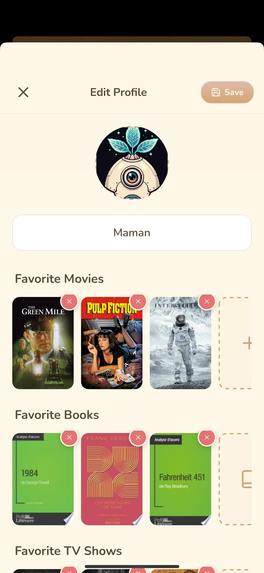
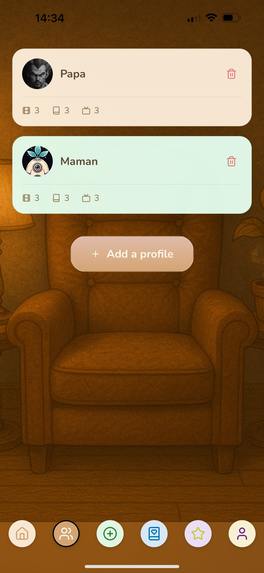
Create a profile for each member using our Taste Wizard.
- The Wizard suggests popular titles to start with.
- You can then customize each profile by adding specific works from any category.
- Each entry links to a unique Qloo entity ID, refining the taste model.
Users can also explicitly dislike works (thumbs-down); this contributes to a negative taste profile, allowing Qloo to avoid bad matches and improve consensus.
Step 3: Find Common Ground with Qloo
This is where the Qloo magic happens.
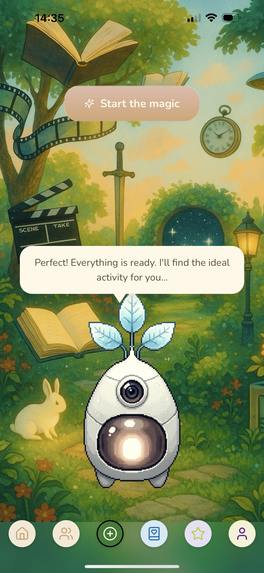
Kurius sends the group’s cultural DNA to the Qloo API, which acts as our consensus engine.
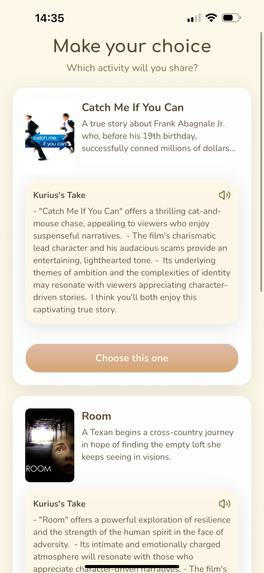
It analyzes cross-category affinities between movies, series, and books, and returns three culturally-aligned suggestions that will resonate with everyone.
Step 4: Bring Recommendations to Life with AI
Each suggestion is enriched with a Gemini-generated explanation.
Tap the Kurius avatar to hear the pitch read aloud, using its signature ElevenLabs voice.
Step 5: Take Action
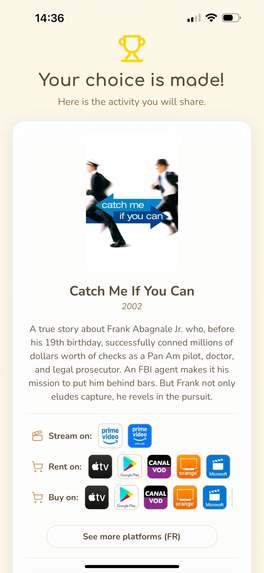
Each result comes with geo-localized smart links to watch, read, or buy the selected story.
💡 Why Qloo Was the Perfect Match
Qloo doesn’t just return recommendations; it maps culture.
Their vector-based taste graph is uniquely capable of understanding cross-domain relationships:
- A user’s love for a book can influence their film matches.
- A group's shared dislike of horror informs every suggestion.
This deep understanding of taste as a system, not a tag, is what made Qloo the ideal foundation for Kurius.
🧰 Tech Stack
- React Native (Expo, TypeScript)
- Supabase (PostgreSQL, Auth, Edge Functions)
- Qloo API (Taste Modeling & Consensus Engine)
- Gemini (AI Commentary)
- ElevenLabs (Voice Synthesis)
- TMDb & Google Books (Metadata sources)
📚 What I Learned
- Strong product vision + smart AI use = working product
- Emotional design matters just as much as technical correctness
- Bugs teach architecture: I now understand full-stack flows from UX to RLS
🧩 Challenges I Ran Into
⚙️ LLM Availability and Fallback Design
While Gemini generally performed well in generating group-specific explanations, I occasionally encountered slowdowns or timeouts — especially during peak usage hours or when the API was under heavy load.
Rather than breaking the flow, I designed the interface to degrade gracefully:
If Gemini failed to respond in time, Kurius remained usable.
The avatar would simply inform the user that “the voice of Kurius is resting,” encouraging them to try again later.
For production, this will be reinforced with:
- Retry logic & async queueing
- A proxy fallback system (e.g., serverless functions)
- Optional cached responses for common group profiles
This limitation didn’t block the hackathon delivery, but it’s a real-world challenge that every LLM-integrated product must face — and I learned to work with it instead of against it.
💰 Business Model
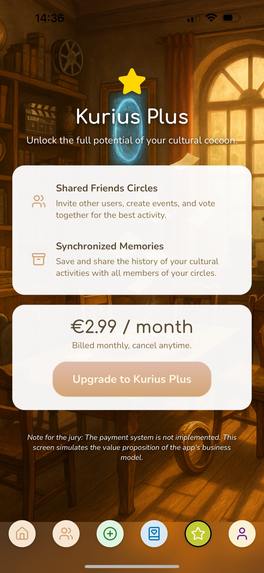
Kurius follows a Freemium model:
| Kurius Free 🤚 | Kurius Premium ✨ ($2.99/month) |
|---|---|
| Local-only profiles | Friend Circles (remote taste voting) |
| 1 of 3 AI explanations | All Gemini explanations unlocked |
| Voice disabled | ElevenLabs voice enabled |
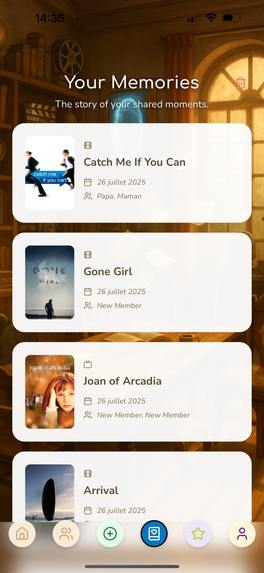
| Shared Memory Archive |
Kurius Insights (Coming Soon)
Every group decision on Kurius is logged as an anonymized "cultural consensus snapshot" — capturing which story a multi-profile group actually chose, along with basic demographics (e.g. age brackets). This forms a unique, GDPR-compliant dataset that reveals what types of content unite different generations and tastes.
We plan to monetize these insights by offering:
- Custom reports (e.g. “Top 50 consensus picks by age mix”),
- Access to a B2B API for streaming platforms, publishers, and cultural institutions seeking to optimize for shared viewing or cross-demographic engagement.
This transforms Kurius into both a consumer product and a cultural intelligence engine.
📈 Financial Projections
Based on a modest 1.5–2.5% conversion rate:
| Users | Premium Users | MRR ($) | Annual Revenue ($) |
|---|---|---|---|
| 50,000 | 750 | 2,242 | 20,610 |
| 500,000 | 10,000 | 29,900 | 274,800 |
| 5,000,000 | 125,000 | 373,750 | 3,435,000 |
🔮 What’s Next
Short-Term:
- Official launch on iOS / Android
- Finalize Friend Circles UX
- Add more cultural verticals (podcasts, games)
- Streamline onboarding for even faster profile setup
Mid-Term:
- Deploy Kurius in real-life workshops: libraries, youth centers, intergenerational events
Long-Term:
- Launch Kurius Insights
- Grow user base to become the reference platform for cultural consensus
Kurius doesn’t just recommend.
It reconnects.
🧾 Attachments for Judges
📄 Technical Briefs: The Kurius Insights Data Creation Algorithm - Qloo API Integration in Kurius
(uploaded separately as Technical Briefs_ The Kurius Insights Data Creation Algorithm - Qloo API Integration in Kurius.pdf)
Built With
- bolt
- elevenlabs
- gemini
- gpt
- qloo
- react-native
- tmdb


Log in or sign up for Devpost to join the conversation.