-
-
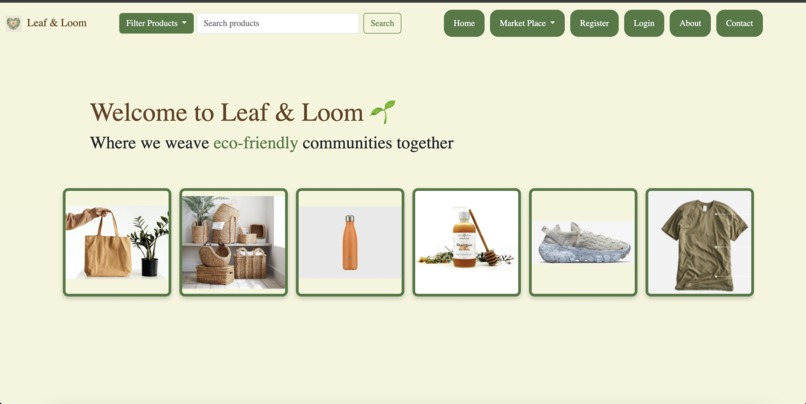
Leaf & Loom

Inspiration
With the rise of fast fashion brands like Shein and Fashion Nova, which have a significant negative impact on the environment, we aim to provide an eco-friendly alternative. Our goal is to create a platform modeled after Facebook Marketplace, offering sustainable fashion options for conscious consumers.
What it does
An eco-friendly market place where buyers and sellers are able to register and log in to make a profile where they are able to add products in the market place and purchase goods.
How we built it
We built the platform using Django as the web framework, with an SQL database to securely manage user logins. For the front-end design and user interface, we utilized HTML and CSS to create a responsive and user-friendly experience.
Challenges we ran into
We encountered merge conflicts in Git while pushing new features, and also faced styling challenges due to the lack of adherence to conventional CSS practices. However, we overcame these challenges and learned a lot more about Git and CSS in the process.
Accomplishments that we're proud of
We've developed a fully functional marketplace where users can purchase goods, and sellers can create accounts to list and sell their products.
What we learned
We gained valuable experience in effectively using the Django framework, styling with HTML and CSS, and collaborating efficiently as a team.
What's next for Leaf and Loom
In the future, we plan to incorporate artificial intelligence to assess how environmentally friendly sellers' products are, using this data to highlight sustainable sellers on our marketplace. Additionally, machine learning will help us predict buyer preferences based on past purchases, allowing us to create personalized feeds tailored to each user.


Log in or sign up for Devpost to join the conversation.