-
-
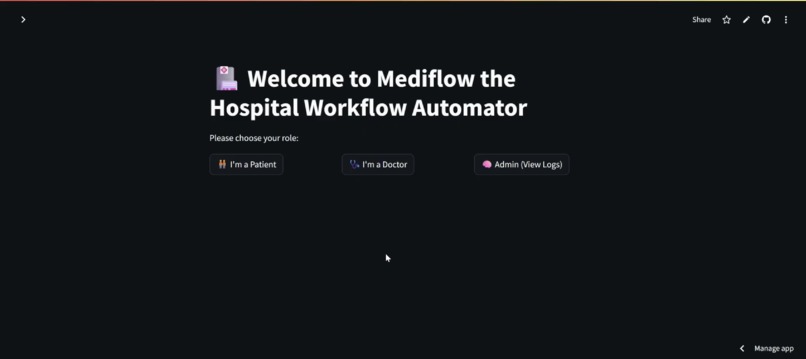
Homepage
-
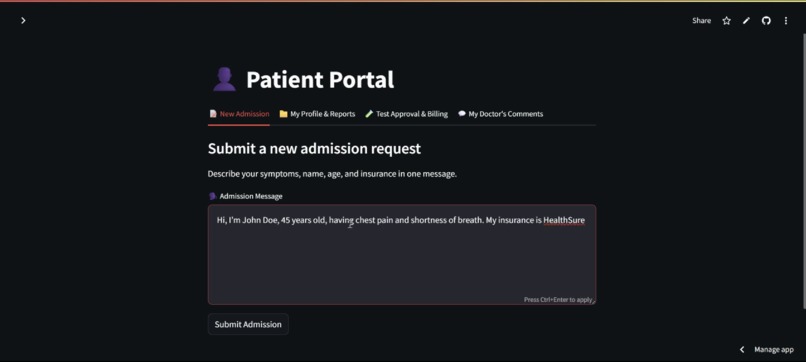
Patient admission portal
-
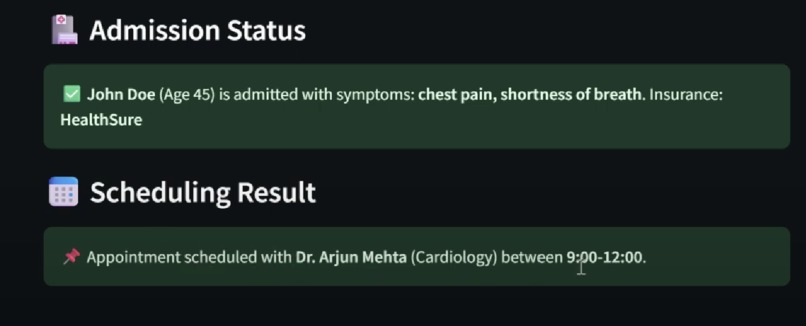
Successful appointment scheduled
-
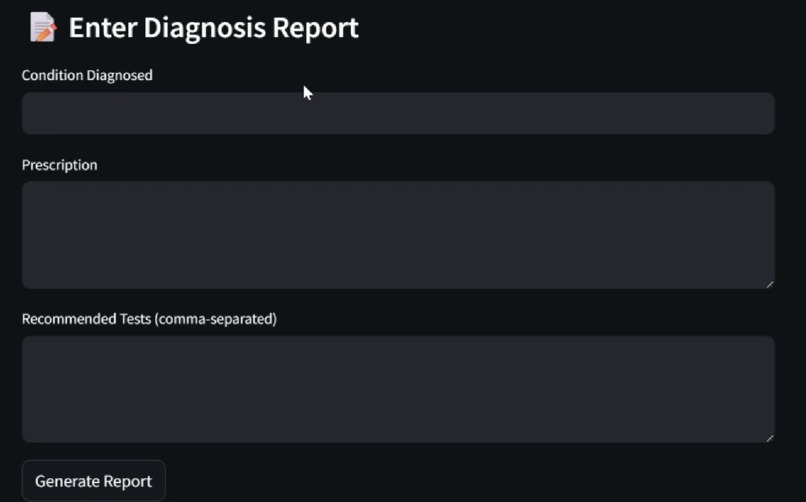
Doctor dashboard
-
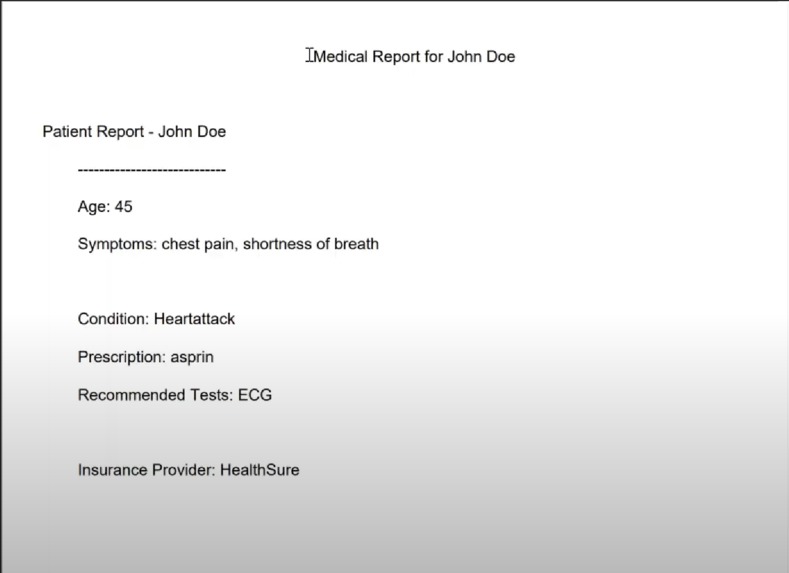
Doctors report pdf
-
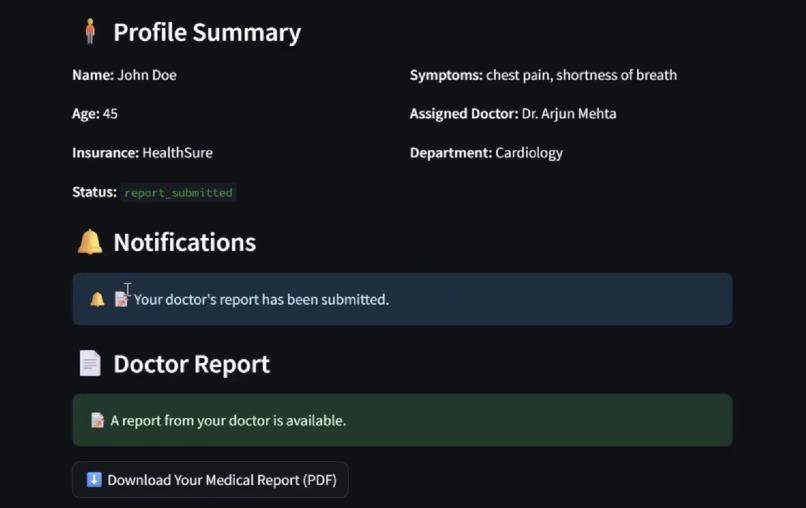
Profile Summary
-
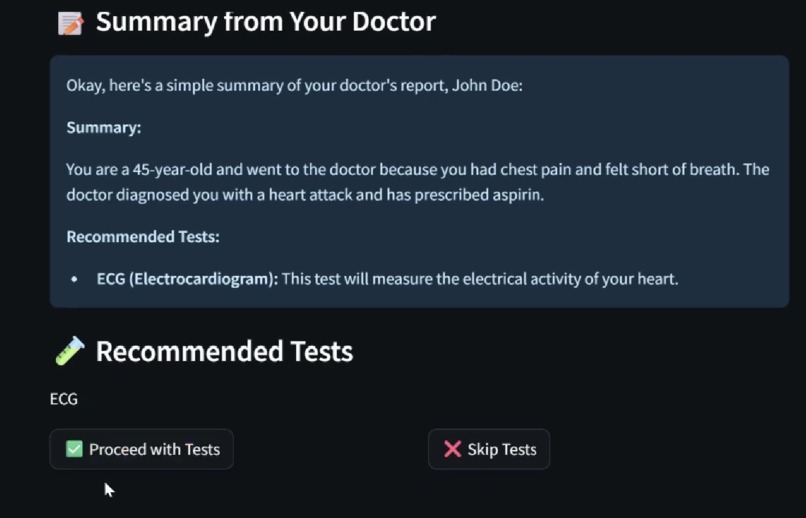
Report Summary
-
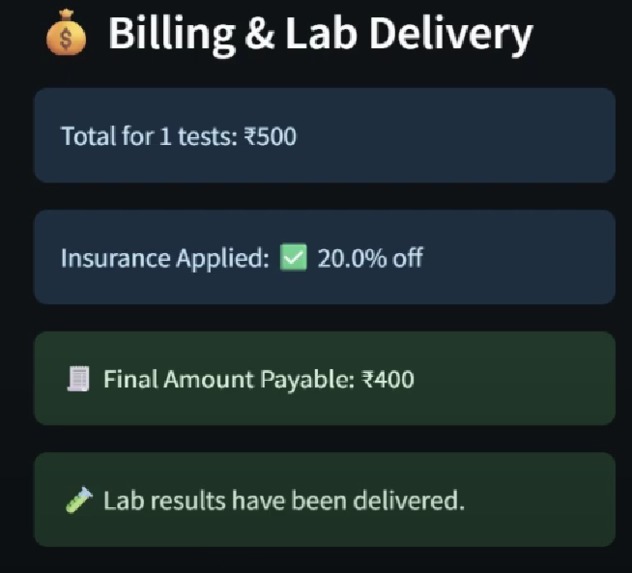
Billing Confirmation
-
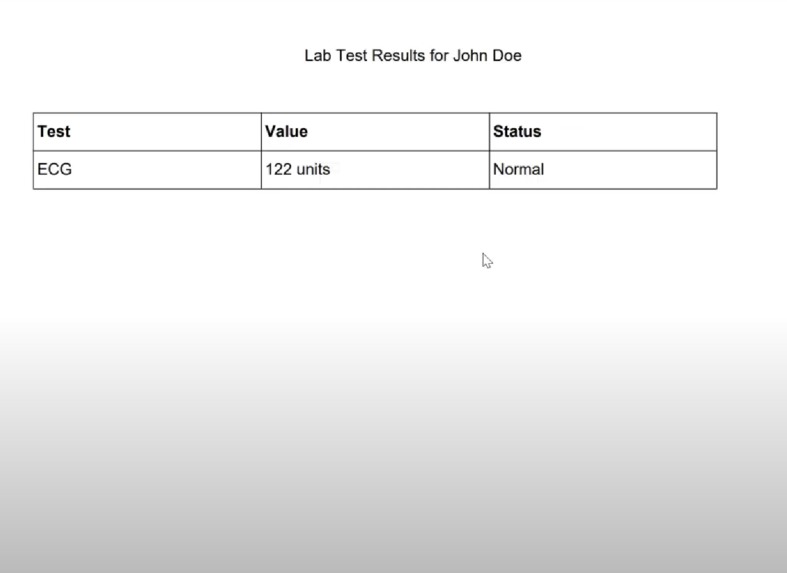
Generated Lab Report pdf
-
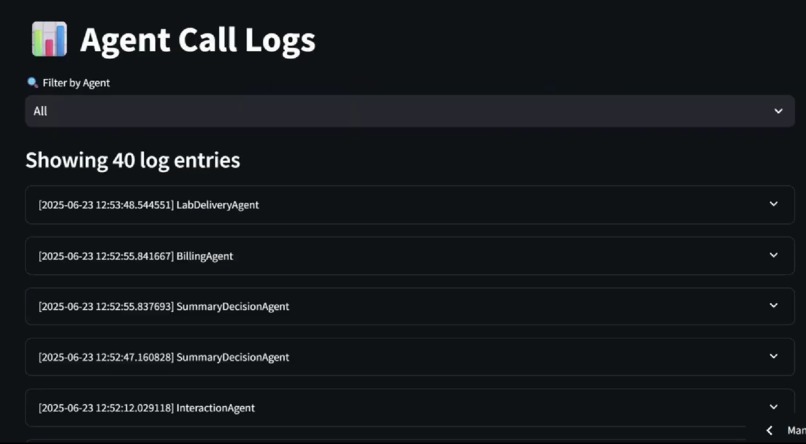
Agent Call Logs
-
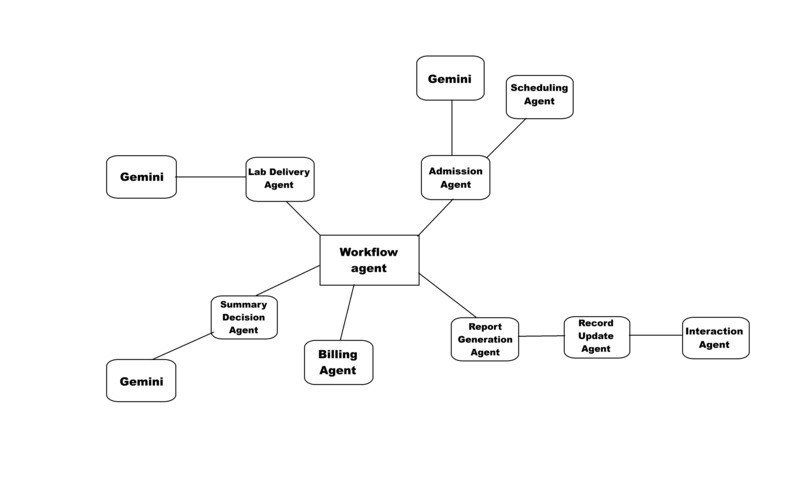
Agent Architecture


Inspiration
The theme we've chosen for the hackathon is automation of complex processes, As individuals deeply interested in healthcare and AI, We've always wondered why hospital systems remain so fragmented. Whether it's repetitive admissions, scattered test reports, or the agony of waiting for updates, inefficiencies add up. That's when we decided to build MediFlow - an end-to-end hospital workflow automation system powered by Google's Agent Development Kit (ADK) and Gemini. Our goal? Build a working multi-agent hospital system that can admit patients, match them to doctors, manage diagnosis reports, generate lab results, and notify patients - all automatically.
What it does
MediFlow automates a hospital's workflow using intelligent agents:
- Admits patients via natural language input
- Schedules doctor appointments
- Generates diagnosis reports
- Handles billing and insurance-based discounts
- Approves and delivers lab test results with Gemini-generated summaries
- Notifies patients and doctors, with downloadable PDF reports
Both patients and doctors interact via a clean Streamlit interface with role-based tabs.
How we built it
- Google Agent Development Kit (ADK) for building modular agents
- Gemini 2.0 Flash for parsing admission messages and generating lab summaries
- Streamlit for the interactive frontend
- Pandas for doctor-patient matching
- FPDF + BytesIO for generating downloadable PDF reports
- JSON files used as lightweight DBs
- dotenv for handling API keys securely (during development)
We built 10+ agents like admission_agent, scheduling_agent, report_generation_agent, and a workflow_agent to coordinate them all.
Challenges we ran into
- ADK Integration: Understanding how Agent.run() chaining works took trial and error.
- PDF Encoding Issues: Handling .output(dest="S") and BytesIO() for Streamlit downloads caused bugs.
- Pathing Errors: Streamlit Cloud required switching from absolute Windows paths to relative ones.
- State Syncing: Managing patient status (e.g., skipped tests) in JSON files across multiple agents needed careful coordination.
- API Key Management: Balancing secure .env usage locally and simple deployment via Streamlit Cloud was tricky.
Accomplishments that we're proud of
- Built a working multi-agent healthcare automation system
- Successfully integrated Gemini LLM for intelligent lab summaries
- Designed a clean Streamlit UI with real-time updates, doctor and patient dashboards
- Achieved full end-to-end automation: from patient admission to test report delivery
What we learned
- How to architect and orchestrate multiple agents using Google ADK
- Effective use of LLMs like Gemini in real-world data processing tasks
- Deploying Streamlit apps to the cloud and handling file compatibility
- The power of modular automation in healthcare and beyond
What's next for Medi-Flow
- Move to a secure backend (e.g., Firebase or Firestore)
- Add EHR integration and appointment calendar syncing
- Expand Gemini use for diagnostic suggestions
- Add nurse/assistant roles and multi-user authentication
- Deploy in real hospitals as a proof of concept
The team
Ananya Gupta, Akshat Shende Asia pacific region
Built With
- adk
- bytesio
- fpdf
- gemini
- google-cloud
- json
- pandas
- python
- streamlit
- vertex-ai
- visual-studio


Log in or sign up for Devpost to join the conversation.