-
-
-
-
-
AI used


MemoryLens
What It Does
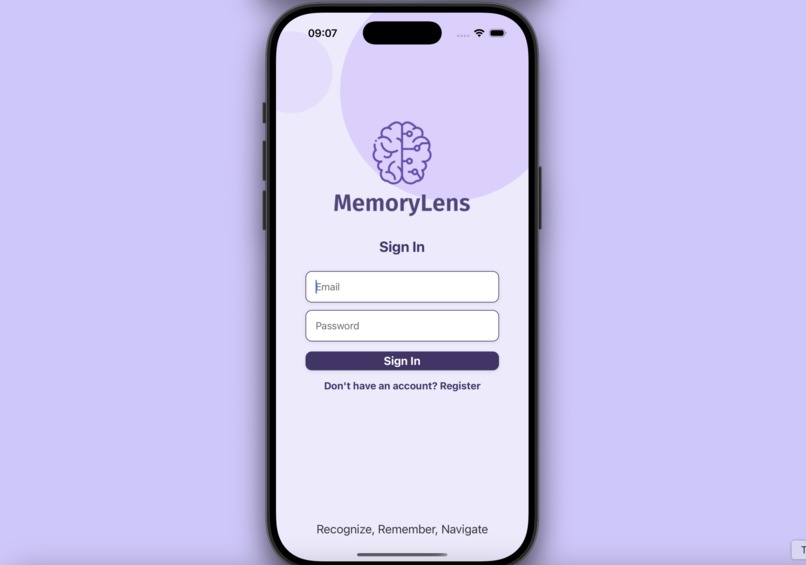
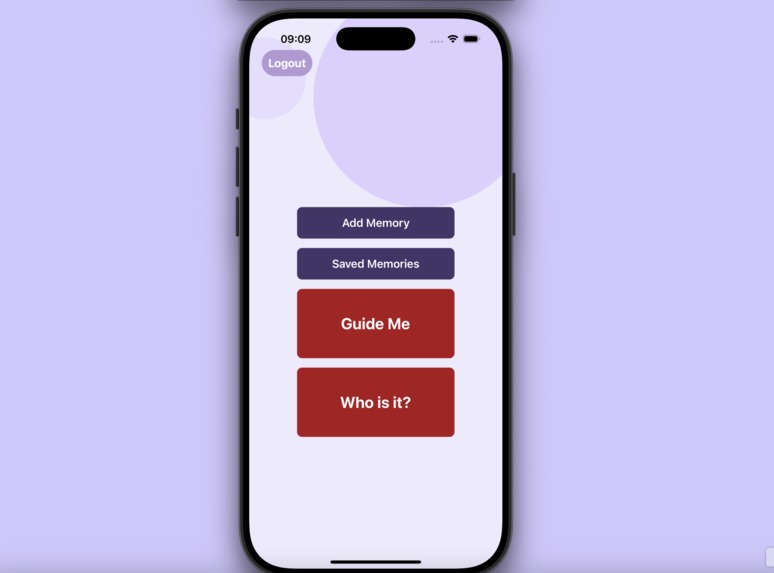
MemoryLens is a mobile application designed to assist Alzheimer’s patients in recognizing people, places, and objects through an AI-powered augmented reality (AR) system. The app allows users to store virtual memories, annotate them with labels and notes, and retrieve them using real-time object and face recognition. It enhances autonomy, reduces caregiver burden, and helps users maintain connections with their surroundings.
Technology Stack
- Frontend: React Native (Expo) for cross-platform development.
- Authentication: Auth0 for secure user authentication and session management.
- Database: Firestore for real-time data storage and retrieval.
- Storage: Firebase Storage and Cloudinary for storing images and voice notes.
- Face Recognition: FaceNet for identifying individuals.
- Object Recognition: YOLOv8 for detecting and labeling user-specified objects.
- Augmented Reality: ViroReact for real-time AR overlays.
How We Built It
User Authentication and Data Management
- Auth0 Integration – Secure authentication to manage user sessions.
- Firestore Database – Stores user profiles and memory data for seamless retrieval.
- Firebase Storage – Used for storing images and voice notes uploaded by users.
- Cloudinary Integration – Optimized image storage and transformations.
Memory Storage & Retrieval System
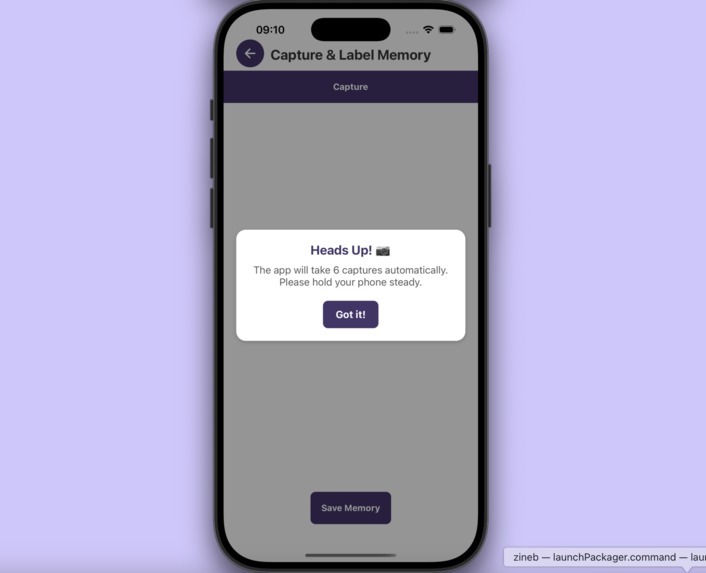
- Upload Virtual Memories – Users can store images of people, objects, or places.
- Add Labels & Notes – Users can annotate their memories for future reference.
- Retrieve Past Interactions – When an object or face is recognized, the app displays previous interactions in AR.
- Voice Playback – Users can record and replay voice notes tied to saved memories.
Real-Time Recognition & AR Integration
- Face Recognition (FaceNet Model)
- Allows users to identify a person when they forget who they are.
Uses a “Who is this?” button for instant identification.
- Stores face embeddings in Firestore for personalized recognition.
Object Recognition (YOLOv8 for Personalized Recognition)
- Users can manually label objects for personalized object recognition.
YOLOv8 enables training custom object detection models for user-specific items.
Real-Time AR Integration (ViroReact)
- Users can scan objects and view saved labels directly in AR.
- Recognized objects trigger overlay labels and voice playback.
Location Recognition ("Where am I?")
- Helps users recognize where they are in their home.
- Uses object positioning and prior labeled data for room identification.
AI-Powered Personalization
- Manual Annotation System
- Users can train YOLOv8 to recognize specific objects they frequently forget.
- User-Trained Object Models – Users can store their trained models for future use.
Challenges We Ran Into
- AI Model Integration:
- Faced difficulties in achieving accurate face recognition without a sufficient number of labeled images.
- AR Overlay & Navigation:
- Ensuring AR labels remained correctly anchored to moving objects posed a significant challenge. complicating development.
- Performance & Latency:
- Experienced variability in Firebase Firestore's syncing speed, impacting data retrieval times.
Accomplishments That We're Proud Of
Optimized AI Integration
- Successfully implemented pre-trained AI models, reducing development time.
- Developed an efficient fallback system prompting users to label unidentified items.
- Integrated image compression to enhance processing speed and reduce latency.
Enhanced User Experience
- Designed a UI with intuitive navigation and accessibility features.
- Developed real-time voice prompts to assist users when interacting with stored memories.
- Implemented a personalized training system, allowing users to refine object recognition accuracy.
What's Next for MemoryLens:
- Advanced AR Features:
- Plan to implement more sophisticated AR overlays and navigation aids to enhance user interaction.
- Expanded Database:
- Aim to increase the repository of labeled images to improve recognition accuracy and broaden the app's applicability.
- Performance Optimization:
- Intend to further refine image processing and API interaction to reduce latency and improve user experience.
- User Feedback Integration:
- Commit to actively gathering user feedback to inform future updates and ensure the app continues to meet user needs effectively.
Built With
- firebase
- javascript
- react-native
- viroreact
- yolov8


Log in or sign up for Devpost to join the conversation.