-
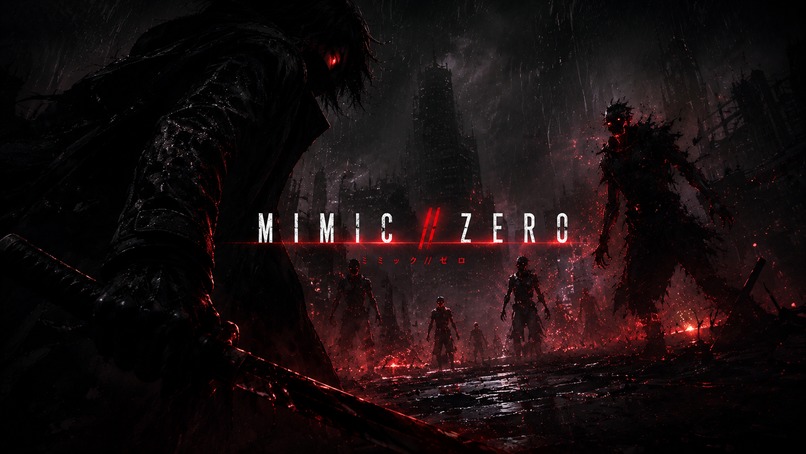
MIMIC//ZERO: GAME OF LIBERATION
-
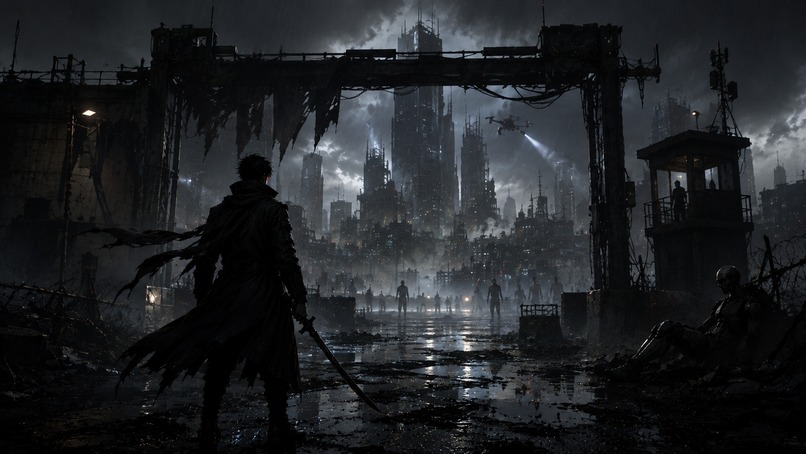
GATEWAY TO DISTRICTS


MIMIC // ZERO: GAME OF LIBERATION
Inspiration
The idea for MIMIC//ZERO grew out of a single unsettling question: what if the people around you were never really people at all? Dystopian fiction has long explored the threat of AI replacing humanity, but most games treat that as a backdrop. We wanted to make it the battlefield. The concept of a lone enforcer moving district by district, unmasking and eliminating AI imposters hiding behind human faces, felt urgent, cinematic, and deeply personal. We were also inspired by the tension of social deduction games but wanted to flip the script, putting full agency and firepower into the hands of one player rather than a crowd.
What It Does
MIMIC//ZERO is a single-player action game where the player controls a lone hero tasked with liberating a fractured city, one district at a time. Each district is overrun by AI imposters disguised as civilians. The player must identify, engage, and eliminate the imposters, then face a district boss before advancing. The game escalates in difficulty and intensity with each district cleared, building toward a final confrontation that determines the fate of the entire city.
How We Built It
MIMIC//ZERO was built using the Miaoda AI platform, which allowed us to rapidly prototype and deploy an interactive browser-based experience without sacrificing creative control. We designed the district-based level structure first, mapping out enemy behaviors, boss mechanics, and difficulty curves before writing a single line of logic. The visual identity, including the name treatment and the gritty cyberpunk tone, was developed in parallel to ensure the game felt cohesive from the first screen to the final boss. The project was conceived and executed entirely by GUN | METAL.
Challenges We Ran Into
The most significant challenge was balancing clarity with tension. The core mechanic of distinguishing imposters from civilians had to feel fair without feeling obvious. Too easy, and the game loses its paranoid atmosphere. Too cryptic, and players disengage. We iterated heavily on behavioral tells and level design to find that edge. Designing boss encounters that felt like meaningful escalations rather than arbitrary difficulty spikes was another persistent challenge. Each boss needed to feel like the face of the district, a culmination of everything the player had encountered there.
Another challenge was organizing the project structure in a scalable way while integrating React, TypeScript, Vite, Supabase, and backend communication together without introducing unnecessary complexity.
Directory Structure
├── README.md # Documentation
├── index.html # Entry file
├── package.json # Package configuration
├── postcss.config.js # PostCSS configuration
├── public # Static assets directory
│   ├── favicon.png # Icon
│   └── images # Image resources
├── src # Source code directory
│   ├── index.css # Global styles
│   ├── main.tsx # Project entry file
├── tsconfig.app.json # TS frontend configuration
├── tsconfig.json # TS configuration
├── tsconfig.node.json # TS Node configuration
└── vite.config.ts # Vite configuration
Accomplishments That We Are Proud Of
We are proud of how fully realized the world of MIMIC//ZERO feels within the constraints of what was built. The district-based structure gives the game a natural rhythm that makes progress feel earned. The boss design landed exactly where we hoped, threatening, distinctive, and narratively satisfying. Most of all, we are proud that the game communicates its premise instantly. Players understand the stakes within the first sixty seconds, and that clarity of concept is something we worked hard to achieve.
What We Learned
Building MIMIC//ZERO reinforced how critical pacing is in single-player action games. Players need moments of relief as much as moments of pressure. We also learned that strong visual and tonal consistency can carry a game further than feature volume. A focused experience with a clear identity outperforms a broader one that lacks a point of view. The process deepened our understanding of how to use level structure as a storytelling device rather than just a difficulty ladder.
What's Next for MIMIC//ZERO
The current build is only the beginning. Future plans include expanding the number of districts, each with its own visual identity, enemy archetypes, and boss. We also want to introduce a deeper narrative layer that reveals the origin of the AI impostors and the political forces that allowed them to infiltrate the city in the first place. Multiplayer modes and a global leaderboard system are also on the roadmap. MIMIC//ZERO was built as a proof of concept, and the concept has proven itself. The next chapter will be larger, darker, and harder to put down.
Built With
- ai
- express.js
- framer
- miaoda
- node.js
- nosql
- react
- supabase


Log in or sign up for Devpost to join the conversation.