-
-
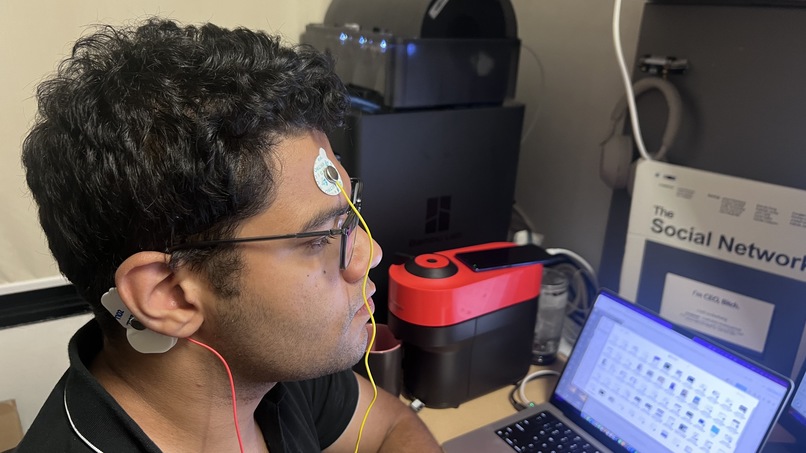
Placement of Electrodes on your head
-
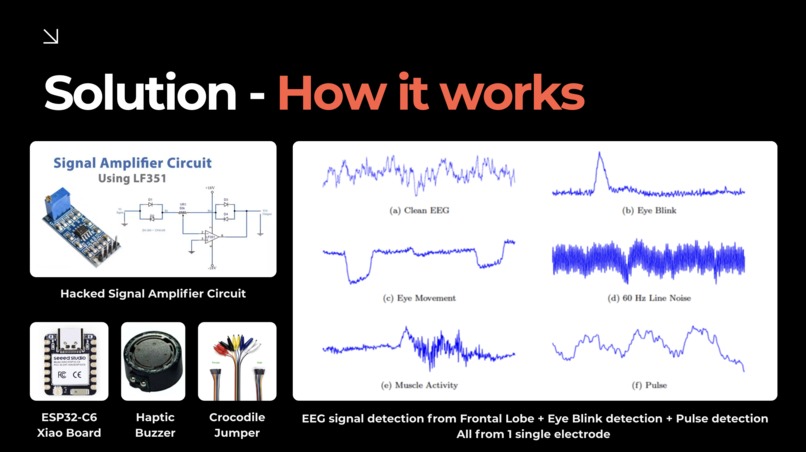
Our Solution
-
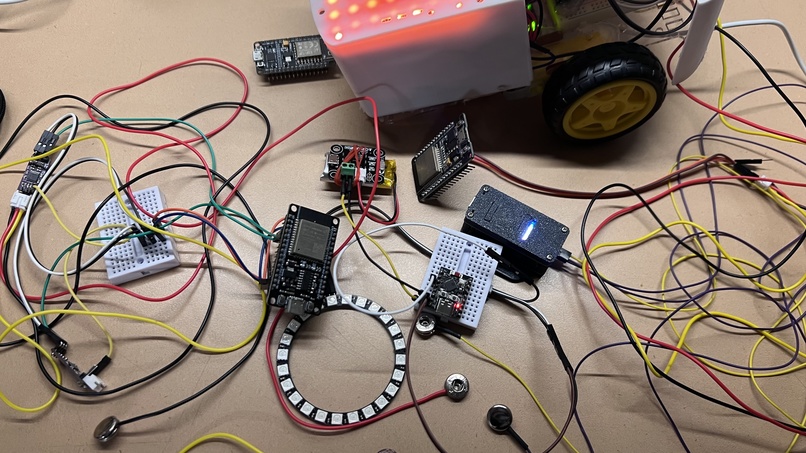
Our beautiful hardware !
-
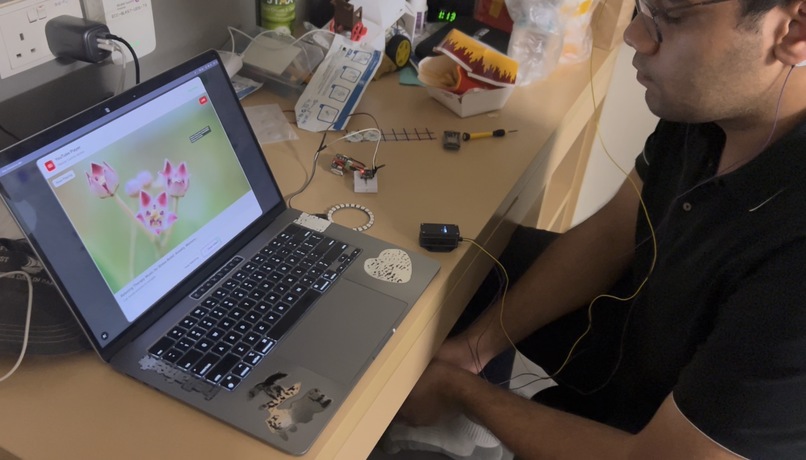
Controlling what video to watch with your brain
-
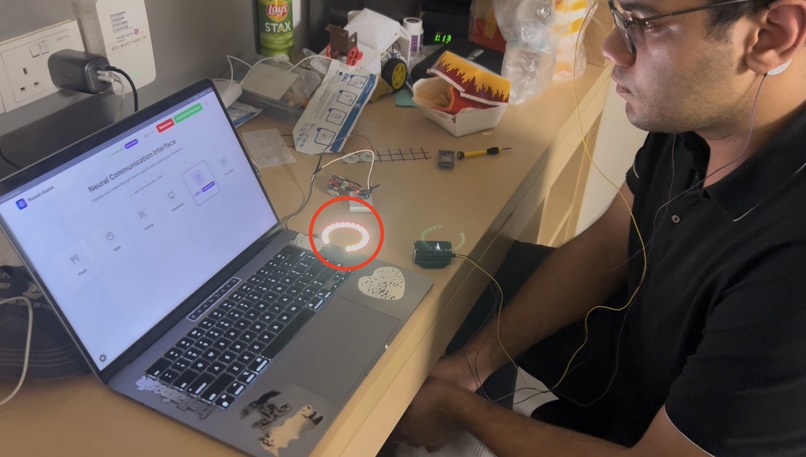
Controlling a Light with your brain
-
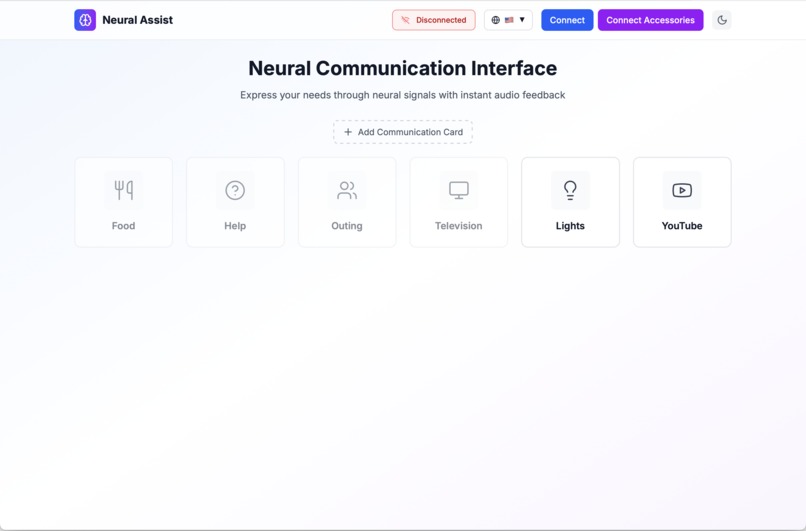
User Interface for Neural Assist


Inspiration
The idea for Neural Assist emerged from a heartbreaking observation: watching our grandparents, once fiercely independent, gradually lose control over the simplest aspects of their daily lives. In Singapore, 500,000+ elderly citizens currently need daily assistance, and with our nation becoming super-aged by 2026, this crisis demands immediate action.
We recalled our close friend's grandfather in a nursing home waiting 20 minutes just to adjust his bed position of his liking and comfort. His eyes conveyed a mix of frustration and hopeless that no one should have to feel. It was then we knew this problem was real enough for us to fix.
What it does
Neural Assist is a neuro headband that translates brain signals into actions, allowing elderly users to control their environment using thought and blinks. No voice commands needed when your throat is dry. No buttons to fumble for with arthritic hands. Just think, and it happens.
1. Environmental Control: Users can control lights, air conditioning, TV, and smart home devices by focusing on visual cues on their dashboard (More actions can be added in the dashboard with ease!)
2. Assistive Mobility: Integration with wheelchairs and medical beds for independent movement and positioning
3. Emergency Communication: Double-blink activation for immediate caregiver alerts
4. Real-time Response: Sub-second latency between thought and action through BLE connectivity with ESP32 technology.
How we built it
EEG Signal Processing: Modified an ADS620 amplifier module to detect both EOG (eye blinks) and EEG (brain focus signals) from a single forehead electrode
AI Classification: Developed machine learning algorithms to distinguish between intentional commands and background neural noise alongside a custom Fast Fourier Transform algorithm
Hardware Integration: Used ESP32-C6 Board for processing and BLE transmission with haptic feedback for user confirmation
No-Code Platform: Built an intuitive dashboard using modular technologies that requires zero technical knowledge from end-users
IoT Ecosystem: APIs ensure seamless integration with over 600+ existing smart devices and software platforms
Challenges we ran into
Signal Clarity: Extracting clean EEG signals from a single electrode while filtering out muscle movements and environmental interference required extensive circuit optimisation
User Experience for Elderly: Designing an interface intuitive enough for users with no technical background while maintaining powerful functionality
Bluetooth Battle: Our ESP32 kept disconnecting every 127 bytes of data transmission. After diving through obscure documentation, we discovered a buffer overflow issue and had to rewrite our entire BLE protocol with watchdog to ensure the bluetooth connection does not die out
Accomplishments that we're proud of
- 10-second setup time compared to industry standard of 2+ hours
- Successfully detected and classified 6 different signal types (clean EEG, eye blinks, eye movement, muscle activity, pulse, and line noise) from a single electrode
- Built a working prototype that elderly users could operate independently within minutes of first use under 3 days !!
What we learned
Dignity is priceless: The psychological impact of dependency often outweighs physical limitations
Simplicity is sophistication: The best assistive technology becomes invisible to the user
Local context matters: Singapore's unique healthcare landscape and elderly population needs require tailored solutions
Why we stand out
Immediate Independence vs Months of Training: While competitors require 2+ hours of setup and cost more than $25,000, Neural Assist works in 10 seconds. An 82-year-old grandmother can control her room immediately.
Singapore-Built for Singapore's Elderly: We're the only brain-computer interface designed specifically for Singapore's super-aged society. No need to wait 6 months for overseas shipping or deal with foreign customer service. We're here, we understand HDB layouts, we speak Singlish.
Open Ecosystem vs Walled Gardens: While Neurostyle, Emotiv, and Tobii lock you into their proprietary systems, our open API integrates with 600+ existing devices. Your grandmother can control her existing TV, not buy a special "compatible" one.
What's next for Neural Assist
AI Enhancement: Implement adaptive learning to personalise command recognition for individual users
Expand Integration: Develop partnerships with local healthcare providers and smart home manufacturers
Scale Production: Move from prototype to mass production while maintaining affordability


Log in or sign up for Devpost to join the conversation.