-
Neuropoly!
-
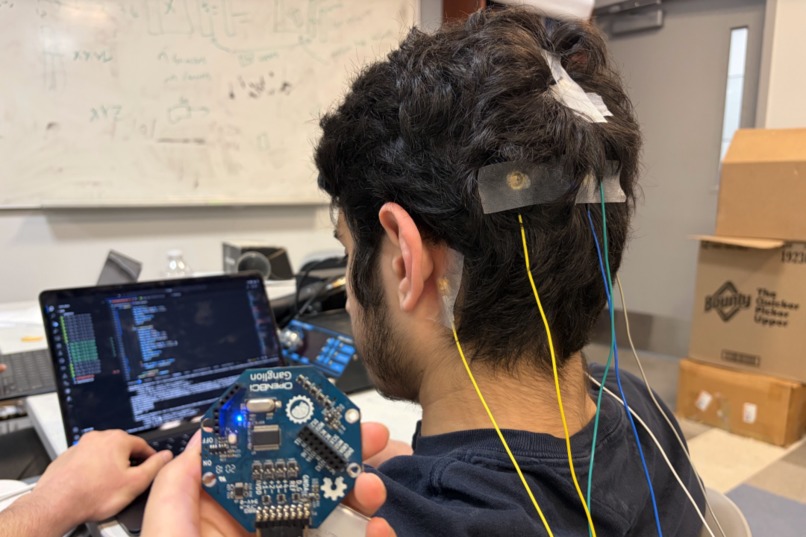
EEG Connection to Ganglion Board
-
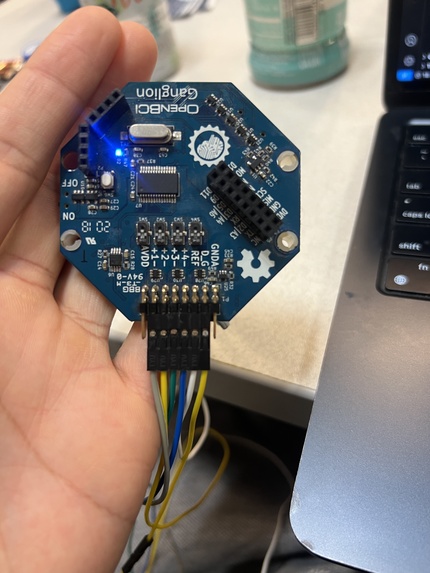
OpenBCI Ganglion Board
-
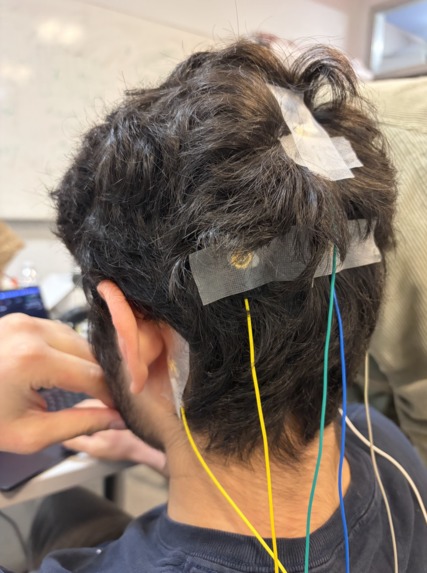
Electrodes


Introduction
Countless individuals living with motor disabilities find themselves not being able to do simple tasks that we take for granted. One thing especially that almost every individual does in todays age is partake in some form of digital experience such as moving a mouse or playing a game.
So, with the rise of AI and better technology we thought: what if you could control a computer simply through your thoughts? This initiative marks our initial stride towards improving computer interaction, making it completely accessible for those who cant.
What it does
Our project's goal is to empower users to make in-game choices using solely their brain activity.
By applying non-invasive EEG electrodes to areas of the occipital lobe, we can detect frequency-specific neural responses (A methodology known as Steady-State Visually Evoked Potentials SSVEPs) and convert them into immediate gameplay actions.
- No mouse.
- No keyboard.
- No voice.
In contrast to traditional eye-tracking technologies, our interface does not depend on visible eye movements. SSVEP-based decoding accurately captures with a 95% accuracy allowing users to maintain a steady gaze and concentrate mentally to select their desired option. This ensures that the system is usable even for those who cannot move their eyes, head, or hands (In theory, you could try this with your eyelids closed since the bright flashing lights can still be noticed by your retinas and thus processed by your occipital lobe!)
Our Development Journey
We created a real-time neural control interface by utilizing:
- OpenBCI Cyton / Ganglion for EEG signal acquisition
- BrainFlow + Python for data streaming and filtering
- A specialized SSVEP-based frequency detection system for accurate classification
- An interactive gaming environment fully driven by our neural decoder
Processing Workflow:
- Stream raw EEG data
- Implement filtering and noise reduction
- Identify the dominant frequency response
- Translate that neural response into a game action instantly
This innovative setup allows for hands free gameplay.
Challenges
For most of our team, real-time signal processing and neural decoding, were brand-new concept. In fact, all of us did not even know what the term SSVEP was a couple days ago nor did we even know how to use the bio-signal acqusition board that captures the EEG signals. We had to learn about electrode placement and that itself took us 8 hours to finally accurately get the EEG signal. Finally, the last challenge was doing the decoding and signal processing behind it and the algorithms we used such as canonical correlation analysis which requires advanced linear algebra was something we learned and applied. Also, faced some signal processing issues.
Bridging neuroscience and Python code was not simple — but attempting to overcoming was an exciting part of the project.
Accomplishments
We successfully got some output demonstrated brain-controlled gameplay in a live environment.
That means:
- No physical input devices
- Only EEG-based neural intent detection
Being able to create a more inclusive way of interacting with computers is something we are truly proud of.
- This approach goes beyond gaze-based control. While eye tracking only shows where someone is looking, EEG reveals what their mind is actively attending to.
- It also works reliably in any lighting environment and does not require camera calibration, making it far more robust and inclusive.
What we learned
- How to apply electrodes to the head using the 10/20 electrode placement system
- How to design and tune real-time bio-signal processing pipelines
- How computer science and neuroscience can combine to create new forms of interaction
What's next for Neuropoly
Our goals are bigger than just this demo.
Next steps:
- Faster and more accurate multi-action decoding
- Constructing a large labeled neural dataset to interpret more complex cognitive intents
Our long-term vision:
A non-invasive neural input system that can replace keyboards, controllers, and touchscreens using only thoughts.
Built With
- brainflow
- eeg
- openbci
- ssvep


Log in or sign up for Devpost to join the conversation.