-
-
Front Page
-
Mission
-
Statistics
-
Competitor
-
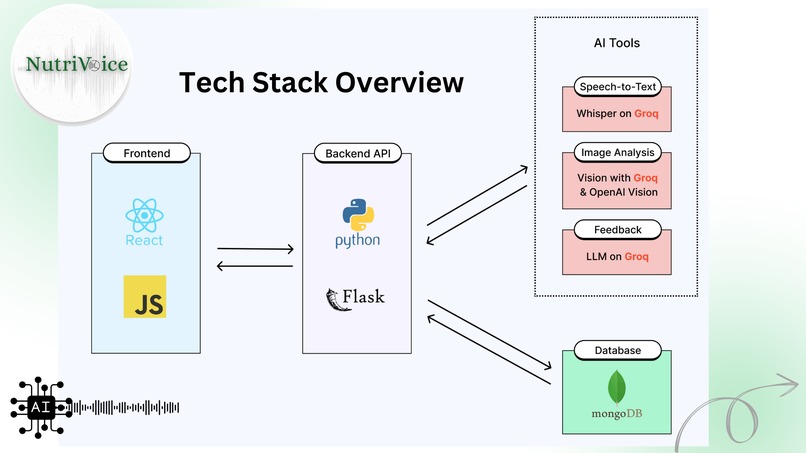
Tech Stack
-
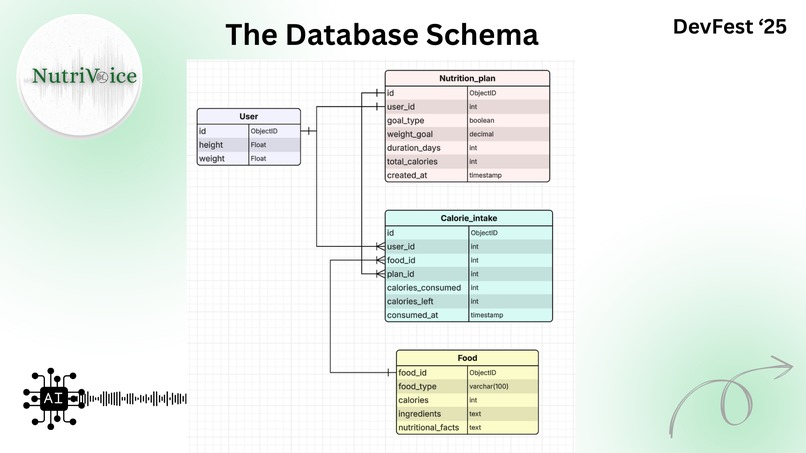
Database
-
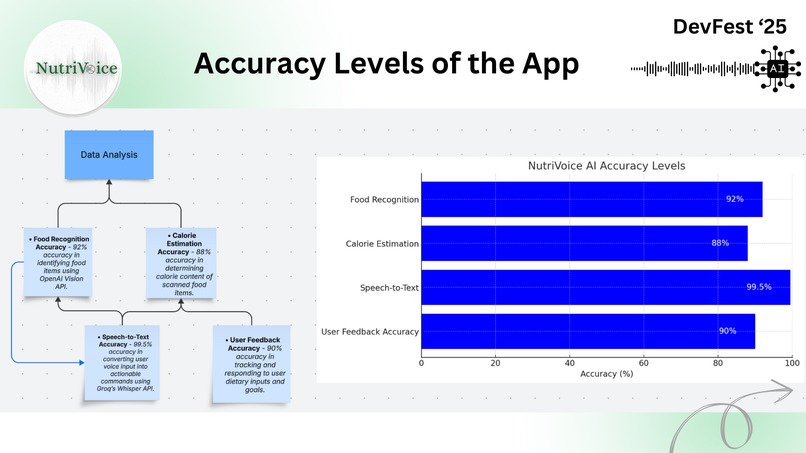
Accuracy
-
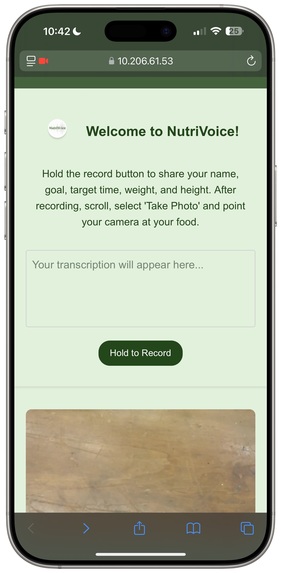
UI-1
-
UI-2
-
UI-3


NutriVoice: "See with AI, Eat with Confidence"
Inspiration
The inspiration for NutriVoice came from a simple yet critical question:
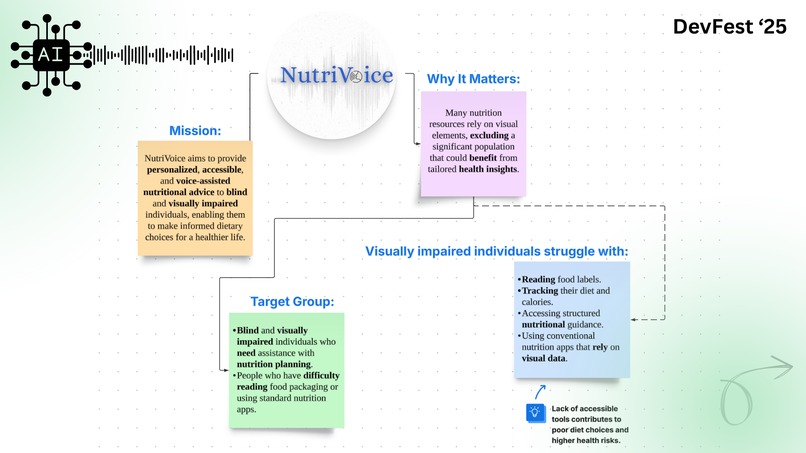
How can blind individuals easily access nutritional information about their food?
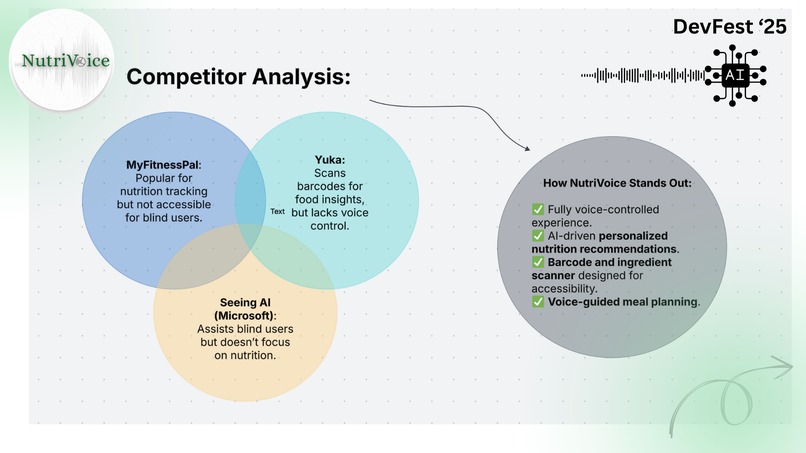
Many existing nutrition apps rely heavily on visual elements, making them inaccessible to the visually impaired. We wanted to bridge this gap using AI-powered speech and vision technologies, ensuring that everyone, regardless of ability, can make informed dietary choices.
What It Does
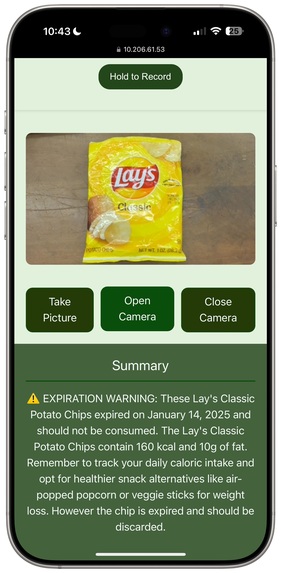
NutriVoice is an AI-powered nutrition assistant designed to help blind and visually impaired users track their daily calorie intake through voice commands and food recognition.
The app allows users to:
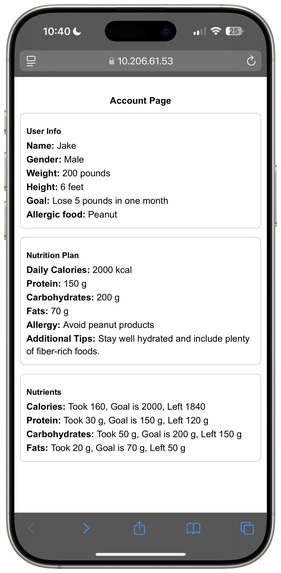
- Set personal dietary goals based on weight, height and timeframe.
- Scan food items using their phone's camera.
- Receive instant calorie estimations via AI-powered food recognition.
- Use voice commands for seamless interaction.
- Track daily calorie intake to stay on course with their nutrition goals.
How We Built It
We leveraged cutting-edge AI technologies to develop NutriVoice:
- OpenAI and Groq's Vision API for food recognition and calorie estimation.
- Groq’s Whisper API for real-time speech-to-text processing.
- A custom nutrition database to cross-reference food data and provide accurate calorie values.
- A voice-first interface to ensure accessibility for visually impaired users.
- Python & Flask backend to process user data and integrate AI models.
Challenges We Ran Into
Building NutriVoice was not without its hurdles:
- AI Accuracy – Ensuring precise food recognition and calorie estimations required extensive testing and prompt engineering refinement.
- Speech Processing Latency – Optimizing Whisper API’s response time to provide real-time feedback was challenging.
- Data Constraints – Some food items lacked well-documented calorie data, requiring integration with multiple nutrition databases.
- User Accessibility Testing – Designing a voice-first experience for the visually impaired required iterative testing and feedback.
Accomplishments That We're Proud Of
- Developing a fully functional AI-powered nutrition assistant.
- Achieving high accuracy in food recognition and calorie estimation.
- Creating an intuitive voice-first experience that makes nutrition tracking accessible to visually impaired users.
- Successfully integrating speech recognition for seamless hands-free operation.
What We Learned
Throughout the development of NutriVoice, we gained valuable insights:
- Accessibility must be at the core of design – Ensuring that all features are optimized for voice-based interactions was key.
- AI models require constant improvement – Fine-tuning food recognition and calorie estimation models was a major learning curve.
- User experience matters – We had to refine speech-to-text interactions to minimize errors and enhance usability.
What's Next for NutriVoice
NutriVoice is just the beginning! Future plans include:
- Personalized meal recommendations based on dietary preferences.
- Multi-language support to make the app accessible worldwide.
- Crowdsourced food database expansion to improve accuracy and include more local cuisines.
- Offline functionality to allow users to track nutrition without an internet connection.
With NutriVoice, we aim to redefine nutrition accessibility and empower individuals to take control of their health through AI-driven innovation.
Built With
- computer-vision
- flask
- groq
- javascript
- lucidchart
- mongodb
- python
- react
- speech-to-text


Log in or sign up for Devpost to join the conversation.