-
-
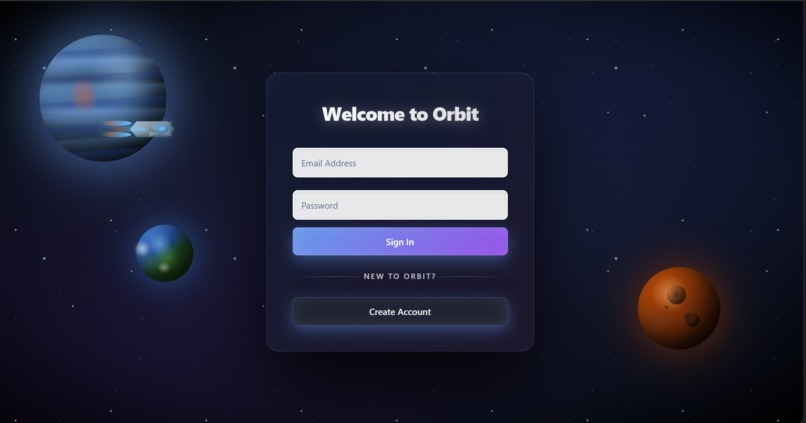
log-in page
-
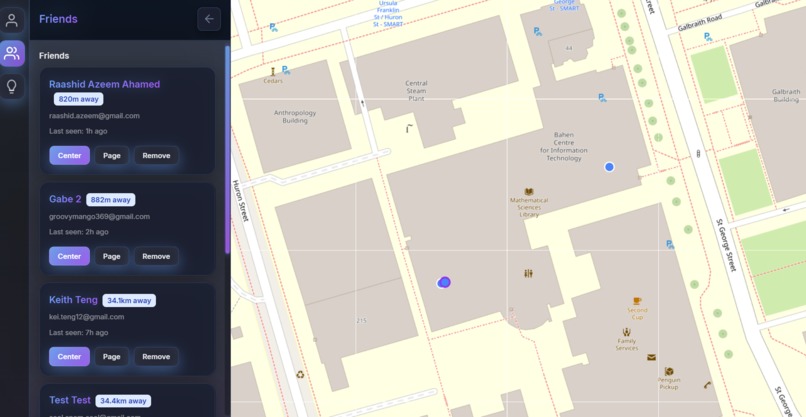
The map and friend view
-
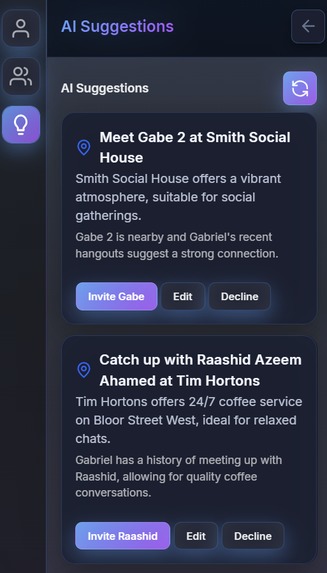
Example of dynamic AI suggestions based on user data


Inspiration
In a world of "infinite scroll," we’ve lost the art of the spontaneous hangout. We noticed that even when friends are free, the "What should we do?" decision-making fatigue often leads to staying home. We wanted to build a social lighthouse, a way to signal you’re ready for adventure and let AI handle the logistics of finding the perfect "landing zone."
What it does
Orbit is an AI-driven social map that turns your city into a living galaxy. It does more than show you where your friends are; it uses intelligent recommendation engines to suggest the perfect activities nearby. By analyzing your location, the time of day, and the collective interests of your "available" fleet, Orbit generates custom "missions", from hidden-gem cafes to the best local hiking trails, making real-world connections effortless.
How we built it
We engineered Orbit by blending a futuristic glassmorphic frontend with a robust real-time backend. The interface was built using HTML, CSS, and JavaScript to handle the complex Space animations and layered starfield effects that define our visual identity. On the backend, we utilized Node.js and MongoDB to manage user data and presence states with high efficiency.
To power our core data structures, we integrated the Backboard API while using Amplitude to track user engagement and refine our AI-driven activity suggestions. We also implemented MailerSend to handle secure communication and automated launch notifications. By weaving these technologies together, we ensured that the transition from a user signing up to launching their first orbit feels seamless, secure, and immersive.
Challenges we ran into
Integrating the AI Suggestion Engine with real-time location data was a major hurdle. We had to ensure the AI didn't just suggest "generic" spots, but actually found high-quality, relevant activities that matched the mood of the group. Additionally, optimizing the planetary animations to run smoothly alongside the map's data-heavy layers required diligent CSS performance tuning.
Accomplishments that we're proud of
We are incredibly proud of our Spontaneity Engine, which successfully transforms a standard utility map into a discovery tool that feels like a game. Seeing the AI generate a "Mission: Pizza & Retro Arcade" based on three friends being free in the same neighbourhood feels like magic. We have managed to bridge the gap between digital presence and real-world action, creating an interface where finding your friends feels less like a task and more like a cosmic adventure.
What we learned
We realized that the biggest barrier to social life isn't a lack of time, but indecisiveness. By using AI to curate the destinations, we removed the mental load of planning, proving that technology is most powerful when it acts as a bridge to real-life connection. We also discovered that design is a narrative. By wrapping the app in a space-themed UI, we turned location sharing from something that feels invasive into an invitation to join a fleet, making safety and community feel like a shared adventure.
What's next for Orbit
Our next mission is to expand the galaxy with Constellation Clusters, an AI feature that detects when friends are in the same sector and suggests the perfect group activity. We are also launching Galactic Rewards, a system that transforms local exploration into a cosmic scavenger hunt. By visiting AI-recommended Landing Zones and hidden gems, users earn digital trophies and status within their fleet. This gamified loyalty program encourages people to break their routines and treat their city as an uncharted map waiting to be explored.
Built With
- amplitude
- backboardapi
- css
- html
- javascript
- mailersend
- mongodb
- node.js
- railway


Log in or sign up for Devpost to join the conversation.