-
-
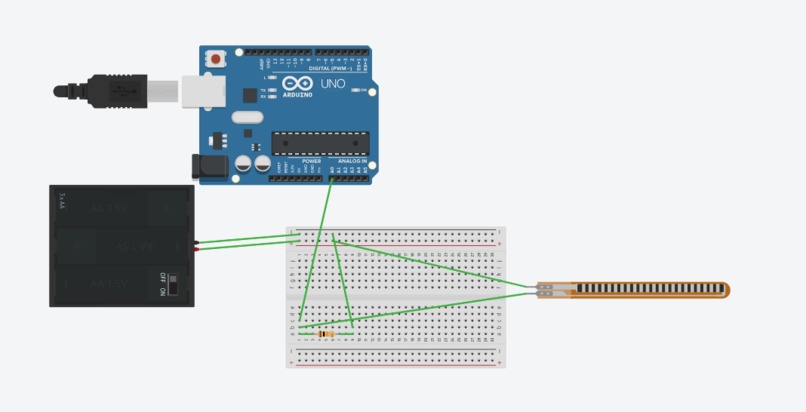
This is a model of the electronic components in our mechanism.
-
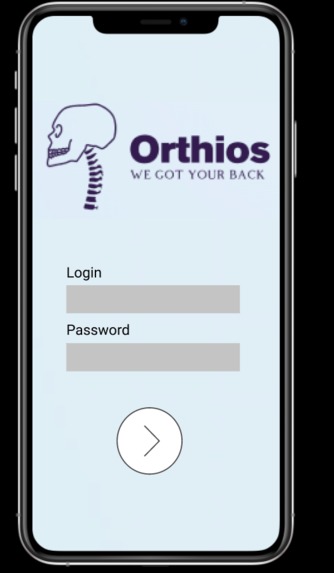
Page 1 of our prototype.
-
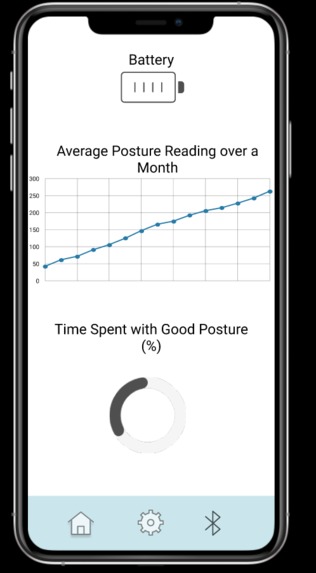
Page 2 of our prototype.
-
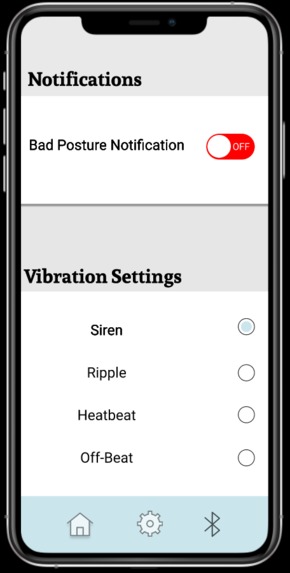
Page 3 of our prototype (switch off).
-
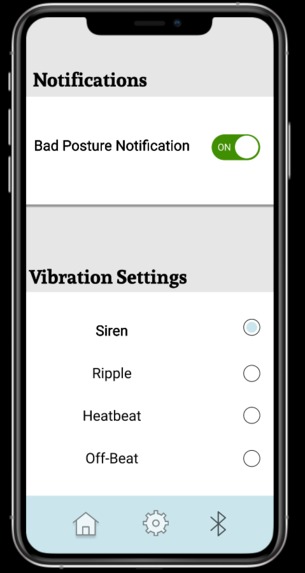
Page 3 of our prototype (switch on).
-
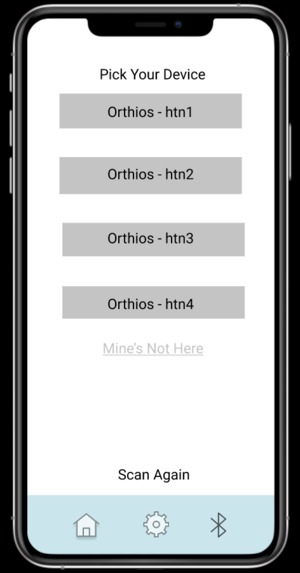
Page 4 of our prototype.


Inspiration
The members of our team recently started going to the gym and this is when we truly understood the importance of posture and correct form. That led us to think, what better way to address this issue than to use technology to hack a solution together.
What it does
We have developed a product that helps fitness enthusiasts maintain correct form while doing certain exercises such as deadlifts, squats, rows, etc. In all of these movements, it is essential that one keeps their back straight, as failure to do so can lead to serious injuries. Understanding these risks on a personal level, our product, the Orthios Backbrace, is a wearable sensor that notifies the user through their phone every time their back is bent, helping prevent injury. Apart from the gym, it has applications in offices for people with bad posture, and college students learning remotely due to the pandemic. We believe that our hack can help improve the safety of many lifters.
How we built it
To start, we CADded a model of the hardware mechanism so that we could ensure it works when built in real life. After building the mechanism we started using charts.js to program the back end of our application. Finally, we used Figma to prototype the front end of our application.
Challenges we ran into
Due to our status as fairly new backend developers we found it hard to program the backend of our app that would send live information from our sensor to our application. Whether it was small path errors resulting in our page being unable to be found or whether the issue was deciphering documentation we learned that the best way to combat these issues was to brainstorm a list of possible reasons for the error and isolate the code to check whether that section of code was the root of our problem.
Accomplishments that we're proud of
We are proud to have collectively agreed upon an idea within the first 30 minutes of discussion. We did this by combining certain features from all our different ideas into one single app. Also, for this being our first time using the Figma software to create prototypes, we believe our design looked very sleek, modern, and attractive.
What we learned
We learned how to accurately program using charts.js to display graphs in live time. Furthermore, we researched many design principles to ensure our prototype could be widely adopted. This includes making our UI minimalistic, providing user input and using content prioritization techniques.
What's next for Orthios
The first thing we would incorporate going forward is flex sensors as these would allow us to measure changes in posture with a compact and lightweight mechanism. In addition, we would need to develop the frontend based on our figma design and link it with our backend for a working application. Finally, we would hope to expand our product to encompass a wider variety of issues such as stress on the knee, shoulder and elbow joints.
Business Viability
We believe our idea would be viable in business due to the fact that this market is relatively untouched. There is almost no competition in this market leaving us to be market leaders. Due to the overwhelming saturation in the fitness industry, with millions of influencers teaching others how to perform exercises correctly, we are certain that there is a large demographic that would be interested in our product. In addition, with an increase of people sitting for longer hours in a day, the need for posture correction will only increase in the future. We plan to generate revenue through the physical product (the Backbrace) and through the app. Since people are very hesitant to purchase an app for an initial cost, we will rather use the Freemium model, in which basic features in our app are available for free but in depth analysis of posture and form will require reasonable payment. All in all, we believe our project has tremendous growth potential in today's age.
Built With
- arduino
- charts.js
- figma


Log in or sign up for Devpost to join the conversation.