-
-
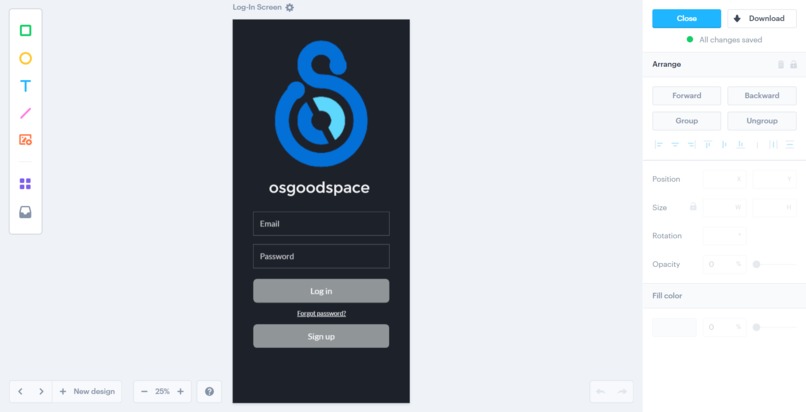
The following snapshot shows the log-in screen of our prototype
-
This snapshot shows the loading screen of our prototype. The logo for our made up company was self made and brainstormed by the team.
-
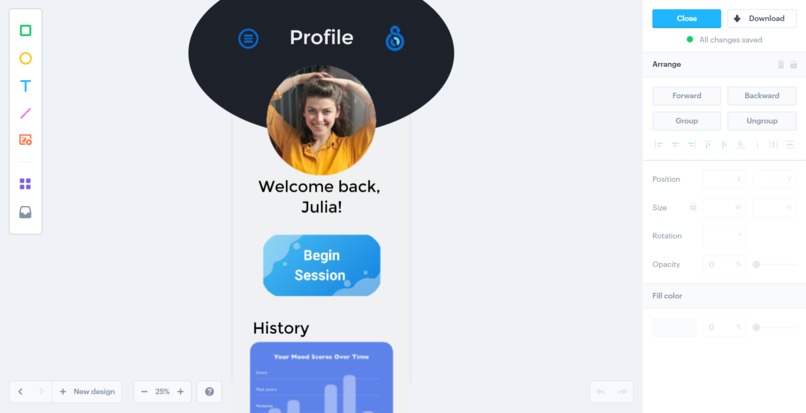
This last snapshot shows the unfinished homescreen of our prototype.
-
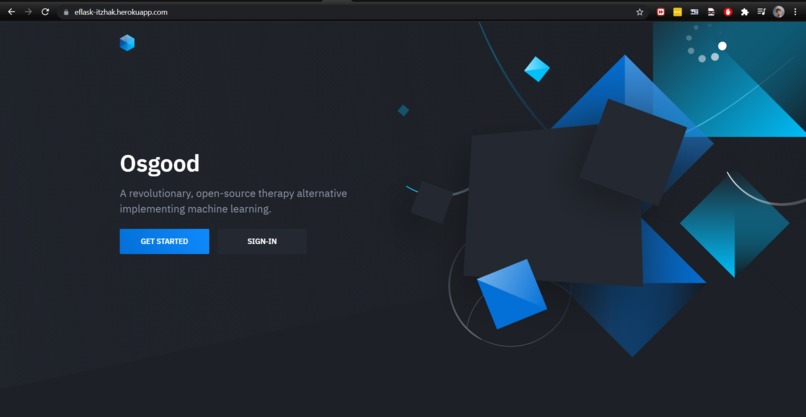
Front end of website.


Inspiration
When COVID first hit, a lot of us went through daily troubles and obstacles in life that affected our physical and mental health. For this project, the team decided it would be a fun and interesting idea to "implement" a free therapist AI that could help you out anytime.
Osgoodspace comes from Charles E. Osgood, a lifelong psychological researcher who did not receive as much credit as was due. As a result, we decided to develop this program with his last name 'osgood' characterizing his space, his mind, his work. The Osgoodspace is an experience for everyone.
What it does
Osgoodspace allows for people to talk to a virtual therapist about their problems. It takes in audio input, processes it to determine intent and a proper response, and then outputs an audio back. Broadly, it acts as a virtual therapist for someone who needs someone to listen to.
How we built it
config_mp3 = speech.RecognitionConfig(
        sample_rate_hertz = 48000,
        enable_automatic_punctuation = True,
        language_code = 'en-US
We first take in a .wav file as an audio file and utilize Google Cloud speech to text API to transcribe it into text. Following this, we utilize Google's dialogflow in order to generate a response by analyzing intent of the message as text. Finally, we used Google's text to speech voice AI to return an audio response.
Challenges we ran into
Implementing Google Cloud API into Python was very difficult considering we were completely unfamiliar with this format. Genuinely, we ran into everything: from trouble configuring token API keys and privileges across multiple users to decoding advanced Python error codes. Another unfamiliar technology was Heroku which hosted our Flask Python application. Unfortunately, we ran out of time to fully integrate all the Google APIs and script into our website.
Accomplishments that we're proud of
We were able to create a web application front-end and mobile application design for this service. Additionally, a fully integrated Google API virtual conversation - from inputting audio to outputting audio - was a tremendous accomplishment as it required numerous hours of work and debugging.
What we learned
We learned how to use Google's plentiful APIs and how to integrate them all with Python. Additionally, we learned how to more effectively design front-end for an application; my teammate (Itzhak) was able to learn so much more about app development and design, and likewise I (Jawad) was able to learn about front-end web development implementing Flask and hosting the website on Heroku. Finally, we learned how to use domains.com to add a name to our website with a free .tech name - osgoodspace.tech.
What's next for Osgoodspace
Osgoodspace needs to have more unique features that resemble a comforting human. Of course, therapy involves mostly active listening which is established by the talking AI and response generating, however it is a great plus to add in sections of code to make the process smoother. For instance, we can add in active listening action words and introspection, such as 'how does that make you feel?'. Finally, we would integrate Osgoodspace fully into the web application and mobile application, with options for talking anytime to agent, history of conversations.
Built With
- google-cloud
- google-cloud-dialogflow
- google-cloud-speech
- google-cloud-texttospeech
- heroku
- pip
- python


Log in or sign up for Devpost to join the conversation.