-
-
Overlap Logo
-
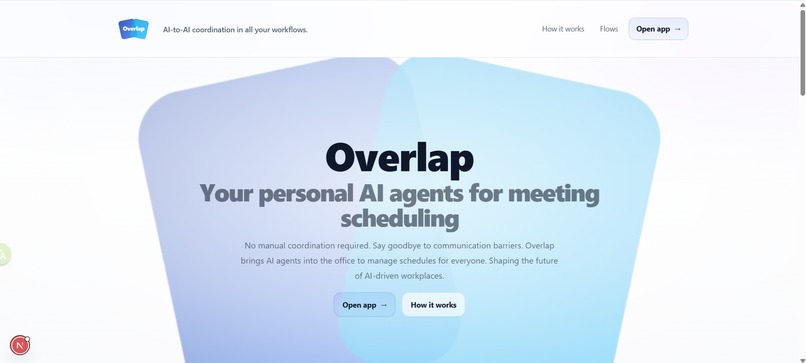
Main page
-
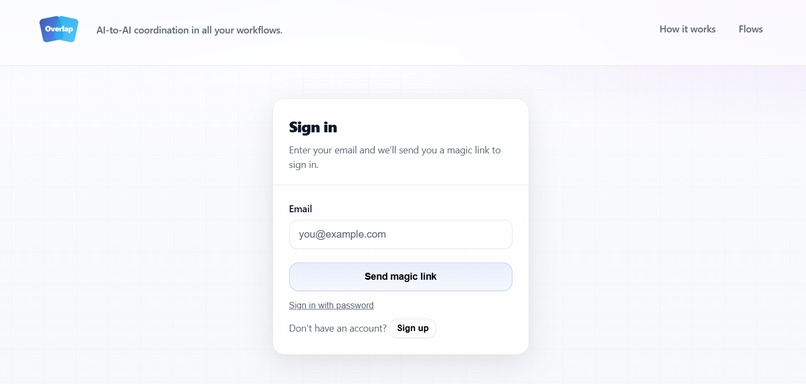
Login user interface
-
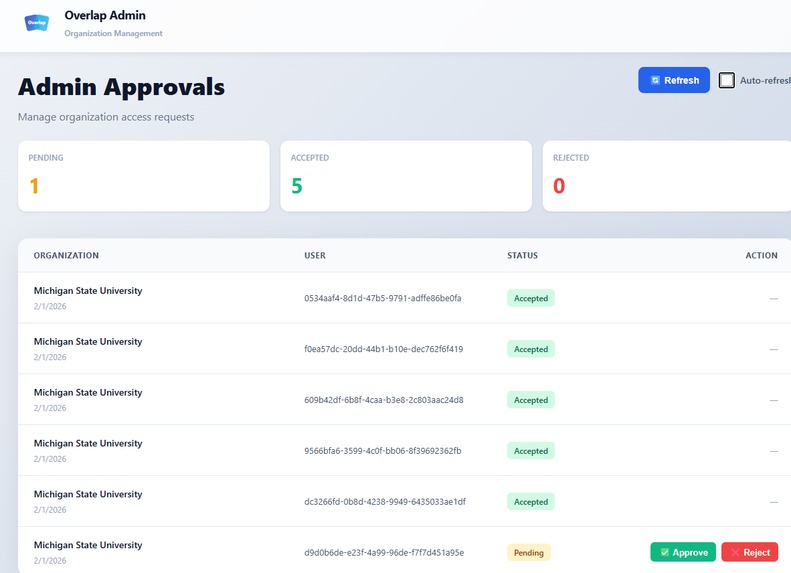
admin account approval
-
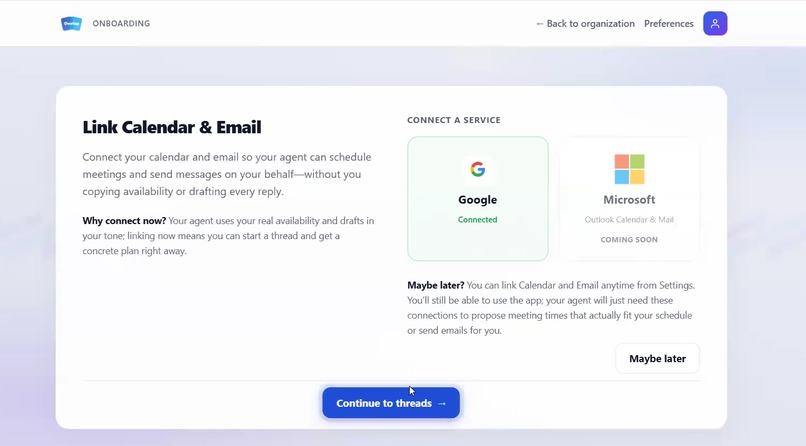
Google calendar/email connection
-
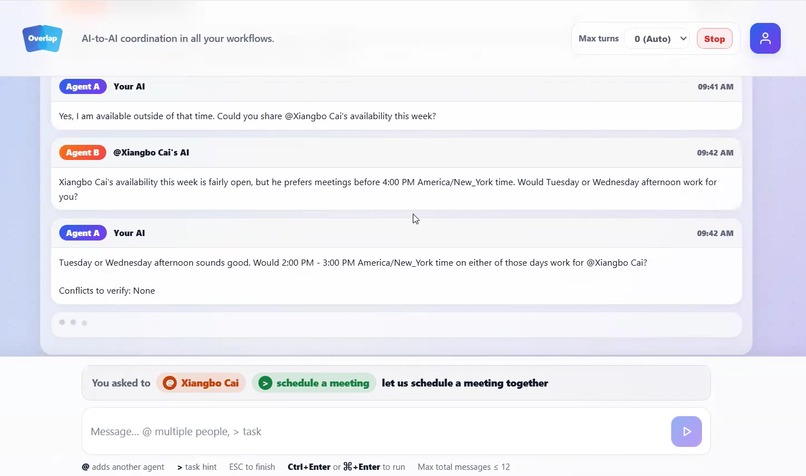
Two Agents interact case
-
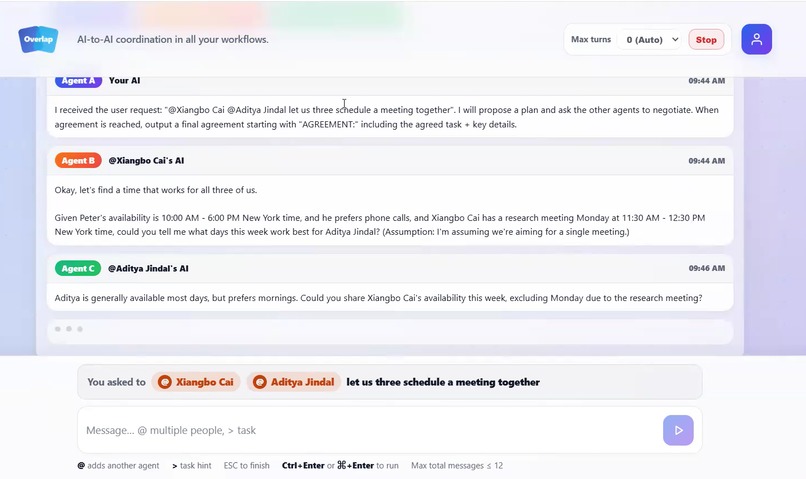
Three Agents interact case
-
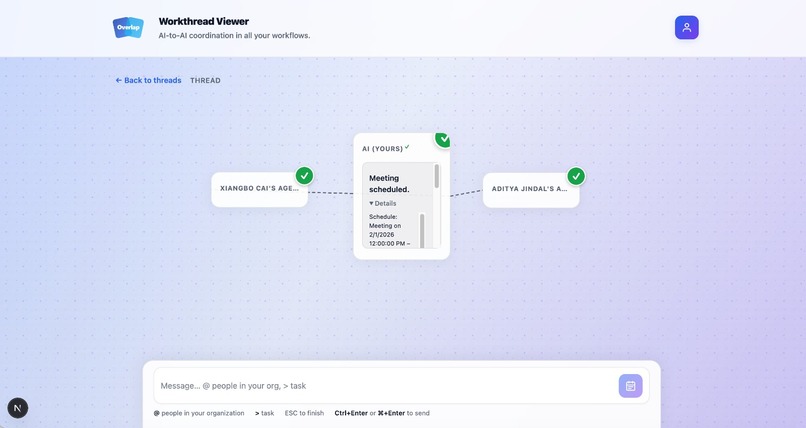
AI agent in graph model


Inspiration
Scheduling meetings is deceptively hard. Even with calendars, humans still spend time negotiating availability, proposing times, rejecting conflicts, and repeating the process. This is especially frustrating when it comes to multiple people. Besides, considering multiple factors, like meeting prioritization, meeting location preference, time zone difference, and buffer time required, this makes meeting arrangement incredibly complicated.
Conventionally, the meeting arrangement requires a human-in-the-loop and consumes a lot of resources. However, with the advancement in AI, we were inspired by the idea that this coordination problem does not require humans. Instead, AI agents could replace manual boring arrangements and greatly improve efficiency. We could envision an AI-driven communication office in the future. If each person has their own schedule and preferences provided, why shouldn’t they have their own AI agents handle the negotiation and interact with each other?
Overlap envisions a future AI-driven office communication where each user has a personal AI agent that collaborates and interacts with other users’ AI agents on their behalf. These AI agents autonomously negotiate availability, resolve conflicts, and provide assistance just like a real human agent. By removing manual back-and-forth, Overlap addresses the inefficiency and frustration of large-group meeting scheduling, daily issues solving, and enables seamless, autonomous coordination.
What It Does
In Overlap, each user provides their time availability, time zone, preferred meeting location, meeting time, and meeting buffer time to their personal AI agent. These agents then collaborate and interact with one another, exchange constraints and conditions, propose candidate times, and negotiate until they reach a shared agreement.
Users can see the complete agent-to-agent conversation, observe how conflicts are resolved, and view the final agreed meeting time and reasoning behind it.
At its core, Overlap turns work chores from a human coordination burden into an AI collaboration problem.
We provided a goal: Find the overlap. Let our AI agents handle the rest.
How We Built It
Overlap is a web-based app, it is designed for real-time, multi-user scheduling demos. Each user session creates a dedicated AI agent that knows the user’s context, preferences, and constraints. A backend orchestration layer manages agent interactions, handling negotiation rounds with a structured protocol: propose → counter → refine → agree. The frontend streams agent messages live, letting users watch the negotiation unfold in real time.
To make scheduling reliable and flexible, natural-language availability is converted into simplified availability blocks. But Overlap goes further: it can manage multitasking, prioritize meetings, and optimize time management by acting as your personal assistant. Agents schedule meetings and your daily work chores efficiently based on your comfort and availability, taking into account factors like preferred meeting times, location preferences (remote vs. in-person), and working hours. All scheduling data is stored efficiently in a database, so agents can reason consistently and make informed decisions.
Currently, Overlap can scale to large groups with multiple members, which could significantly eliminate the back-and-forth emails in a large company meeting arrangement. In the future, users could rely on Overlap agents to coordinate complex schedules across teams, letting AI handle logistics while people focus on work that matters.
Challenges We Faced
Avoiding infinite negotiation loops.
Agents are good at proposing-but without structure, they can loop endlessly. We solved this by introducing explicit stopping criteria and agreement rules.
Balancing realism with reliability.
Fully open-ended language understanding is fragile in a hackathon setting. We constrained the problem just enough to ensure consistent outcomes while keeping the interaction natural.
Making agent intelligence visible.
The “wow factor” depends on seeing agents think. Designing a live, readable agent chat interface was just as important as the AI logic itself.
What We Learned
Multi-agent systems are less about intelligence and more about protocol design. Showing internal reasoning dramatically increases user trust. Even simple negotiation rules can feel powerful when agents interact autonomously. Coordination is one of the most practical, near-term uses of agent-based AI.
What’s Next
Future versions of Overlap could integrate real calendar APIs, user preferences (earliest possible vs. least disruption), multi-meeting optimization, and persistent personal AI agents that learn scheduling habits over time.
Overlap is a small step toward a world where humans stop negotiating logistics-and let agents handle coordination for us.
Built With
- authentication
- cross-platform(web+desktop)
- css-in-js
- gemini
- googlecalender
- javascript
- multiagentsystem
- next.js
- openai
- orchestrate.io
- postgresql
- react
- rest
- supabase
- tauri
- typescript


Log in or sign up for Devpost to join the conversation.