-
-
-
VFX
-
Gameplay overview
-
Hand Tracking
-
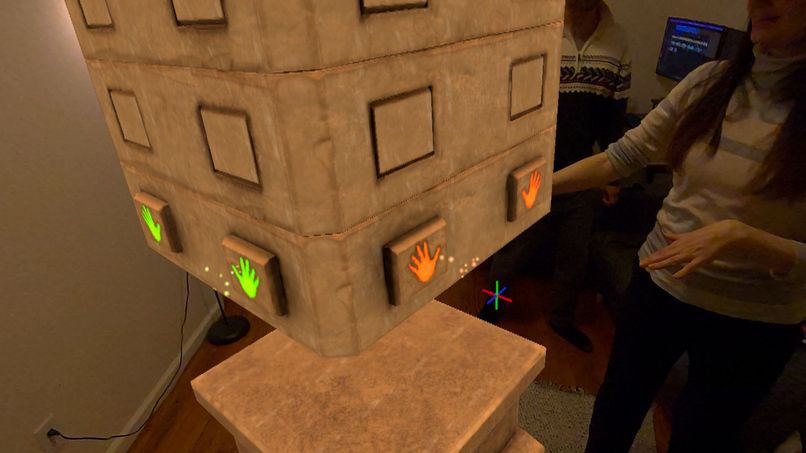
VFX
-
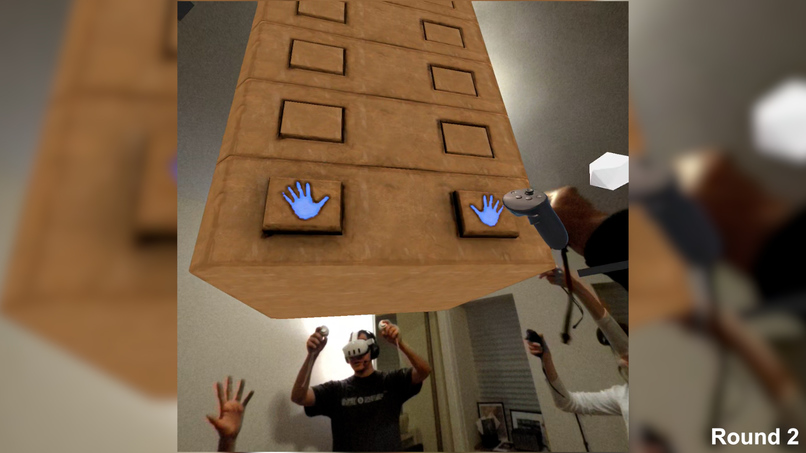
Thanks to my friends!


About the Project
PillarSync was born from a simple question: what does a truly physical, cooperative Mixed Reality game look like when four people share the same real space?
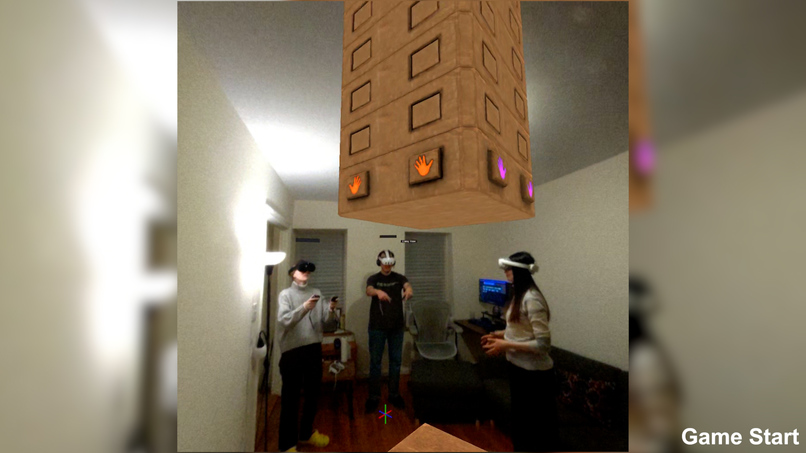
Most MR experiences keep players acting in parallel, not together. I wanted to flip that and design something that connects people instead of separating them—an experience where four players physically coordinate around one descending pillar and can only succeed by syncing their movements. That sense of shared rhythm and real-world cooperation became the foundation of PillarSync.
The core inspiration came from three very different classics: the rhythmic precision of Beat Saber, the block-clearing logic of Tetris, and the physical coordination chaos of Twister. PillarSync blends those ideas into a single MR mechanic—a descending pillar that forces players to read patterns, move in sync, and react based on their assigned color. It becomes a co-op rhythm puzzle you solve with your whole body, not just your hands.
How I Built It
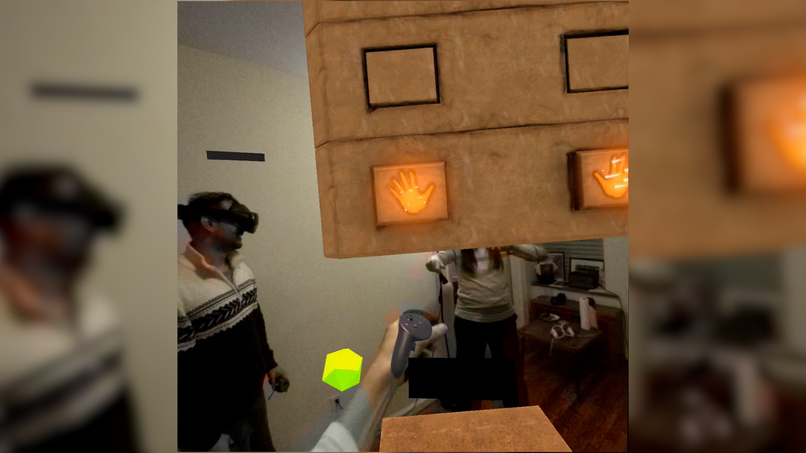
The game is built in Unity using the Meta XR SDK, the Interaction SDK, and Shared Spatial Anchors for reliable local colocation. The core gameplay centers around a networked pillar made of interactive blocks, each of which procedurally generates a four-sided color pattern—one side per player—based on the current difficulty tier.
Key Systems
Colocation & Alignment
All players align to a single shared anchor so everyone sees the pillar in the exact same physical spot. This consistency is what makes the cooperative movement feel real and fair.
Networked Interactions
Server-authoritative logic handles button presses, block activation, pillar descent, and success/failure states. This keeps all players perfectly synced, even during fast sequences.
Hand Tracking & Controllers
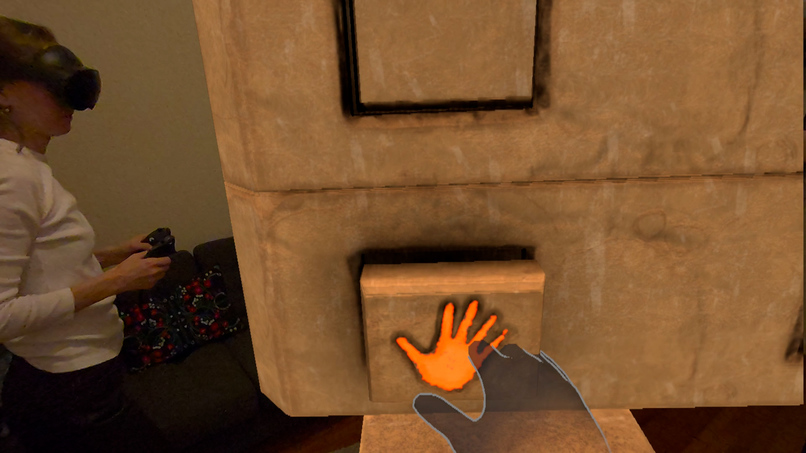
Players can use either controllers or full hand tracking. Every interaction—including touches, presses, and gestures—is mapped to both input methods so the experience feels natural regardless of how each person chooses to play.
Procedural Difficulty
Patterns are generated from difficulty levels (1–7), which define timing tolerance, visual complexity, and required team coordination.
MR Visuals & Lighting
The pillar uses MR-friendly shaders, grounded shadows, and soft global lighting to make it feel like a physical object sitting in the room, not a floating hologram.
What I Learned
PillarSync showed me how unforgiving real-time multiplayer is in MR. Even small positional drift or slight network delay instantly breaks the shared experience, so accurate colocation and tight syncing became non-negotiable. I also observed how differently players move around a shared virtual object and how easily cooperation breaks down when they aren’t aligned. I learned that MR puzzle design is really about choreographing group movement, not just logic. When timing and coordination line up, the game feels seamless; when they don’t, everything falls apart. That shaped every decision in the project.
Challenges Faced
Real-time multiplayer in MR proved extremely sensitive. Any tiny desync—positional or network-related—could break cooperation, so keeping all players aligned was a constant challenge. Testing colocation was equally difficult since most of the development happened remotely, making it hard to validate how the pillar behaved when multiple people stood around it in the same physical space. Simulating those scenarios alone or over distance was nearly impossible, and many issues only appeared during rare in-person tests.
What’s Next
There are several clear directions to expand PillarSync. New modes like a Time Challenge and a Gauntlet run will push coordination under pressure. A remote-friends mode will let players join through avatars, making the game playable even when they aren’t in the same room. I also plan to add a three-player version with asymmetric patterns so smaller groups can still experience the same cooperative rhythm. These additions aim to make PillarSync more replayable, more accessible, and easier to enjoy with any group.
Credits
Original idea by: Aysu Unal, Uttam Grandhi, Zihao Zhang, Rustam Mirzakhmedov.
Thanks to my teammates & friends who helped me test the game, fix bugs, and work on complex algorithms. You're the best!


Log in or sign up for Devpost to join the conversation.