-

Login Page
-
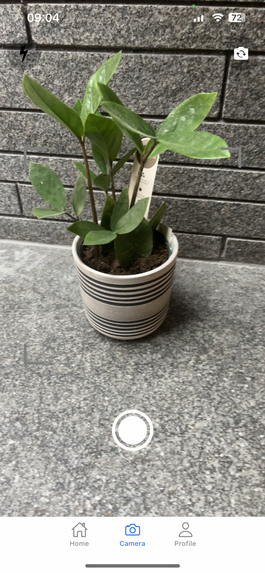
Camera Page


Inspiration
The inspiration for PlantID came from a shared desire to contribute to sustainable agriculture and support farmers worldwide. We recognized that plant diseases can devastate crops, leading to food insecurity and economic losses. Many farmers, especially in rural areas, lack access to resources or experts who can quickly diagnose and suggest solutions for plant diseases. Our goal was to bridge this gap with accessible technology, empowering farmers to detect and address plant diseases using just their smartphones.
What it does
PlantID is a React Native mobile application that leverages machine learning to identify plant diseases from photos taken directly in the app. Users simply snap a picture of a plant, and the app identifies the disease (if any) and provides actionable insights on how to treat or prevent the disease. This streamlined process helps farmers make informed decisions to protect their crops and improve yield while promoting sustainable farming practices.
How we built it
We developed PlantID using React Native for cross-platform compatibility, ensuring that the app works seamlessly on both Android and iOS devices. For the machine learning component, we trained a convolutional neural network (CNN) using a dataset of plant disease images. The model was built and trained using Python and TensorFlow. The app integrates this model with a cloud-based API for fast and efficient image processing. Additionally, we implemented a user-friendly interface with intuitive navigation to make the app accessible to farmers of all technical backgrounds.
Challenges we ran into
-Data Collection: Finding a high-quality, diverse dataset of plant disease images was challenging, as we needed to ensure the model could generalize across various plant species and conditions. -Model Optimization: Balancing model accuracy and performance was a key challenge, especially since the app needs to run efficiently on mobile devices with limited resources. -Seamless Integration: Integrating the machine learning model with the React Native app required overcoming compatibility issues and ensuring the app remained responsive during image processing. -User Experience: Designing an intuitive and easy-to-use interface for users with varying levels of technical expertise required extensive testing and iteration.
Accomplishments that we're proud of
-Successfully training a machine learning model with high accuracy for plant disease identification. -Building a fully functional cross-platform mobile app within the hackathon’s time constraints. -Creating a tool that has real-world applications and the potential to make a significant positive impact on sustainable agriculture.
What we learned
-The importance of dataset diversity and quality in training machine learning models. -Strategies for optimizing machine learning models for mobile applications. -Best practices for developing cross-platform mobile apps using React Native. -The value of effective teamwork and communication when tackling complex technical challenges within a short timeframe.


Log in or sign up for Devpost to join the conversation.