-
Slide 1- Intro
-
Slide 2- Intended Audience
-
Slide 3- Why
-
Slide 4- Functionality
-
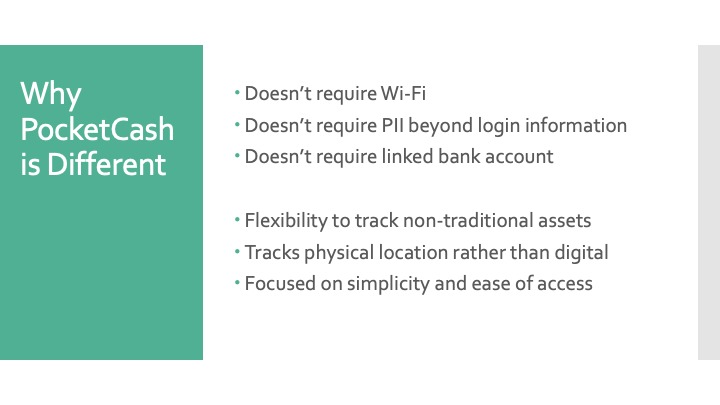
Slide 5- Why PocketCash
-

Slide 7- Thank You!
-
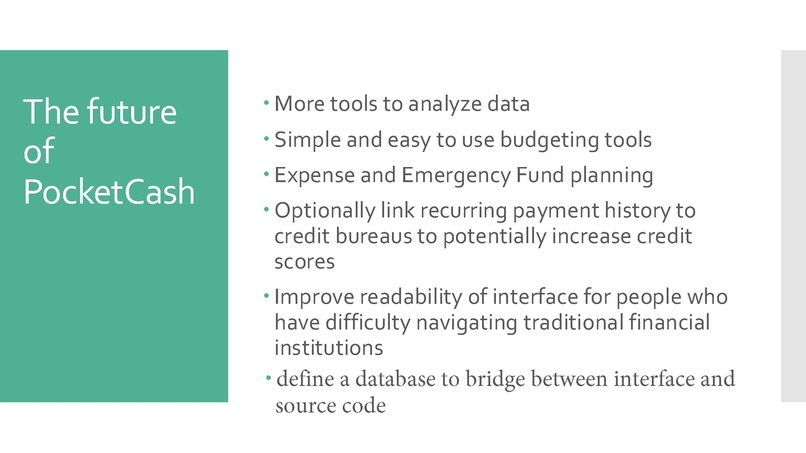
Slide 7- going forward
-
Slide 8- Source
-
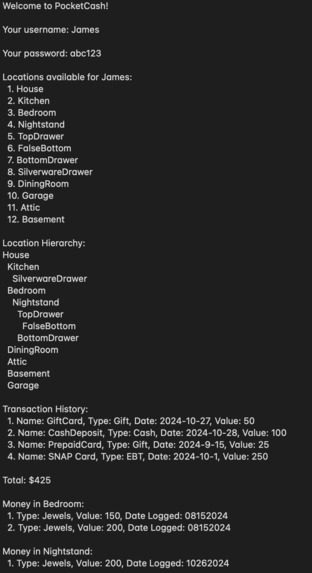
Sample javaScript output
-
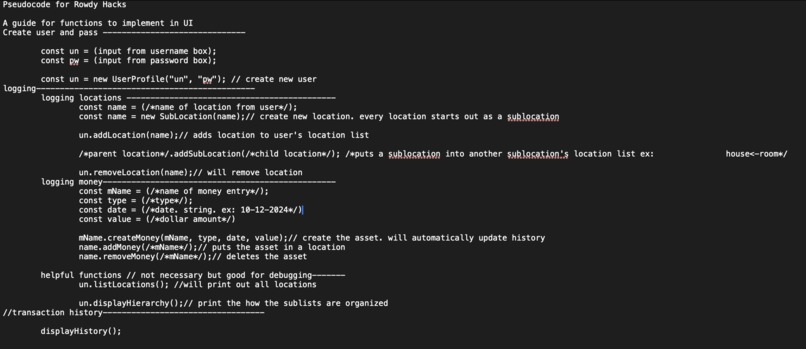
pseudocode for implementing javascript in React
-
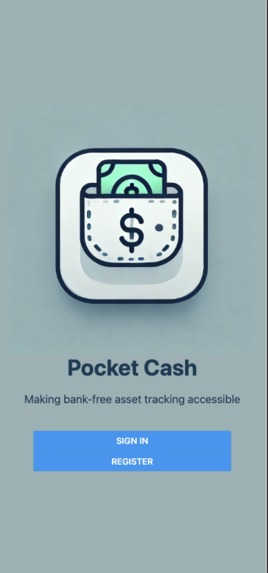
PocketCash Landing Page
-
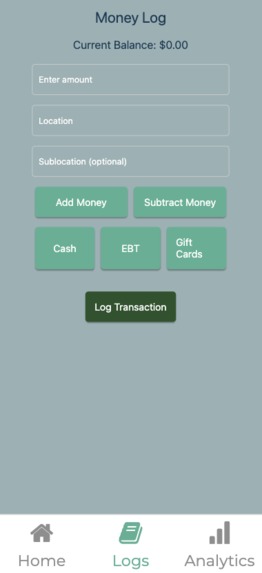
Example Money Log Interface
-
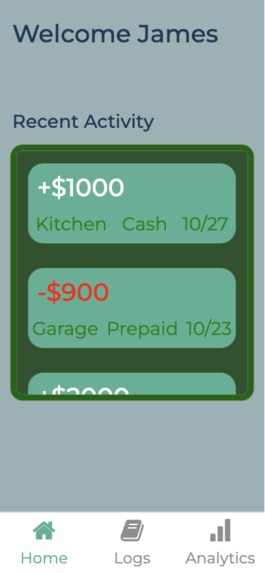
Example Home Page


Inspiration
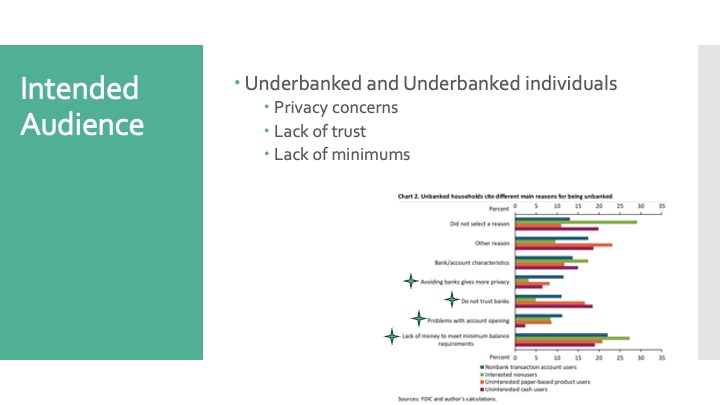
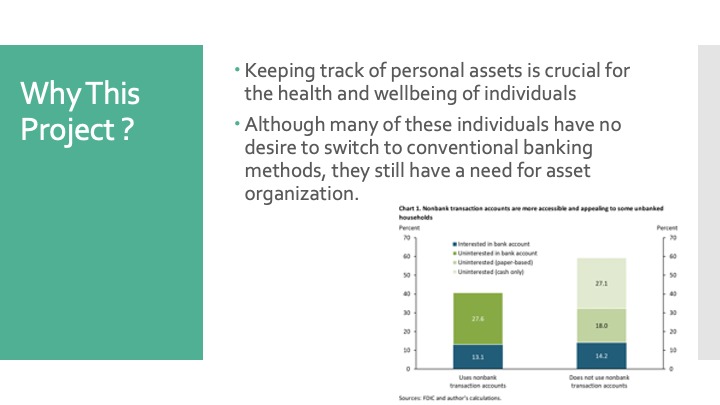
Unbanked and Underbanked individuals are less likely to have reliable finance tracking and budgeting tools, as most of these tools rely on banking accounts and are often imbedded in banking apps themselves. To address this problem, we have developed a bank-free finance tracking and budgeting app.
What it does
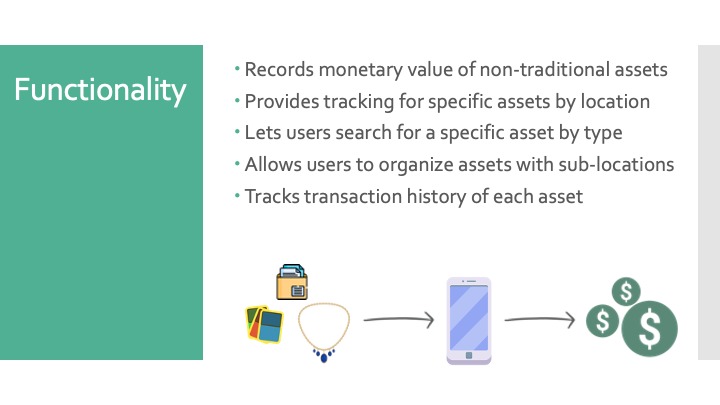
One of the main reasons individuals are unbanked is because many simply do not trust the banking system. For that reason, we plan on meeting our users where they are. Our app, "PocketCash," is entirely offline, storing the user's data locally. This prevents anyone else from viewing that data that users might not trust. PocketCash tracks any and all finances the user inputs— from heirlooms to prepaid cards to cash itself. One of the key features of our app is how we track funds. Instead of tracking digital locations of funds, our app allows users to keep track of detailed physical locations of funds. Users are able to add assets to locations, and these locations can be organized within other locations to improve ease of organization and the ability to track data. For example, a user might have a gift card in their bedside table, within their bedroom, within their house. From here, our app can inform the user about important data like how many types of assets they have, what types of assets are in a certain location, what the value of a certain location is, and much more. We understand keeping track of physical assets can be quite difficult for people who are unbanked, so we designed an app to keep track of their finances, all in one place.
How we built it
We built the functionality in VSCode using JavaScript, and the interface was written with React. Additionally, we used CloudFlare to debug our JavaScript code.
Challenges we ran into
Learning new programming languages, and app development within the allotted time was certainly a challenge, but with the help of online resources and some very tolerant mentors, we were able to program our ideas into pretty nice product. Unfortunately, we ran out of time to make a data base that connects the source files to the UI. Additionally, part of our team was working remotely, but we we were able to communicate our progress effectively.
Accomplishments that we're proud of
Coming into this competition, almost all of us had no experience in Java Script. We we're learning on the fly, but we were able to create a program that works and effectively logs users data. In addition, none of us had any experience in app development, but we created a UI that is user friendly and will allow us to reach underbanked communities. We may be a team of almost all near-beginners, but were extremely accomplished at what we created.
What we learned
Through tireless research and by learning through trial and error, we learned an incredible amount of knowledge about web development with react native and and object oriented programming in JavaScript. Above all, we learned the value of programming as a team— if any single one of us were to take on this task, the end result would be far less complete. Communication was a key throughout, with each other and with the mentors alike. We also learned a whole lot about app development and how the front and back-ends communicate with each other.
What's next for PocketCash
First and foremost, we want to create a simple database that bridges our source code to our UI. This is an easy solve, but we have larger aspirations for our app. Ideally, we'd like to expand our project into a budgeting tool as well. We understand that not all of our users reject banking services because of fear. Many of them are unable to obtain financial tools because they do not have a credit score. Thankfully, recurring payments like bills and rent can increase one's credit score. Given the data provided, users could track their payment history by category, and they could potentially sync that payment history with credit reporting services so that people can start building credit without relying on loans and debt.




Log in or sign up for Devpost to join the conversation.