-
-
PolySight Logo
-
PolySight AI Logo
-
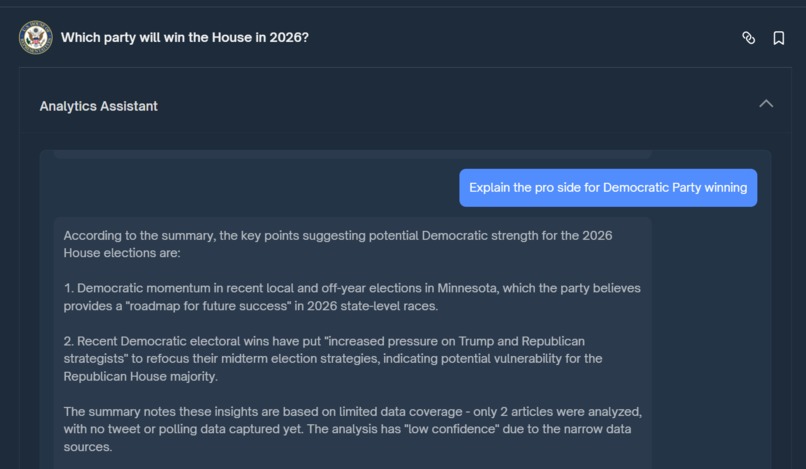
Chatbot Example
-
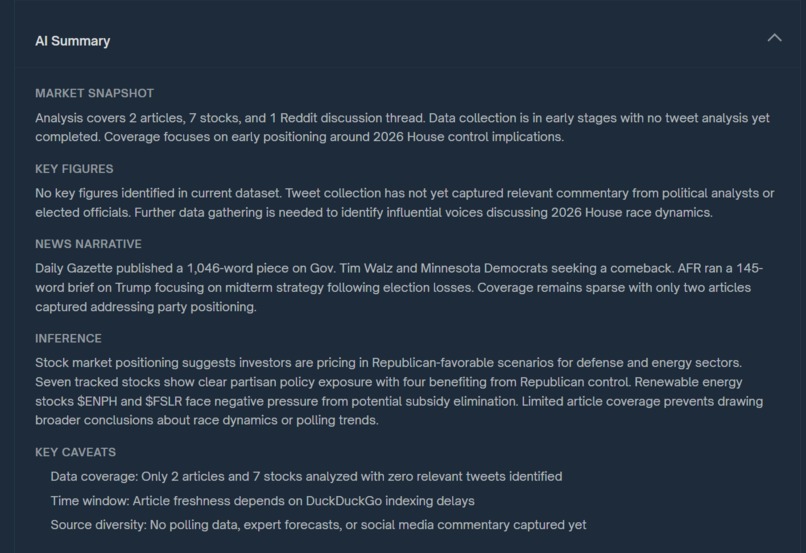
AI Summary Example using Polymarket
-
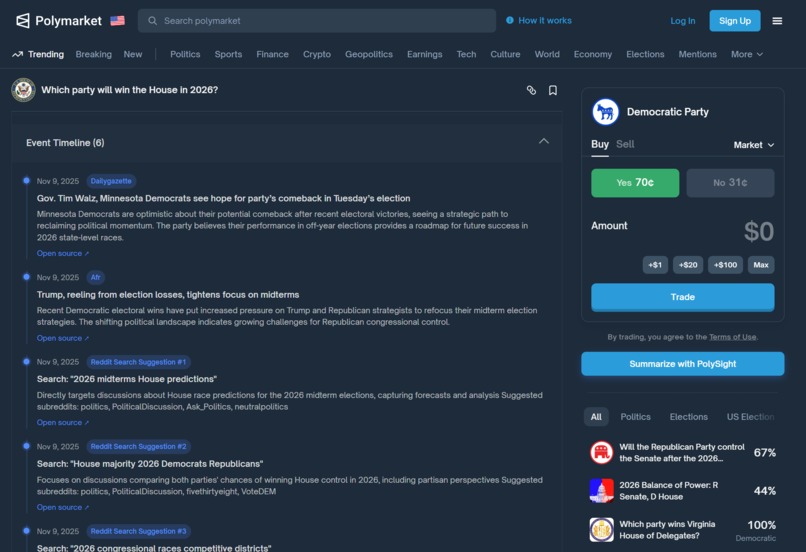
Timeline Example using Polymarket
-
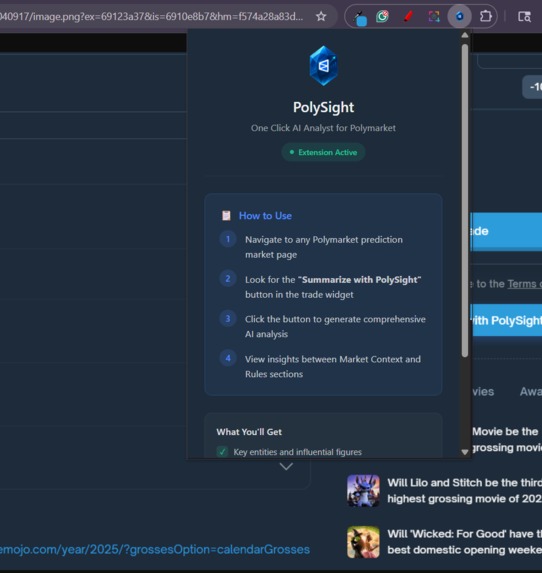
Extension popup
-
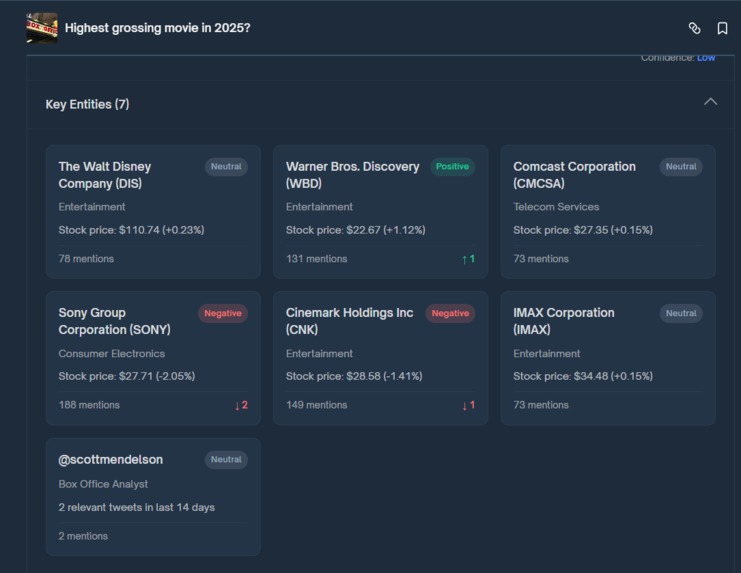
Key Entities using Yahoo Finance
-
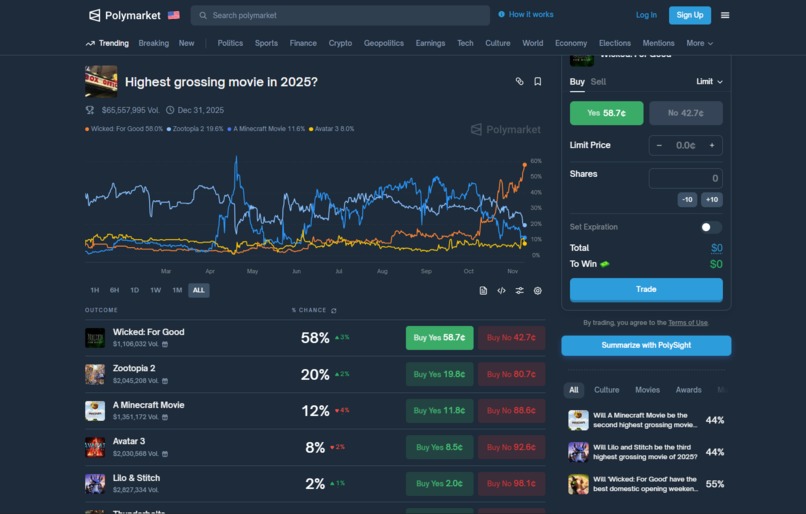
Seamless UI Integration with Polymarket's Interface


Inspiration
Polymarket is a website that turns real-world uncertainty into tradable markets, but after using it for some time, we realized a key flaw in that it fails to inform its users about what it is they are betting on, and so that was where we wanted to step in and make up for the shortcomings of the site
What it does
Our project is a chrome extension that at a click of a button will seamlessly integrate a fully fledged analysis of whichever real-time event you might be interested in betting on, showing relevant stocks, giving a timeline of events that give a bigger picture of the history of this event, messages from reddit and twitter from people that have relevancy to the event, and an overall summary of the event in general. It also comes with a chatbot, so if you have further questions, they can be answered with the press of a button.
How we built it
We built an AI-powered Chrome extension that transforms Polymarket prediction markets by delivering real-time multi-source intelligence through a sophisticated parallel data pipeline. The frontend uses React, TypeScript, and Tailwind CSS to inject a sleek "Summarize with AI" button directly into Polymarket pages, opening a side panel with comprehensive market analysis. Behind the scenes, a Python Flask backend orchestrates four simultaneous data collection pipelines using ThreadPoolExecutor: Twitter intelligence fetching tweets from influential accounts via RapidAPI, article discovery using NewsData.io and ScrapingDog for full-text extraction, Reddit community discussions, and real-time stock analysis via Yahoo Finance. This parallel architecture cuts analysis time from 30 seconds to 15 seconds while strategically deploying two Claude models, Sonnet 4.5 for high-accuracy tasks like domain detection and content quality checks, and Haiku for speed-critical operations like tweet filtering and article pre-screening. Domain detection dynamically prioritizes entity types, surfacing stocks for financial markets and politicians for political ones. At the same time, all data is synthesized into a structured timeline of events, an entity network connecting key figures and assets, and an executive summary with confidence ratings, delivering professional-grade market intelligence through intelligent parallel execution.
Challenges we ran into
We faced significant technical hurdles integrating our extension into Polymarket's live platform. The first major challenge was establishing reliable communication between our Chrome extension and Flask backend server. CORS policies and Chrome's strict security requirements initially blocked our API requests, requiring careful configuration of both the extension's manifest permissions and server-side CORS headers. Another substantial obstacle was seamlessly injecting our UI components into Polymarket's existing interface. Our initial content script implementations failed to properly mount React components, causing our "Summarize with AI" button and side panel to either become invisible or conflict with Polymarket's DOM structure. We eventually resolved this by refining our content script injection timing and ensuring our components were properly isolated from Polymarket's styling and JavaScript execution context.
What we learned
Building this extension taught us that production-ready AI tools require mastering three critical skills: Chrome extension architecture, intelligent context engineering, and strategic API orchestration. We learned that Manifest V3 extensions demand careful management of content scripts, message passing, and DOM manipulation to create seamless UI injections that feel native to existing platforms. The biggest technical revelation was understanding that AI quality depends on multi-stage data pipelines—starting broad with initial API calls, filtering smart with lightweight models, extracting deep with specialized tools, and refining ruthlessly with final AI passes. We discovered that parallel execution using Python's concurrent. Futures cuts processing time in half by running independent operations simultaneously rather than sequentially. Strategic model selection proved crucial: splitting high-accuracy tasks (domain detection, final filtering) to Claude Sonnet 4.5 and speed-critical operations (tweet filtering, pre-screening) to Claude Haiku reduced costs by 70% while improving performance 5x. Coordinating multiple APIs—Twitter, NewsData.io, ScrapingDog, Yahoo Finance, and Claude—taught us that modern AI applications are fundamentally about intelligent orchestration with proper error handling, rate limit management, and graceful degradation. The ultimate lesson: building truly useful AI tools isn't about prompt engineering alone—it's about architecting systems where APIs, models, and execution strategies work together to transform raw data into actionable insights in seconds.
What's next for PolySight
Our vision for PolySight goes beyond just a browser extension. We want to see this level of market intelligence built directly into Polymarket itself. If these features were native, real-time analysis, timelines, sentiment feeds, and summaries all available the moment a user opens a market, Polymarket could offer a deeper, more confident, and more informed trading experience. We believe full integration would unlock a new tier of engagement for the platform, helping users understand markets as easily as they trade in them.


Log in or sign up for Devpost to join the conversation.