-
-
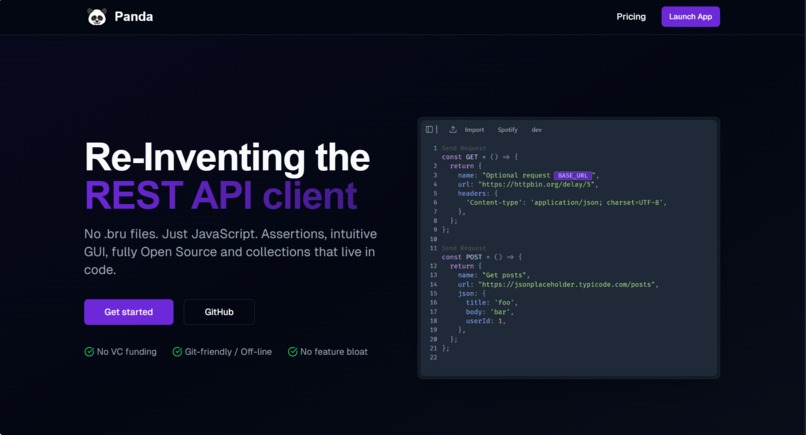
Hero
-
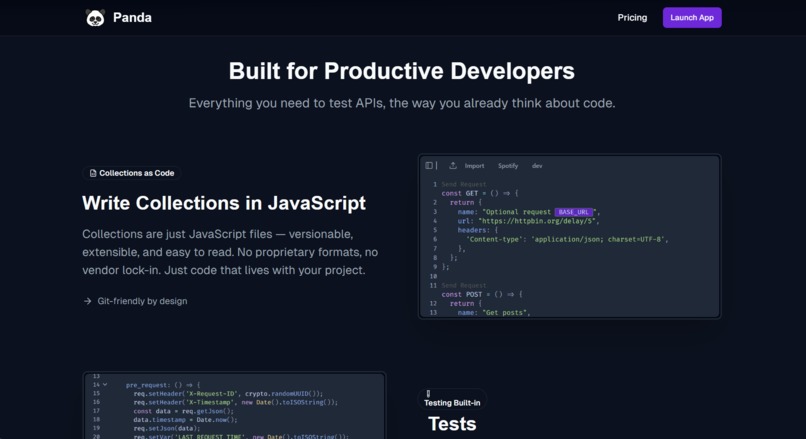
Feature 1
-
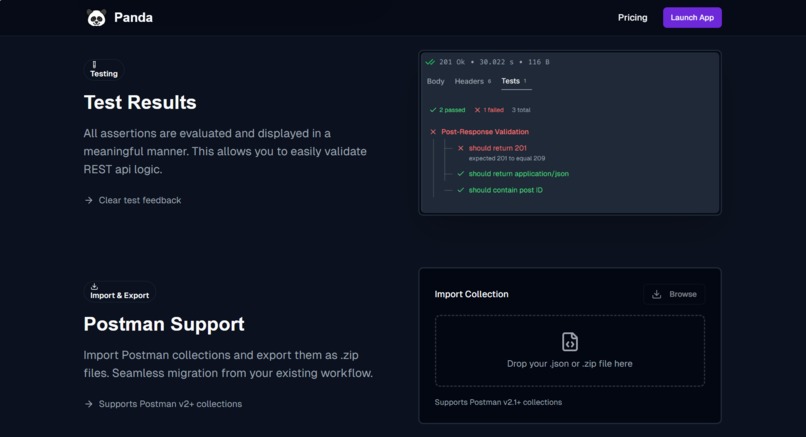
Feature 2
-
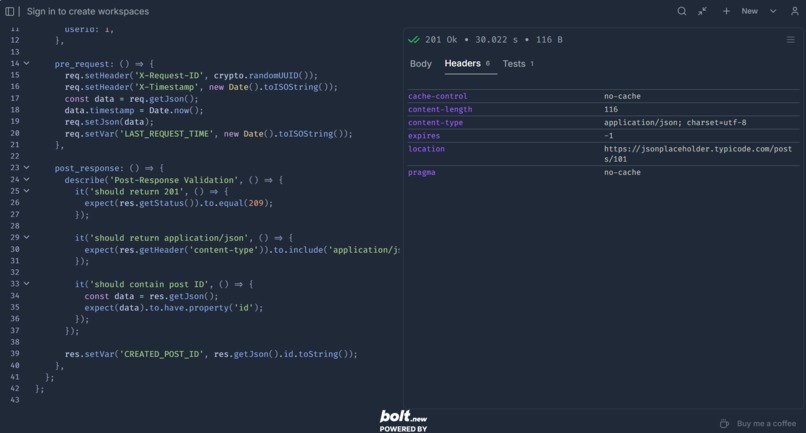
Response panel
-
Advanced fuzzy search
-
Pricing plan
-
Light theme
-
Assertions tab
-
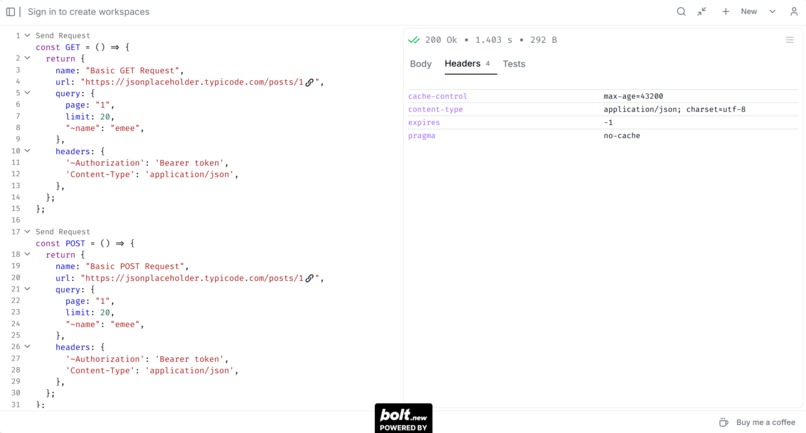
Light theme 2
-
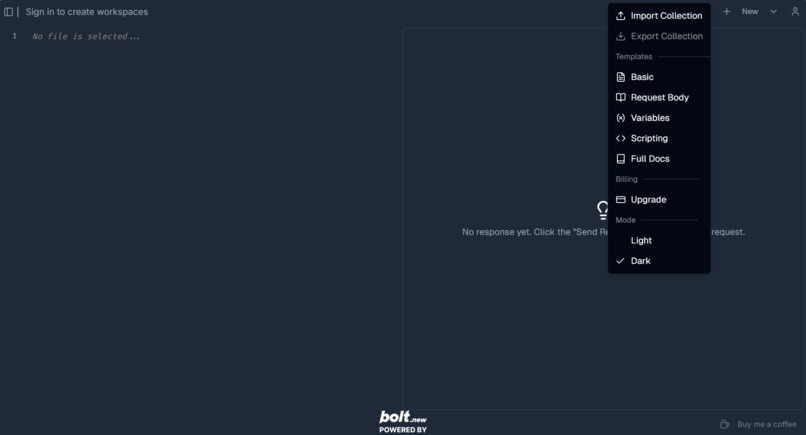
Import collections


Inspiration
Postman is an API platform valued at over $5 billion. It fundamentally transformed how developers interact with and test REST APIs. As a unicorn company, it has widespread adoption and is used by millions of startups and developers. While that level of reach is generally beneficial, Postman has recently taken a turn; trying to do too much. The result is an increasingly bloated application filled with features that the average developer rarely uses or needs.
I found inspiration in Bruno, a direct alternative to Postman that offers an offline, file-based, and Git-friendly approach to REST API testing. Bruno introduced Bru files, a domain-specific language (DSL) designed to represent HTTP requests in a format that can be committed to Git and version-controlled easily. While this approach is appealing, Bruno has several shortcomings: it’s not fully open source, it relies on a custom DSL that users must learn, it lacks extensibility, theming support on GitHub is weak, and perhaps most concerning, it appears to be drifting toward the same complex GUI-based workflows that plague Postman.
What it does
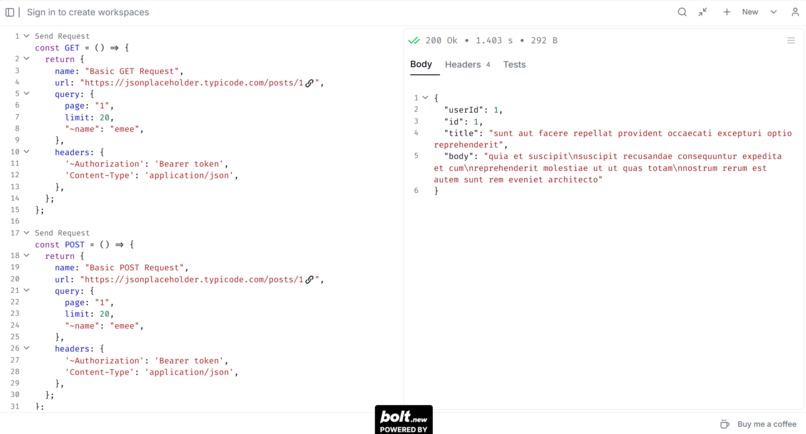
Panda is built to solve these issues. Instead of relying on a custom DSL, Panda models HTTP requests using JavaScript, making it instantly familiar and easily extensible. JavaScript’s ubiquity means excellent syntax highlighting and theming support across GitHub and most code editors.
Panda is a powerful, file-based HTTP IDE specifically designed for HTTP testing. Most importantly, it is bootstrapped, fully open source, and community-funded, prioritizing simplicity, transparency, and developer autonomy from day one.
🔗 Bolt Project Links
⚠️ Note: Due to a current bug on Bolt.new, the dropdown to toggle project visibility is disabled. As a result, my original project is stuck in private mode, even though the linked GitHub repository is public.
I’ve created a duplicate of the project to make it publicly visible, but this unfortunately means the chat history from the original is lost.
- 🔒 Original Project (Private View): https://bolt.new/~/sb1-akbxcfv4
- 🌐 Public Duplicate: https://bolt.new/~/sb1-ogdwzpss
Features
- ⚡ Models HTTP collections as
.jsfiles - 📁 File-based, Git-friendly architecture
- 🌈 CatppuccinLatte code-mirror theming support
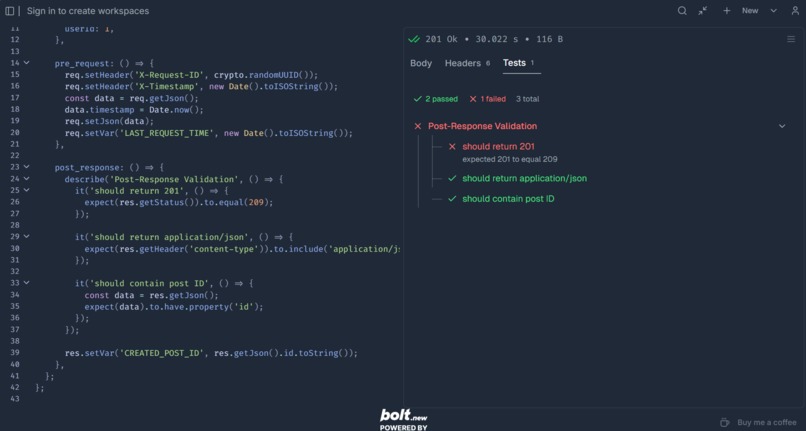
- 🔁 Response history & assertions panel
- 📦 Import Postman v2 JSON collections
- 🌐 Convex-powered auth and queries
- 🛠 Developer-focused extensibility with JS
- 📤 Export/import project as
.zip - 🧪 Pre- and post-response script support
- 🧠 Variable decorators, script runtime
How we built it
Project Documentation
I participated in the Bolt Hackathon to challenge myself: can a full-featured SaaS product be built entirely via vibe coding using Bolt.new? As someone with web development experience, I leaned into Bolt's strengths while using minimal external tools to fill the current limitations.
My initial experience involved a lot of trial and error. My first prompts were rough and unrefined. But after going through the Bolt Discord, YouTube tutorials, and documentation, my prompting got significantly better. This document outlines my process, decisions, and clearly documents any third-party tooling used.
Bolt to External Ratio:
✅ ~90% Bolt (core features, layout, auth logic, backend, payment setup, analytics)
🛠️ ~10% third-party or manual edits (ChatGPT, Loveable, VS Code tweaks)
🧠 Development Workflow
- Prompted Bolt to build components or features
- Re-prompted or used inline comments if needed
- Minimal VS Code, ChatGPT, or Loveable use for refactoring, suggestions, or debugging
⚙️ Key Features Built with Bolt
🔧 Layout & Core Components
- Code Editor (with extensions: HTTP and variable decorators)
- File Tree Sidebar
- Response Panel with Tabs
- Navbar & Footer
- Workspaces Dropdown & Dialog
- Environment Variables Dropdown & Input Modals
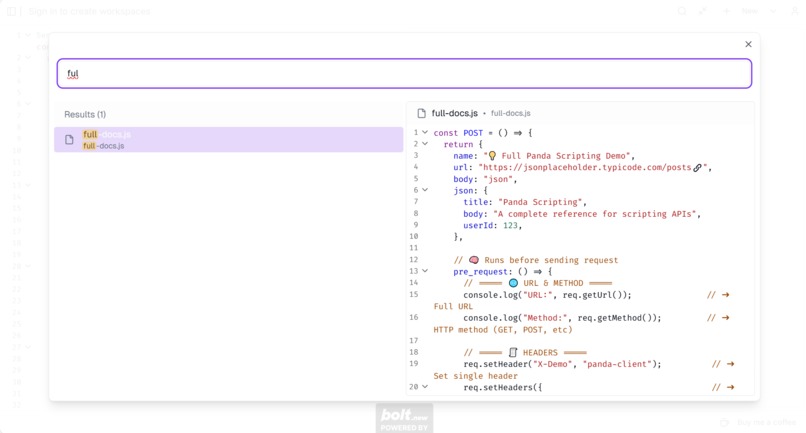
- Advanced fuzzy file search with content preview
🧩 HTTP & Runtime
- HTTP Function Decorators
- Response Assertions Panel
- Import Postman v2 JSON Commit 🔗
- Export/Import Project as
.zip - Response History Panel using Convex for history storage
- Convex Auth: Login/Signup
- Request/Response Runtime Logic
🌐 UI Pages
- Landing Page (Hero, Features, FAQs, Footer)
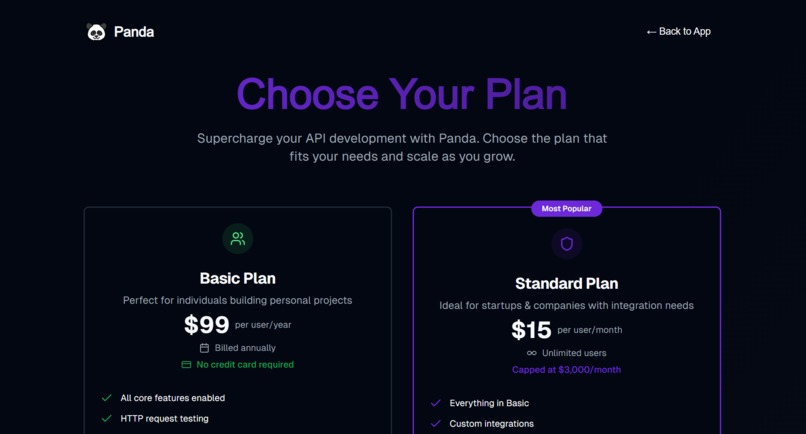
- Pricing Page with Freemius 🤑
- OG Metadata Generator (Next.js-compatible)
📊 Analytics
- PostHog for product analytics
Challenges we ran into
- Wasted a lot of time & tokens trying to integrate Webcontainers
- Prompt fatigue and trial-error debugging when Bolt misunderstood instructions
- Complex runtime logic required post-processing via manual intervention
- Ensuring GitHub theming & code syntax looked great for
.jsbased HTTP requests - Initial File tree and editor extensions required recursive logic and custom utilities
- Theming the application/editor to my specific liking
- Lack of Supabase integration in Nextjs
- High token usage
- Bolt broke app trying to integrate documentation
Accomplishments that we're proud of
- Built a full Postman/Bruno alternative inside Bolt
- Maintained clean UX while sticking to file-based, developer-first ideals
- Achieved full runtime support for pre/post-request scripting and assertions
- Successfully integrated Convex, PostHog, and Freemius for a production-ready MVP
- Advanced file search
- Browser based testing framework
What we learned
- Prompt engineering is a skill: structured, layered prompts work best with Bolt
- JavaScript as a format for HTTP testing makes projects extensible and Git-friendly
- Flat File-based UX is still very much a developer priority over bloated GUI clients
- Convex makes real-time features surprisingly simple
What's next for Panda HTTP
- 🌍 Collaborator sharing and team-based workspaces
- 🔐 Vault-based secret management for environment variables
- 📄 Markdown-powered documentation per project
- 🧱 Plugin API for adding middleware (e.g., auth, transform headers)
- ⚙️ Export options:
.curl,.http,.yaml, etc. - 💬 Community voting board for roadmap prioritization
Initial Bolt Commits
- Initial Layout: Sidebar, Navbar, Editor, Response Panel
- Editor Widget + Bugs
- File Tree Sidebar
- Response Panel with Tabs
- Convex Integration
Important utilities written by Bolt
onSend()Commit 🔗onCancel()Commit 🔗createEditorDecorators()postmanJSONImporter(),convertPostmanRequest()flattenVisibleTree(),TreeFlattenerinterpolateVariables(),normalizeUrl()deserializeHttpFn()Commit 🔗serializeHttpFn()Commit 🔗- Runtime Split Logic Commit 🔗
- and so on...
Third-Party Tools & Manual Edits
Used only where Bolt fell short or for enhancements.
🔁 UI / UX Refinements
- Custom themes and layout tweaks - Commit 🔗
⚙️ Editor and Sidebar Enhancements
🧩 Decorator & Script Enhancements
🧰 Other Notable Fixes
- Utility for newline formatting Commit 🔗
- Filetree Refactored By Loveable - https://lovable.dev/projects/d3d58040-8d21-4e87-b828-c4d7cf062be8?magic_link=mc_8f6ed2ea-86ed-4d2d-af93-ff1e3b15d2ac
- Deterministic sort By ChatGPT - https://chatgpt.com/share/6862811d-1ee8-8009-9b63-e3f60fa48250
💬 Final Thoughts
This project was an ambitious experiment in using AI-driven development to the fullest. Bolt was the heart of this project—driving most of the UI, logic, backend setup, and scaffolding. External tools played a minimal but complementary role, ensuring polish and production-readiness.
🔗 GitHub Repo: Postlad on GitHub
Built With
- axios
- codemirror
- convex.dev
- nextjs
- shadcn
- tailwind
- typescript


Log in or sign up for Devpost to join the conversation.