-
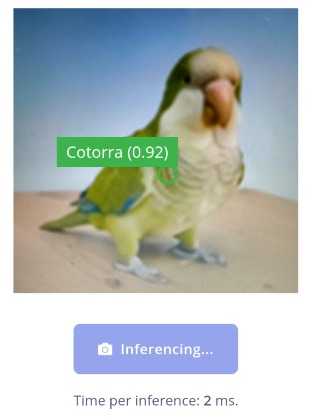
Identification of an Argentinian Parrot through Edge Impulse
-
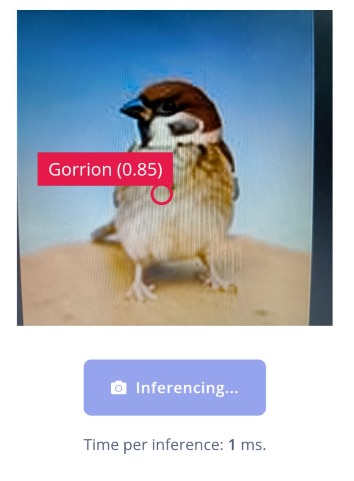
Identification of a Sparrow through Edge Impulse
-
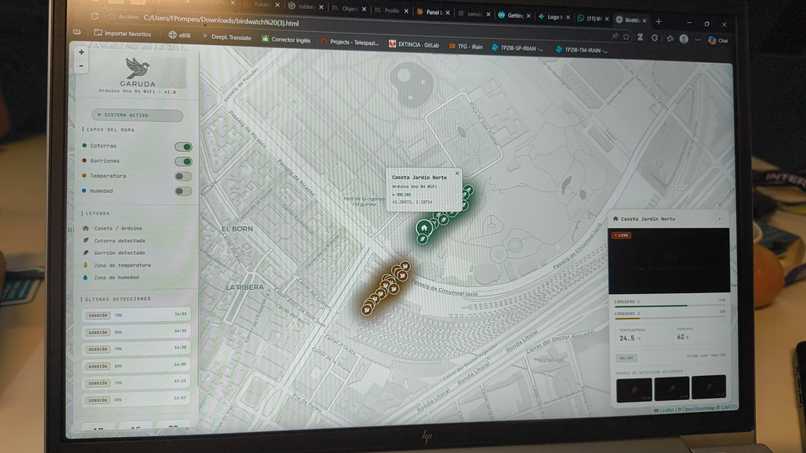
Frontend


Inspiration
Project Garuda was born as a response to the growing ecological imbalance in Barcelona caused by invasive species, especially the monk parakeet. We observed how these birds were progressively displacing native species such as the house sparrow, negatively affecting urban biodiversity and the natural balance of the city. We wanted to create a technological, ethical, and sustainable solution that used IoT and artificial intelligence to protect local wildlife without relying on aggressive or harmful methods.
What it does
Project Garuda is a network of smart birdhouses capable of monitoring and managing urban ecosystems in real time.
The birdhouse uses computer vision and AI-powered acoustic analysis to identify bird species. Depending on the detected species, the system automatically controls access to different food compartments:
Native birds receive normal birdseed and safe acoustic stimulation. Invasive species are given access to birdseed treated with reproductive inhibitors, administered only during mating seasons.
Additionally, the system:
Records activity and population data. Generates acoustic maps of the surrounding environment. Reproduces sounds to encourage the reproduction and settlement of native species. Displays real-time information through a connected web platform. How we built it
We built the prototype using an Arduino Uno Q-based architecture combined with several sensors and modules.
Hardware Arduino Uno Q Logitech Brio 105 Full HD webcam with integrated microphone Motion sensor Buzzer RGB LED strips Software
We developed artificial intelligence models using Edge Impulse to:
Differentiate monk parakeets and sparrows through computer vision. Identify bird species through audio analysis.
All inference runs locally to guarantee privacy and minimize dependence on external servers.
We also developed an interactive web platform that:
Displays birdhouse locations on a map. Streams the live camera feed. Reflects the system behavior and automated mechanisms in real time. Challenges we ran into
One of the biggest challenges was training AI models accurate enough within the limited time and resources of a hackathon environment.
We also faced difficulties related to:
Limited hardware availability. Integrating computer vision, audio analysis, and IoT simultaneously. Optimizing local processing on embedded hardware. Simulating realistic bird sounds using only a buzzer instead of a real speaker.
Additionally, it was essential to design an ethical and safe solution that would avoid accidentally affecting native bird species.
Accomplishments that we're proud of
We are especially proud of:
Building a fully integrated functional prototype. Successfully implementing AI for both image and audio recognition. Guaranteeing privacy through fully local processing. Designing an ethical and ecological solution for invasive species control. Developing a web platform connected to the IoT ecosystem. Applying real edge AI technologies learned during the Qualcomm-sponsored workshop.
We are also proud to have created a project with real environmental and social impact for the future of Barcelona.
What we learned
Throughout the development process, we learned:
How to train and integrate AI models on edge devices. The importance of resource optimization in embedded systems. How to combine IoT, computer vision, and acoustic analysis within a single ecosystem. The complexity of designing technological solutions for real ecological problems. The importance of privacy and local processing in smart urban systems.
We also significantly improved our teamwork, rapid prototyping, and hardware/software integration skills.
What's next for Project Garuda
Our next step is transforming Garuda into a scalable urban infrastructure deployable throughout the city.
Future implementations include:
Separating the architecture into independent servers with dedicated APIs and databases. Optimizing energy consumption by activating the camera only when motion is detected. Replacing the buzzer with real speakers. Expanding the AI models to recognize a wider variety of bird species. Adding visual maintenance alerts and automated error notifications. Creating a complete urban ornithological monitoring network. Integrating Garuda into a broader ecosystem of sustainable technologies designed to protect Barcelona’s native biodiversity.


Log in or sign up for Devpost to join the conversation.