-
-
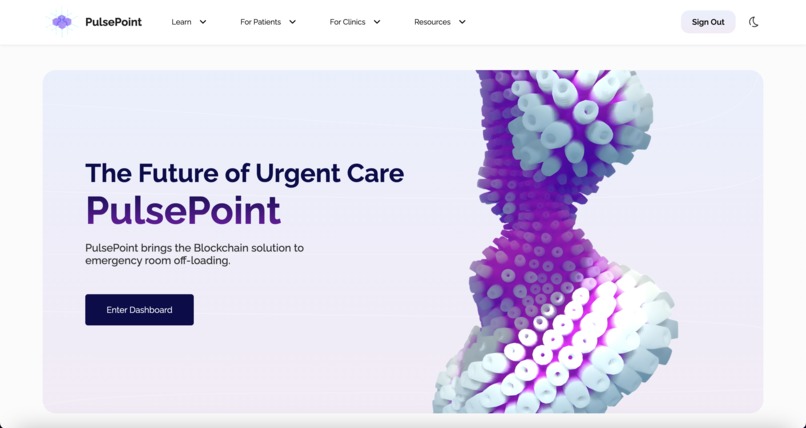
Home page
-

Home page (Tablet)
-
-


PulsePoint represents a significant stride in healthcare technology, leveraging the security and efficiency of blockchain to enhance the way medical records are managed and shared across healthcare providers. By creating a centralized Electronic Medical Record (EMR) system, PulsePoint addresses a longstanding issue in healthcare: the cumbersome process of transferring patient records between clinics and healthcare providers. Here's a deeper dive into its components, achievements, lessons learned, and future directions:
Inspiration The inspiration behind PulsePoint stemmed from the critical need to streamline the management and sharing of medical records in the healthcare industry. The traditional methods of handling EMRs are often fraught with inefficiencies, including delays in record transfers, risks of data breaches, and difficulties in maintaining up-to-date patient information across different healthcare systems. PulsePoint aims to solve these issues by providing a secure, blockchain-based platform that empowers patients with control over their medical data, enabling seamless transfers with just a click.
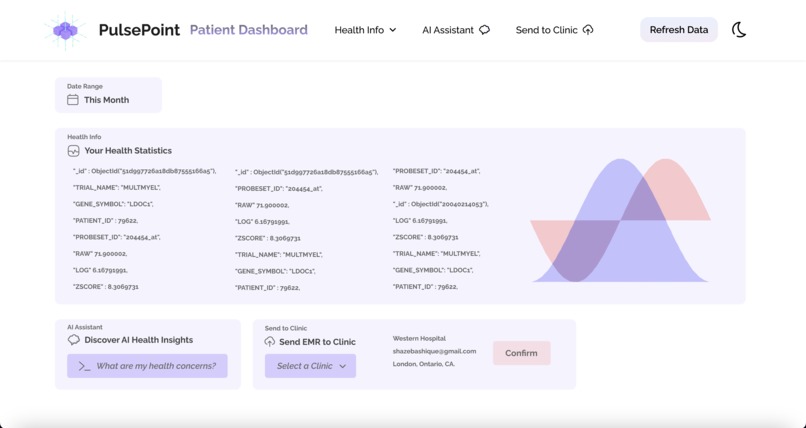
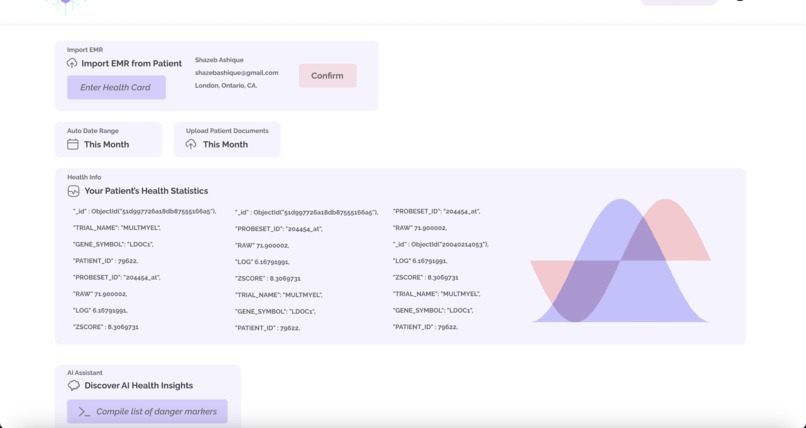
What It Does PulsePoint revolutionizes the way EMRs are managed by utilizing blockchain technology to ensure the integrity, security, and portability of medical records. Patients can easily grant access to their medical history to any participating clinic, significantly reducing the administrative burden on healthcare providers and improving the overall patient care experience. This system not only facilitates quicker access to patient data but also enhances data privacy and security, critical components in healthcare.
How We Built It The development of PulsePoint involved a modified MERN stack (MongoDB, Express.js, React.js, Node.js), incorporating additional technologies such as Auth0 for authentication services and OpenAI's API for an AI-powered assistant. The use of Auth0 allowed for secure and scalable user authentication, while OpenAI's API provided an intelligent assistant feature to help users navigate their medical records and the platform more efficiently. The integration of blockchain technology was a pivotal part of the project, ensuring that all data transactions on the platform are secure and immutable.
Challenges We Ran Into One of the significant challenges faced during the development was setting up the blockchain service. The team encountered difficulties in integrating blockchain to securely manage the EMRs, which required extensive research and troubleshooting. Another challenge was devising a robust solution for document upload and storage that met the necessary standards for security and privacy compliance.
Accomplishments That We're Proud Of Despite the challenges, the team successfully developed a functional and secure platform that addresses many of the inefficiencies present in traditional EMR systems. The ability to securely transfer patient records across clinics with ease represents a major achievement in healthcare technology. Furthermore, the team's increased proficiency in React.js and a deeper understanding of blockchain services are significant accomplishments that will benefit future projects.
What We Learned The development process of PulsePoint was a learning journey, particularly in enhancing the team's skills in React.js and blockchain technology. The project provided valuable insights into the complexities of healthcare data management and the potential of blockchain to address these challenges. It also highlighted the importance of user-friendly design and robust security measures in developing healthcare applications.
What's Next for PulsePoint Looking ahead, PulsePoint aims to expand its network by onboarding more clinics and healthcare providers, thereby increasing the platform's utility and accessibility for patients nationwide. Future developments will focus on enhancing the platform's AI capabilities to offer more personalized and intelligent features for users, such as health insights and recommendations. Additionally, the team plans to explore the integration of advanced blockchain technologies to further improve data security and interoperability between different healthcare systems.
By continuously evolving and adapting to the needs of the healthcare industry, PulsePoint is poised to become a cornerstone in the digital transformation of healthcare, making patient data management more secure, efficient, and patient-centric.
Built With
- auth0
- bcyrpt
- blockchain
- cors
- cryptojs
- css3
- ecdsa
- eth
- express.js
- figma
- hedera
- html5
- jwt
- mongodb
- multer
- node.js
- openai
- pinata
- react
- remix
- solidty
- web3-storage/w3up-client




Log in or sign up for Devpost to join the conversation.