-
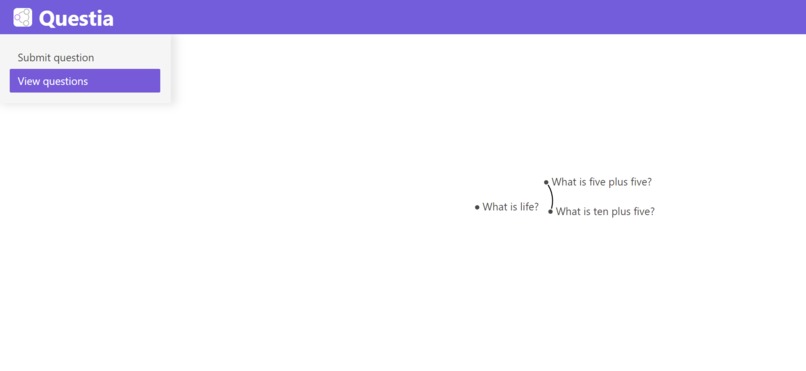
Page showing the network of questions
-
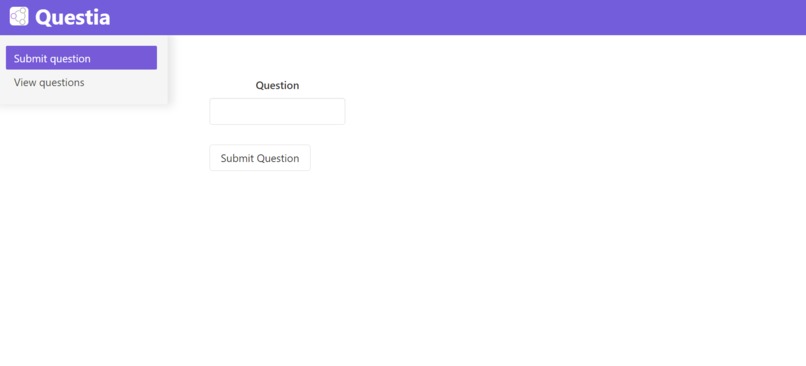
Page allowing students to submit questions


Inspiration
Having kept in contact with our secondary schools, we found that many classrooms have started incorporating Chromebook and tablet devices into teaching even with classes being back in person. However in many cases, these devices were just being treated at a digital text editor or as a virtual whiteboard, not utilising the true potential of what these devices can bring to learning. We wanted to create a web application that allows students to be more confident to explore topics and for teachers to better interact and engage with their students.
One of the fundamental problems with the current schooling system is that many voices are lost in the classroom, often because students are unwilling to speak out in class to admit they don't understand the topic. So we decided that this would be the core focus of our website: Questia.
What it does
It is a web application that allows students to anonymously ask questions for teachers to answer. It utilises NLP to group and cluster similar questions for the teacher to answer all together as well as giving students the option to upvote other questions they want answered so the teacher can prioritise them. We represented the questions as a graph network so links can be made between similar questions and form a natural structure, making it easier for teachers to see at a glance the types of questions that are being asked so they can find the best way to
How we built it
We built the front-end using Typescript, Vue and D3 and the backend using Python, Flask and multiple NLP libraries
Challenges we ran into
We learnt a lot of new techniques when creating this design. One large challenge was incorporating a data vision library, D3, into our program. It simulated forces in unexpected ways which meant that we had to invest a lot of time into configuring all the settings properly. We had also never done NLP before and so we had to research into the best NLP approaches we could take to solve this problem.
Accomplishments that we're proud of
Having never done NLP or used data vision libraries before, we were very proud to be able to put all these components together into such a complex design. We were also proud of coming up with an idea that we believe can truly have a fundamental impact on society.
What we learned
We learnt how to carry out lexical analysis to compare questions with similar meanings. We also learnt how to use data visualisation libraries and how to connect them to a backend to display data stored on a server.
What's next for Questia
We want to create a fundamental shift in the way teaching is carried out using technology. Devices shouldn't be thought of as an addition to learning, but rather lessons should be based around utilising the technology to be able to reach and hear the voices of all the students in the class. For example, lesson plans can be created with this application in mind, setting out dedicated time half way through the class and at the end of the class to tackle any key problems encountered by many students and using the remaining time to answer any individual questions that may arise.


Log in or sign up for Devpost to join the conversation.