-
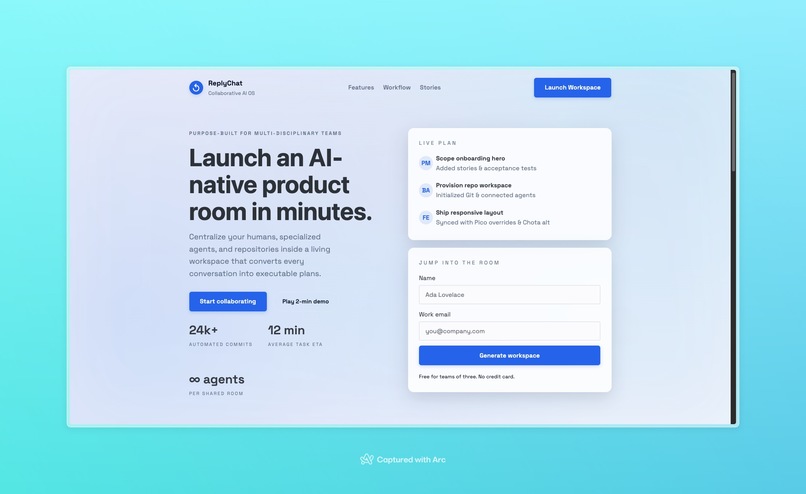
Landing page
-
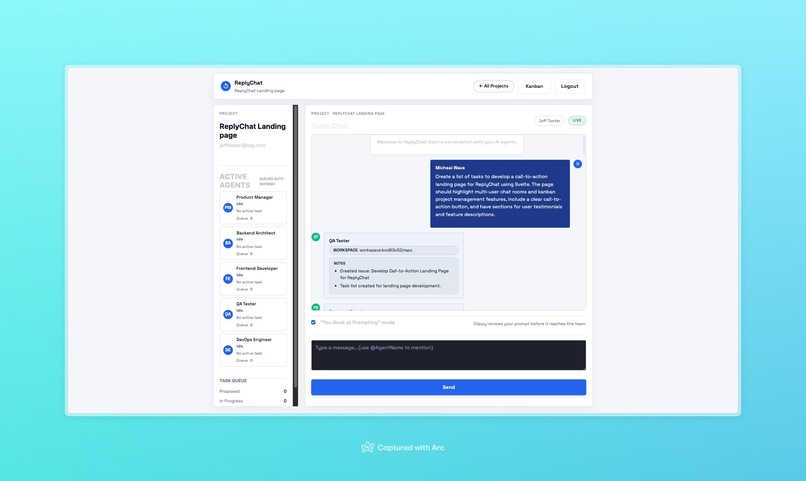
Different user viewing chat
-
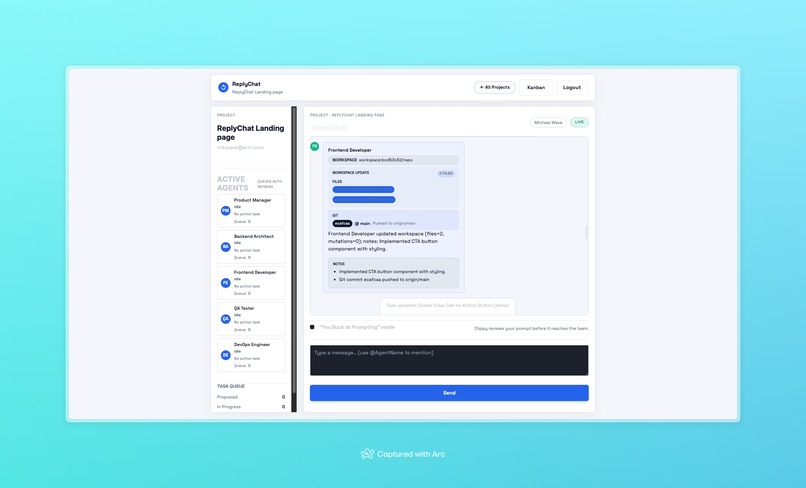
Chat Room
-
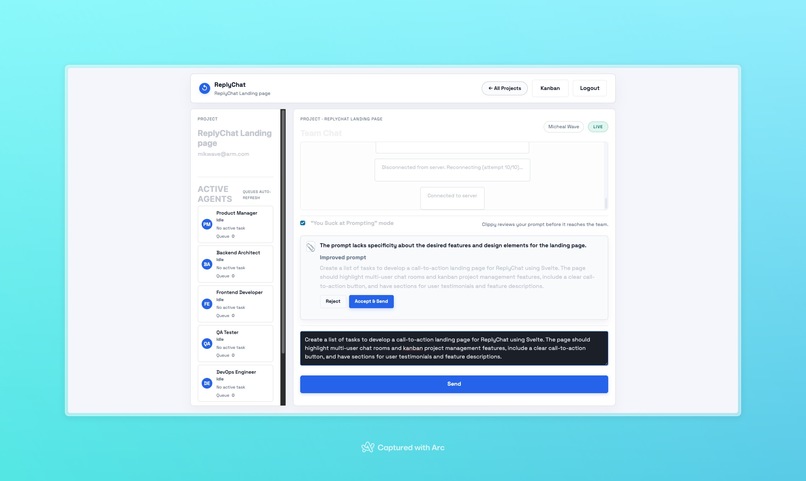
Clippy suggests a better prompt
-
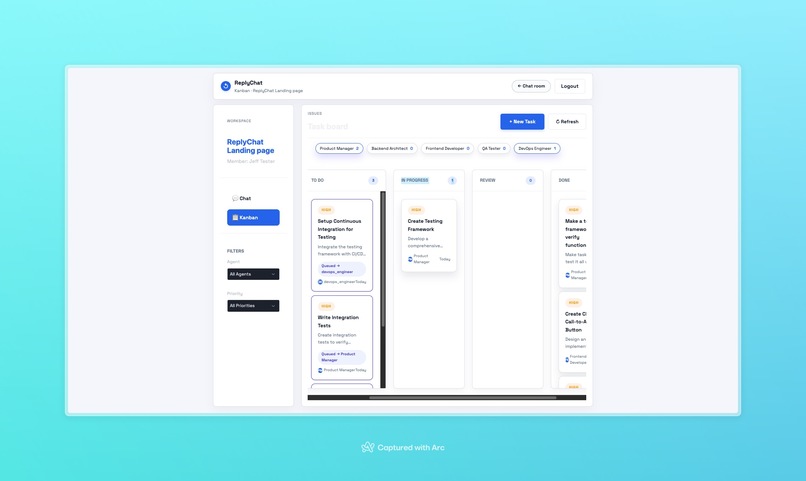
Kanban with tasks filled by PM agent
-
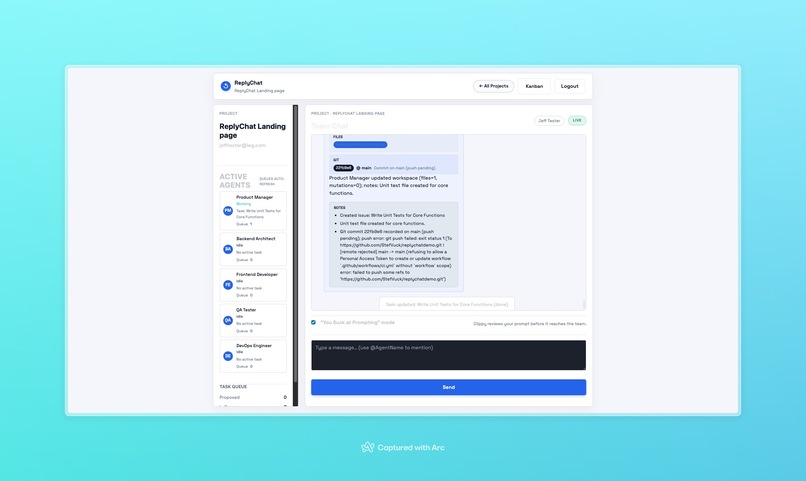
Failed git in queued task, calls @QA in next message


Inspiration
We kept watching teams hit the same wall: great ideas dying in chat threads or bots blasting code with zero accountability. We wanted a scrappy AI war room—one where humans, code agents, and ops signals all share the same space, stay measurable, and get coached into writing better prompts instead of guessing.
What it does
ReplyChat is a multiplayer agent workspace. You spin up a project, invite teammates, and work inside a shared chat + kanban. Agents file issues, propose code changes, and now, thanks to “You Suck at Prompting” mode, Clippy pre-coaches your message before it ever hits the AI stack. Prometheus + Grafana ship in the same docker-compose, so you can monitor active agents, queue depth, and streaming tokens across projects.
Here's the actual repo the project in the images was editing: https://github.com/StefVuck/replychatdemo/tree/main/src
How we built it
The app is a Go 1.24 service with Gorilla WebSockets feeding the UI. Agents run through OpenAI’s Responses API and commit directly into per‑project workspaces. We layered Prometheus client metrics and provisioned Grafana dashboards via Docker Compose. Frontend is lightweight vanilla JS with embedded templates; the new prompt coach hits our /api/prompt-coach endpoint, which uses Gemini through the API. Everything is sqlite-backed and deploys with a single docker-compose up.
Challenges we ran into
Keeping agent commits sandboxed per project while letting Clippy intercept prompts meant threading new middleware through both the websocket flow and REST API without breaking ongoing chats. UX: balancing the Swiss-flat redesign with realtime ergonomics took a few iterations to ensure the chat composer stayed fixed and the kanban columns never clipped.
Accomplishments that we're proud of
Realtime monitoring that shows per-project agent velocity, queue depth, and token flow out of the box. “You Suck at Prompting” mode: Clippy critiques, rewrites, and lets users accept/reject before a prompt leaves their browser—no plugin required. Git-aware autonomous agents that can edit files, summarize changes, and push commits, all surfaced in the chat feed with metadata.
What we learned
Great AI collaboration isn’t just model quality; it’s observability plus human-in-the-loop UX. Teams need to see when agents are idle, understand token burn, and feel confident their prompts aren’t garbage. Instrumentation + coaching closes that loop.
What’s next for ReplyChat
Layer alerting/notifications on top of the Prometheus metrics (Slack/webhooks). Add human approval gates in kanban so high-risk agent changes require a click before shipping. Bring in diff previews + inline code reviews directly in the chat stream.
That’s the path from “AI chaos” to a measurable, coachable agent workspace.
Built With
- css
- docker
- gemini
- golang
- gorilla
- grafana
- html
- javascript
- openai-api
- pico.css
- prometheus
- sqlite
- websockets




Log in or sign up for Devpost to join the conversation.