-
-
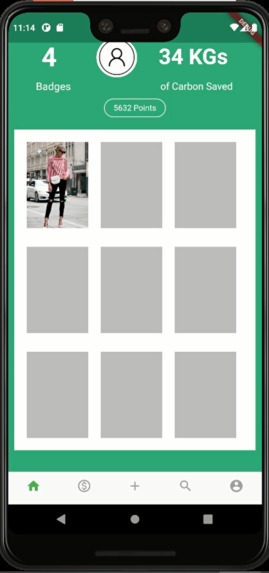
Homepage
-
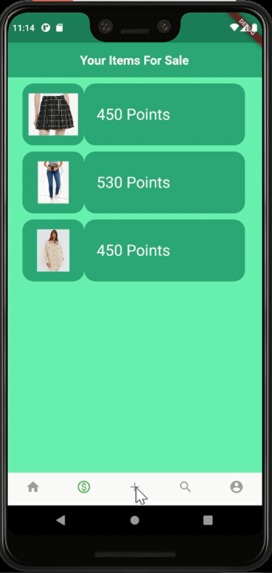
Selling
-
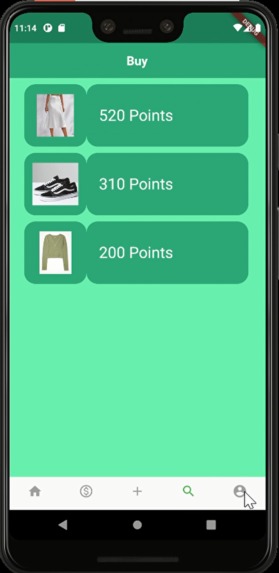
Buying
-
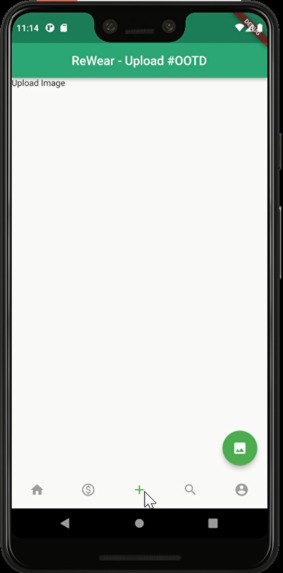
Upload images
-
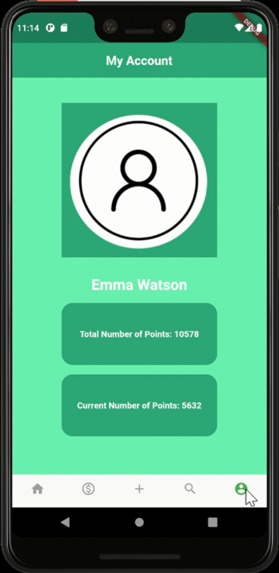
Profile


Executive Summary:
ReWear is an innovative app that helps individuals reduce their own clothing waste by encouraging them to wear their clothes more often through an addicting points system. Users accumulate points and earn badges by rewearing clothes and uploading photos of the clothing each time. Once users accumulate enough points on a piece of clothing, they can put the item up for sale. Other users can then buy that piece of clothing with their own points. Since no money is exchanged and all transactions are done solely through points, we can prevent the issue of reselling faced by our competitors. With this model, clothes which would usually end up in landfills can find new homes.
ReWear accomplishes 4 specific tasks:
- Allows user to upload their "outfit of the day".
- Using ML, the app detects whether the user has worn those clothing items previously.
- The app rewards the user for re-wearing clothes by awarding points.
- These points can be used to "buy" clothes from other users- for free!
Problem:
The fashion industry is the second biggest polluter of clean water in the world. This is mainly due to the fast-fashion business model which has taken over the industry over the past few decades. Instead of making high quality, long lasting clothes, fast fashion focuses on making trendy, cheap, low-to-medium quality clothes that can be on store shelves in as little as a week. The fast speed of garment production also accelerates consumption as trends change every week. According to the Ellen MacArthur Foundation, the average person in 2021 buys 60% more clothing than the average person in the year 2000. As a result, the average person discards more clothing, some without ever being worn. The fast speed and high demand of fast fashion creates a huge strain on the environment. It takes 3,781 litres of water to create a single pair of jeans, the whole process, from the growing of cotton to the delivery of the final product, releases about 33.4 kilograms of carbon. With around 100 billion articles of clothing sold globally each year, and approximately 334,000,000,000 kilograms of carbon released because of it, it is vital to take steps to reduce the environmental effects and carbon footprint of fast fashion on the world. ReWear encourages people to wear their existing clothes and buy used clothes instead of contributing to the fast fashion cycle.
Opportunity and Market:
Today, climate change is at the forefront of the world. More and more people are becoming increasingly aware of the implications of fast fashion and are trying to find ways to shop more sustainably. ReWear will be able to help people shop more sustainably and reduce their clothing waste with its innovative app structure that not only encourages people to rewear their existing clothes, but also buy second-hand clothes from their community with the use of points.
TAM (Total Addressable Market): Almost every single person in the world buys and wears clothing and over 3 billion people have access to a smartphone and internet around the world. With over 100 billion articles of clothing sold each year, the global consumer market spans over six continents and continues to expand year over year. ReWear’s total addressable market are the 3 billion who wear and buy clothes, and who have access to a smartphone and internet around the world.
SAM (Serviceable Available Market): As a start-up, ReWear’s serviceable available market is anyone who wears clothes and has access to a smartphone and internet in Canada. Over 25 million people in Canada have access to both of these things and by 2026, the number of smartphone users in Canada is expected to grow to 30 million. In Canada, the 25,000 fashion and fashion accessories retailers come together to have a turnover of over 28 billion dollars annually.
SOM (Serviceable Obtainable Market): ReWear’s serviceable obtainable market at this point in time are people from the ages of 16- 35 who buy and wear clothing, have access to a smartphone and internet, and live in Canada. ReWear has decided to target people from the ages of 16-35 because they are more likely to shop online and in thrift stores. Gen Z and Millenials are also more likely to understand the impact of fast fashion and are more likely to find alternatives. This gives us a target market of approximately 9.8 million people who fit this demographic in Canada.
Unique Value Proposition & Business Model:
ReWear helps people reduce their clothing consumption and clothing waste through the use of an inventive app. We do this by encouraging users to rewear their clothes through the use of a points system. Since no money is exchanged and all transactions are done solely through points, we can prevent the issue of reselling. With this model, clothes which would usually end up in landfills can find new homes. Users accumulate points and earn badges by rewearing clothes and uploading photos of the clothing each time they do. Once users accumulate 20 points on a piece of clothing, they can choose to put the item up for sale. Other users can then buy that piece of clothing with their own points. ReWear’s approach to tackling the fast-fashion problem sets us apart from our competitors as we focus on not only being a marketplace for used clothes, but also on encouraging people to reduce their consumption by rewearing their own clothes. ReWear plans to make revenue through the use and implementation of ads in the app. All potential ads will be vetted to make sure they do not go against our mission. All ads of clothing stores and other fashion industry ads will be removed.
Business Viability:
ReWear has the potential to be a viable and successful business because it is the first app of its kind which combines an online marketplace for used clothes with features to help reduce user’s personal clothing consumption. ReWear’s easy to use interface and powerful mission will definitely generate a buzz in the industry.
##How we built it:
ReWear was built with Android studio and the programming language Dart, which is a part of Google's SDK Flutter. Through the help of YouTube videos and guidance from mentors, we were able to create the app!
Challenges we ran into
Our biggest challenge was the learning curve we faced while developing the app. None of our team members have ever built anything with the use of machine learning and this was the first 2/3 developers in our team used flutter. We overcame this issue through the use of YouTube videos, talking with mentors, and communicating with each other to share what we have learned.
Accomplishments that we're proud of
We are extremely proud of what we have created over the past 36 hours. For many of us, this was the first time using software such as flutter and android, yet we have created an app with a fully functioning UI. We are also proud of having a well thought-out business plan and plans we hope to implement in the future!
What we learned
Through our research, we became more aware of the impact fast fashion has on the world around us. This experience has inspired up to take more steps to reduce our fashion consumption to help lessen our personal carbon footprints. Over the past two days, we have also learned how to work with machine learning and software such as thinkable machine, flutter, and android.
What's next for ReWear
We hope to be able to create a fully functional app soon with an improved machine learning system that can accurately detect old clothes from pictures and file them in their respective folders to gain points. We also hope to create a wardrobe manager in the app which will remind users if they have not worn a piece of clothing in a while. Oftentimes, people buy clothes and forget about them. If they upload a picture of the piece of clothing onto ReWear, the app will remind users that they have not worn the garment in X amount of days. This reminding feature will help consumers buy less clothing as they will be aware of what they already have in their closets.
Sources:
https://www.ethicalconsumer.org/fashion-clothing/carbon-cost-clothing https://www.statista.com/statistics/467190/forecast-of-smartphone-users-in-canada/ https://savemycent.com/fashion-industry-statistics/ https://fashionunited.ca/statistics/fashion-industry-statistics-canada/#:~:text=Canada%20has%2025%2C000%20retail%20and,is%2028%20billion%20Canadian%20dollars. https://www150.statcan.gc.ca/t1/tbl1/en/tv.action?pid=1710000501
Image Sources: https://fashionjackson.com/jcrew-red-stripe-shirt-outfit/ https://www.ae.com/ca/en/p/women/jegging/jegging/ae-ne-x-t-level-skinny-jean/0432_3408_334?menu=cat4840004 https://www.aritzia.com/en/product/the-ganna-shirt-jacket/72595.html?dwvar_72595_color=10250 https://www.vans.ca/en-ca/shoes-c00081/old-skool-pvn000d3hy28?cm_mmc=GPF-_-google-_-merchantcenter-_-VN000D3HY28&gclid=Cj0KCQjwnJaKBhDgARIsAHmvz6fjLEdE-TPQutcy2P7eBPhCmT-JH96yREjy01JsfdljGl7ytkiqKpUaAvRiEALw_wcB https://ca.shein.com/Zipper-Side-Solid-Satin-Skirt-p-2755828-cat-1732.html?url_from=caadplaswskirt07210524915L_ssc&gclid=Cj0KCQjwnJaKBhDgARIsAHmvz6e0B5GgmQMtccKckOUFkmRc1pTcYmzJH4cOS7i6X6ZYMM0pBfcJfTQaAqjfEALw_wcB https://www.ae.com/ca/en/p/women/t-shirts/layering-tees/ae-bff-tee/3376_7941_379?menu=cat4840004
Built With
- android
- android-studio
- flutter
- google-cloud
- google-teachable-machine
- java
- tensorflow.js


Log in or sign up for Devpost to join the conversation.