-
-
Logo
-
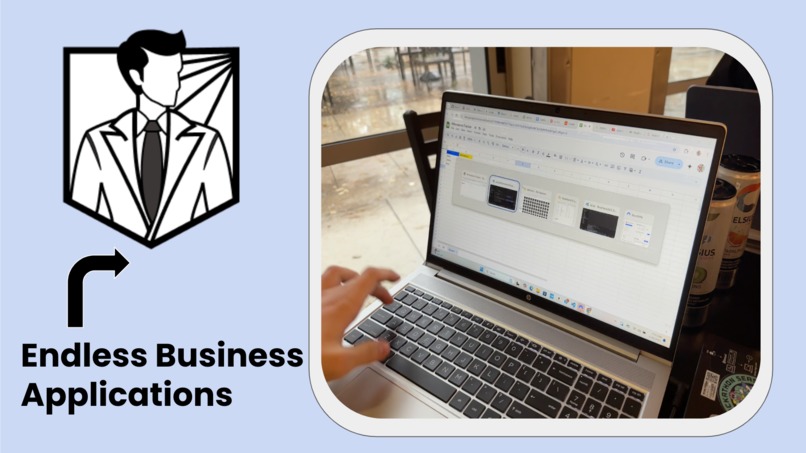
Large Applications
-
-
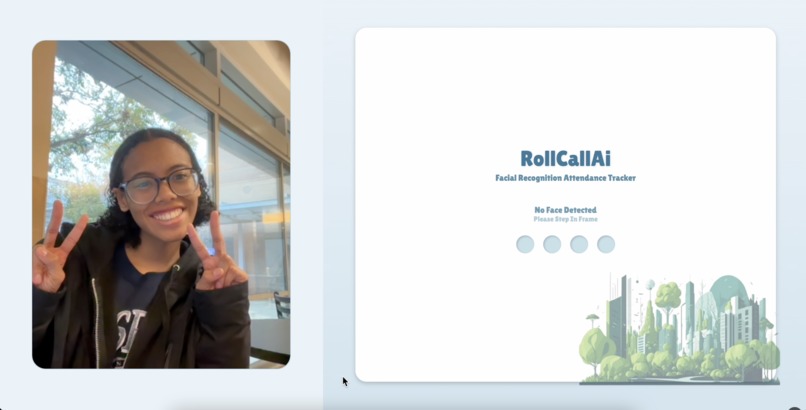
Frontend Welcome Screen
-
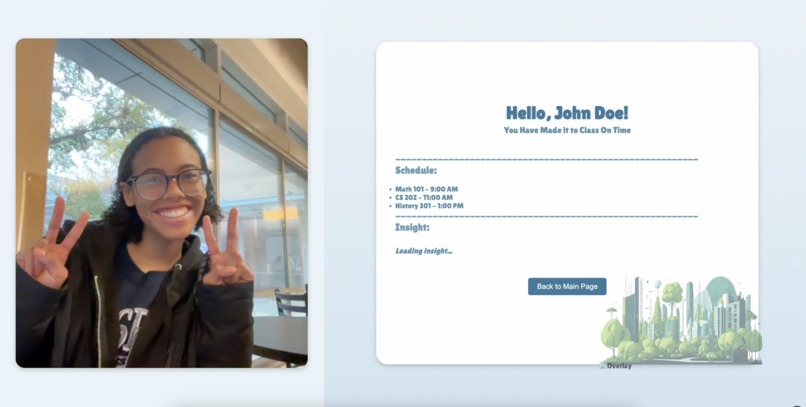
Frontend Face Recognized
-
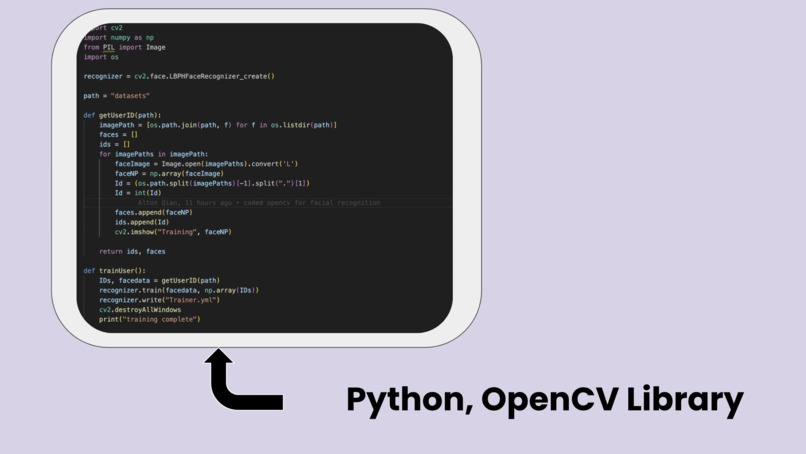
Code Snippet of Training Model


RollCall: Facial Recognition Attendance Tracker
The Inspiration
Our Beginner team started with a simple goal: to improve the way attendance is tracked in workplaces. Many organizations still rely on outdated methods like ID swipes or manual number entries. But people often forget numbers and ID cards, leading to inefficiencies. What people can’t leave at home, though, is their face. That insight inspired us to create RollCall—a solution built around facial recognition technology to ensure attendance tracking is effortless, accurate, and secure.
The Journey
Our team consisted of four members: Kyce Harper, Peyton Fleming, James Mace, and Alton Qian. We came from diverse technical backgrounds, with one member, Peyton, having never taken a computer science class before and other two never participating in a hackathon. By the end of the 24-hour hackathon, she not only understood HTML and Python syntax but also wrote her first lines of code—a testament to the power of collaboration and determination.
The Development
The foundation of RollCall was built using:
- Python: For developing the facial recognition functionality.
- C++: Efficient data structures for storing and retrieving user information.
- HTML: For designing the front-end interface.
Our initial plan was to create a fully functional web platform that seamlessly connected the front-end to the Python-powered back-end. However, this was our first time working on full-stack communication, and the challenge of integrating the two components within the time constraints proved to be a significant hurdle.
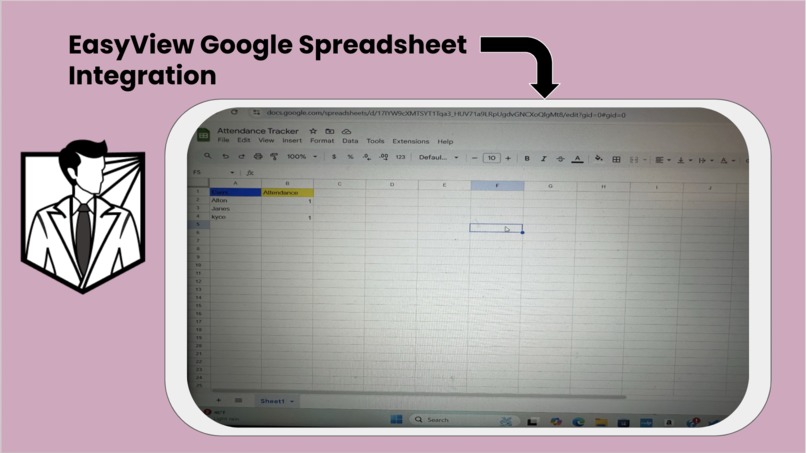
Recognizing the limitations, we pivoted to a more achievable solution: integrating our facial recognition system with a Google Sheets api. This allowed us to store and track attendance data while keeping the core functionality intact.
Hidden Benefits ?
The benefit of using google sheets to store data is that its easily accessible from anywhere, it is up scalable and clean, and very secure, as to get access they would need to decrypt the secure connection to google.
The Challenges
- Full-Stack Communication: None of us had prior experience connecting a Python back-end to an HTML front-end, which slowed our progress.
- Time Constraints: With only 24 hours, we had to prioritize functionality over perfection and find creative solutions to roadblocks.
- Team Experience Levels: Bridging the gap between different technical skill levels was a challenge, but it ultimately became a strength as we supported each other’s learning.
The Impact
Despite the challenges, RollCall is a proof of concept for a modern, scalable attendance solution. The project highlights our ability to adapt, pivot, and deliver results under pressure. Most importantly, it showcases how technology can be made more accessible, as we empowered a team member to go from no coding experience to contributing meaningfully to the project.
The Future
Moving forward, we plan to:
- Implement seamless front-end and back-end integration to improve user experience.
- Expand functionality to make the platform accessible to larger groups, including workplaces, schools, and even large families.
- Optimize the user interface and data management to attract broader adoption.
Conclusion
RollCall is more than just an attendance tracker—it’s a step toward rethinking how workplaces manage time and accountability. With further development, this platform has the potential to transform the way we think about attendance tracking, creating smarter, more connected environments for everyone.
Built With
- css3
- google-sheets
- html5
- javascript
- python


Log in or sign up for Devpost to join the conversation.