-
-
Slide 1 - Seanergize Team
-
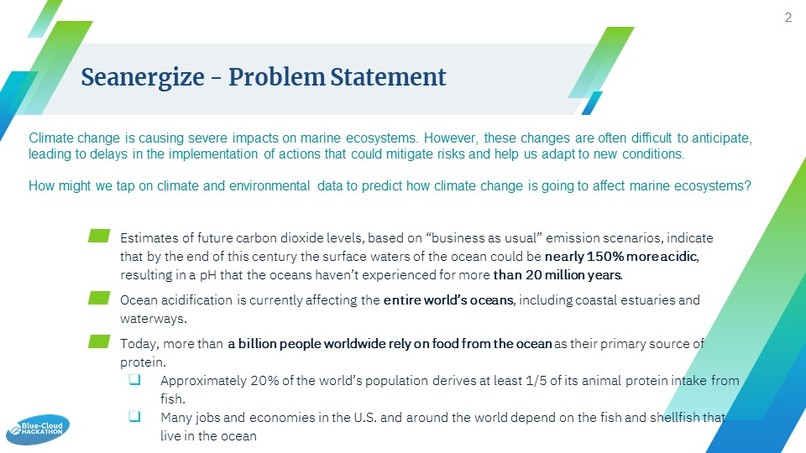
Slide 2 - Seanergize Problem Statment
-
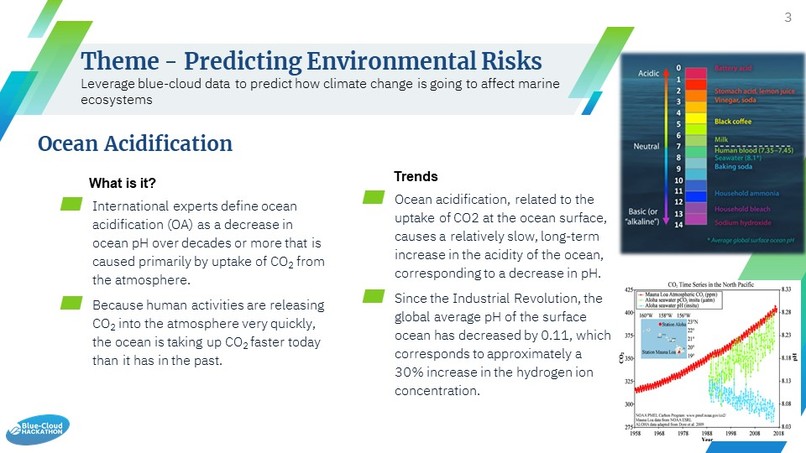
Slide 3 - Seanergize Theme
-
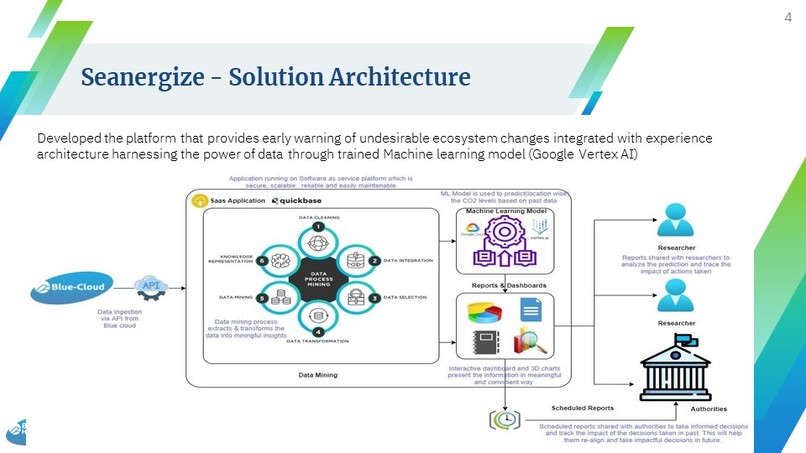
Slide 4 - Seanergize Solution Architecture
-
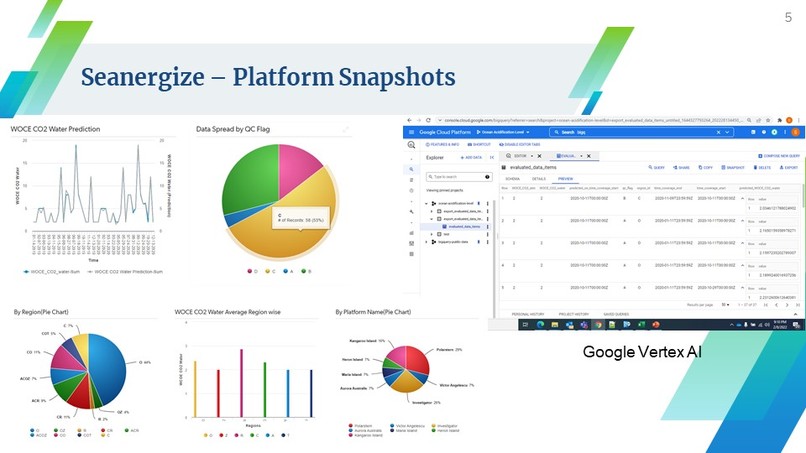
Slide 5 - Seanergize Platform Snapshots
-
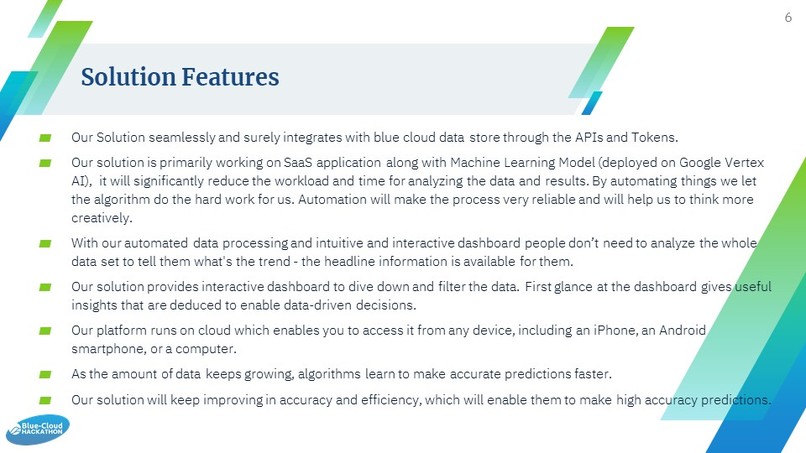
Slide 6 - Seanergize Solution Features
-
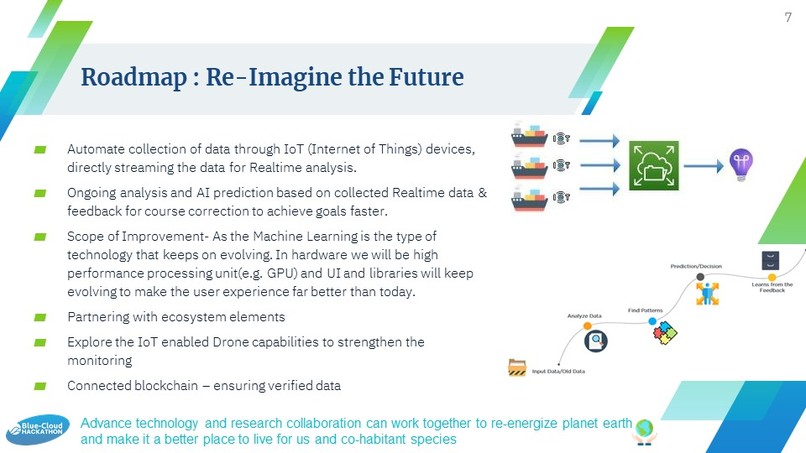
Slide 7 - Seanergize Roadmap : Re-imagine the future


Inspiration
We've heard about forest fires, storms, droughts, and other extreme weather events brought on by climate change. Unfortunately for us, we never took the time to study about the consequences of climate change on the ocean, which covers more than 70% of our planet. It's easy to remain unaware of this developing problem until it becomes a problem for us.
Learning in school can be a pain, and it can be difficult to remember crucial information like ocean acidification, but temperatures and CO2 levels are at all-time highs. Ecosystems are being degraded as glaciers melt. The need to protect our planet and achieve Goal 14 of the 17 UN Sustainable Development Goals, to conserve and sustainably utilise the oceans, seas, and marine resources for sustainable development, is becoming increasingly clear. Mitigating ocean acidification is one major step we can take to achieve this aim, and it all starts with public education.
Ocean acidification is sometimes referred to as "climate change's equally wicked twin," and with good reason: it's a major and destructive consequence of excess carbon dioxide in the atmosphere that we don't see or feel since its impacts occur underwater. At least a quarter of the carbon dioxide (CO2) emitted by burning coal, oil, and gas is dissolved in the ocean rather than remaining in the atmosphere. The ocean has absorbed around 525 billion tonnes of CO2 from the atmosphere since the dawn of the industrial age, with a current rate of around 22 million tonnes each day.
What it does
With limited funds and limited resource tacking this problem can be really tricky. We are pitching in a solution which can run on top the data from blue cloud and provide meaningful insights and Machine learning powered predictions for future CO2 level at seas level.
Our solution will help to identify and prioritize the region which need attention at the earliest to reverse ocean acidification. We are team of technocrats putting together solution which can lend helping hand to the noble cause of betterment of ocean and of the planet earth.
Platform is rich to get scheduled insights as well through defined experience user interface for end users.
How we built it
On Blue-cloud datasets, we utilized Google Vertex AI to develop and train ML models. To construct smart UI, we used QuickBase, a low-code, no-code platform that we internally dubbed ML Endpoints.
Developed API endpoints on top of AI model. These API-fication resulted in loosely coupled architecture to consume the early indicators from large datasets provided by https://www.socat.info/
Solution is futuristic to incrementally add more capabilities in terms of additional graphs and as well to onboard more data sets similar to what has been added currently from blue-cloud socat.
Experience for dashboards, dynamic trend graphs (WOCE Co2 Water prediction, Data spread by QC flag, WOCE Co2 Water Average Region wise, By Platform) have been developed with datasets of socat and intelligence of model on predictability.
Challenges we ran into
Getting right source of datasets took us some time , later training of model on Google Vertex AI have been little more time consuming than expected.
Accomplishments that we're proud of
We are proud that all of our hard work has paid off in our project because we were able to create an engaging and end to end solution that is also experience rich through intelligence of years of datasets.
What we learned
Many concepts related to marine ecosystem – acidification, role of ph and multiple such attributes in socat data (QC flag, region, water and atmosphere correlation through Co2 level). This is just the beginning of our developed interest in blue-cloud.
What's next for Seanergize
Thought through roadmap that encompasses IoT, Blockchain, Drone ecosystem Continue to add more sources of data from blue-cloud to enrich the model prediction across regions
Built With
- ai
- api
- blue-cloud
- google-cloud
- machine-learning
- quickbase
- vertex
- vertex.ai


Log in or sign up for Devpost to join the conversation.