-
-
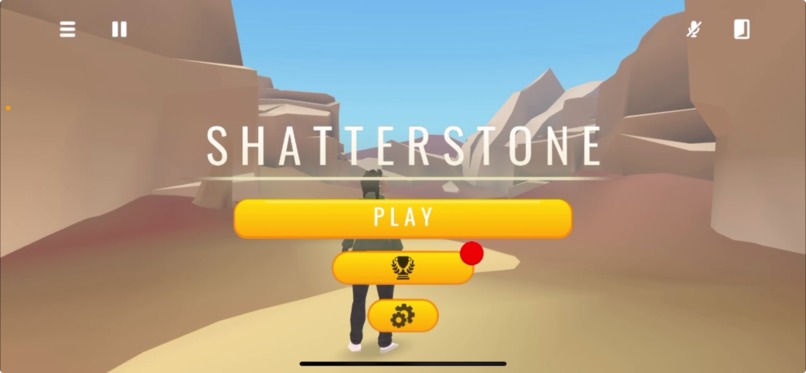
Start screen on mobile
-
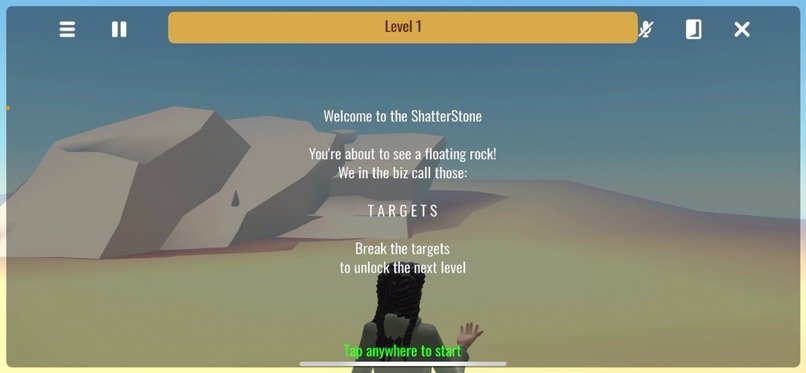
Level 1 Instructions on mobile
-
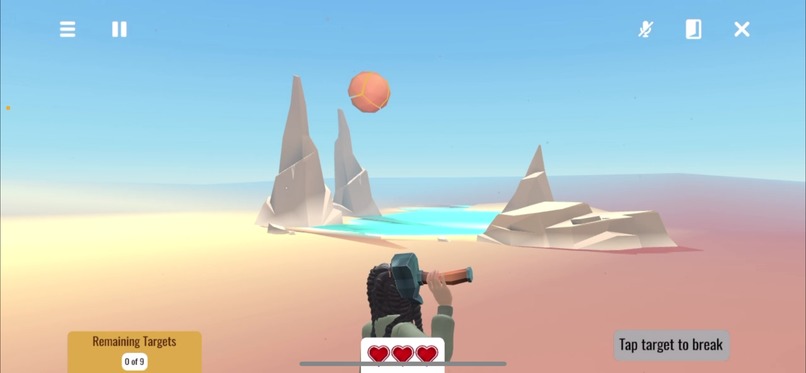
Gameplay on mobile - single target, full life
-
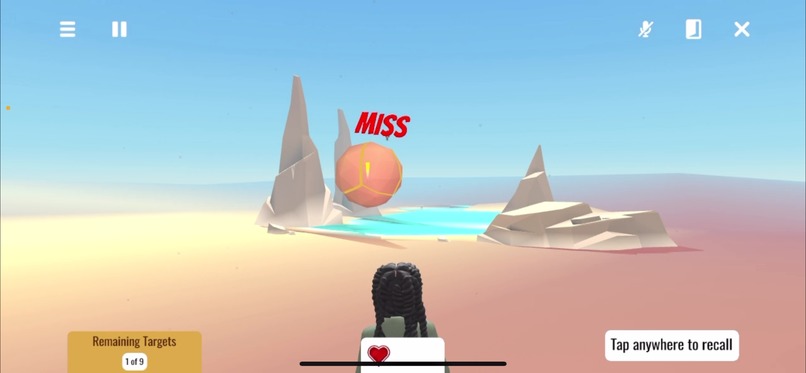
Gameplay on mobile - missed throw
-
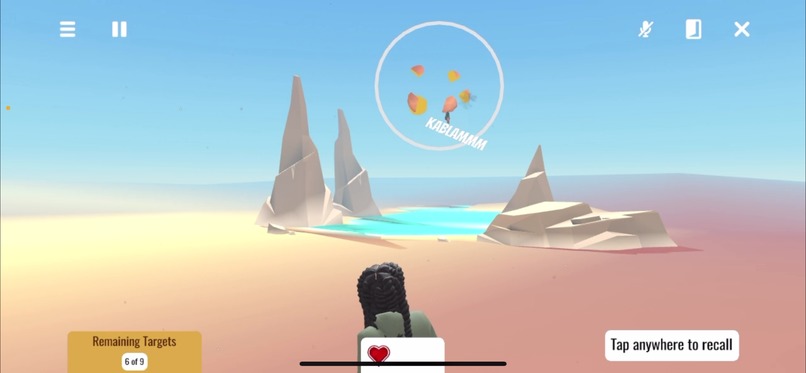
Gameplay on mobile - successful hit
-
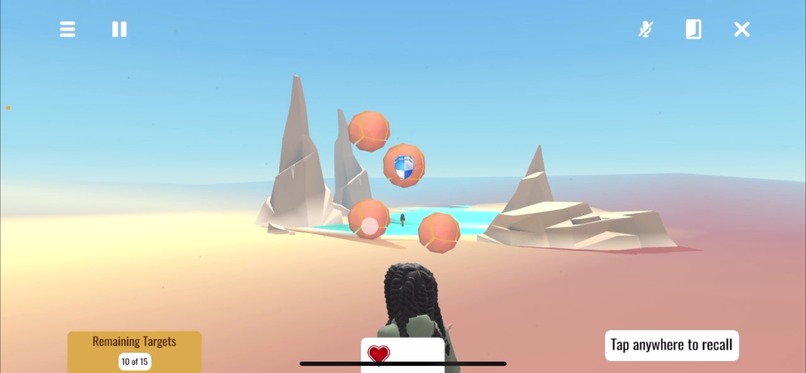
Gameplay on mobile - multiple targets and movement patterns
-
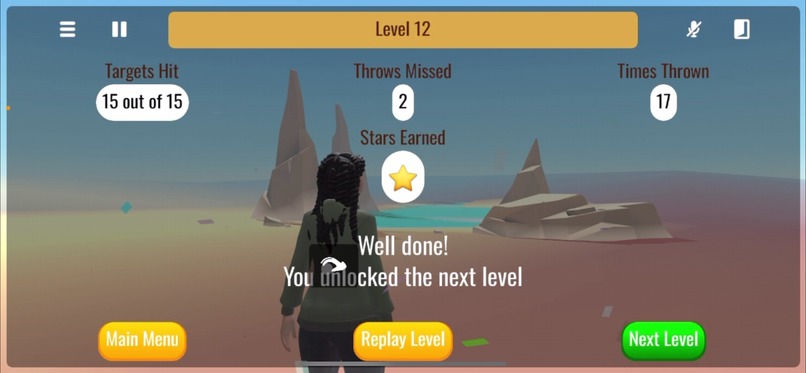
Level 12 completion screen
-
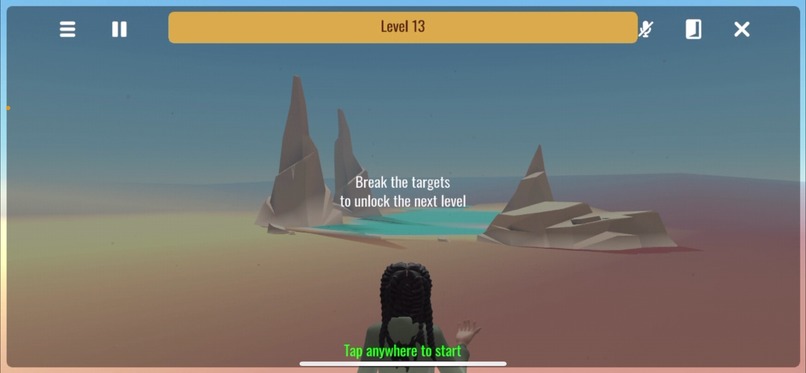
Level 13 instructions screen
-
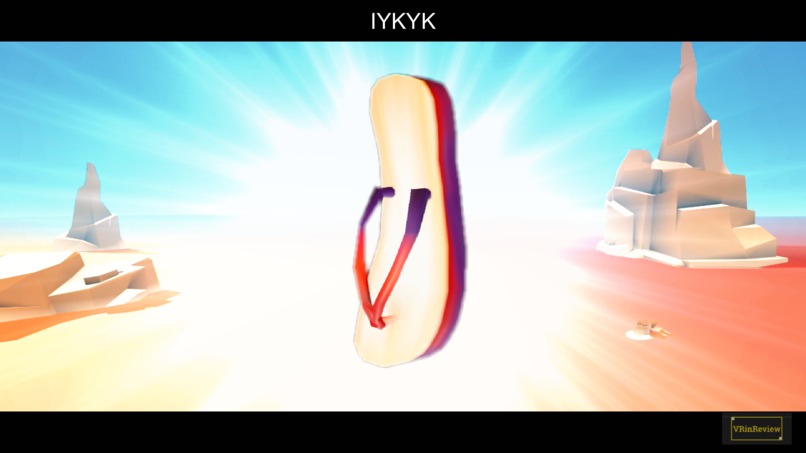


Inspiration
Our goal was to create a game that introduces mobile players to the magic of VR, bridging the gap between platforms. We designed a cozy, skill-based game that feels familiar on mobile and immersive in VR, encouraging player conversion. Set in a tranquil desert oasis, Shatter Stone combines relaxation with precision-based progression. Players master throwing and recalling quirky items—like a hammer, wrench, chancla, and cactus—at floating targets across increasingly challenging levels. With serene landscapes, soothing music, and satisfying mechanics, the game provides a seamless entry point to VR.
What it does
Players start in a solo arena, greeted with a simple play button. Early levels teach the mechanics by having players throw their hammer at floating spheres, which shatter in a satisfying shower of debris. After each level, players can return to the main menu, replay, or advance to the next level. Difficulty ramps up as they progress, with gameplay designed to feel intuitive yet rewarding. The game loop is designed to build curiosity, encouraging players to try the game in VR. While the core mechanics remain the same, targeting and throwing in VR offers a more immersive and tactile experience, enhancing the sense of precision and satisfaction.
How we built it
We prioritized progression and player conversion by building on a strong throwing mechanic from a prior project.
• Matt: Developed game systems and progression.
• Ashley: Designed the low-poly art, UX/UI, and scripted the visual effects.
• Kevin: Playtest and feedback.
Meta Horizon Worlds Features:
• Cross-Device: Custom UI, device-specific mechanics.
• Mobile: Camera API, Focused interactions, toggles for screens, avatar animations.
• VR: Throwing API integration.
• Assets & VFX: Custom model import, vertex colors, particle gizmos (dust, hit ring).
Challenges we ran into
Solo Experience: A solo mode was critical for easing mobile players into VR without the intensity of multiplayer. The delayed release of the instance-closing API created initial challenges but was resolved in time.
Time Constraints: We maximized efficiency by reusing logic and assets from prior experiences.
Accomplishments that we're proud of
Optimized Performance: Rocks are the only spawning assets, keeping the game stable and memory efficient.
Low Poly Art Style: Environments average <8k verts across 7 levels, using a single 128px texture and vertex colors.
Expansion Potential: The system is designed for future updates, including more environments and objects.
What we learned
New APIs: We explored bifurcating mechanics for cross-device parity and efficient asset handling.
Streamlined UX: Simplified designs ensure players get to the fun immediately, removing unnecessary steps.
Iterative Art Design: Early ideas like scripted material swaps were abandoned for better visual and performance outcomes.
What's next for Shatter Stone
We aim to add depth and social connection through:
• Gameplay Enhancements: Power-ups (e.g., explosions, freeze), new rock behaviors, and additional levels.
• Visual Variety: More environments and unlockable objects.
• Community Features: Expanding the lobby world with engaging interactions to create a hub for players to connect.
Built With
- blender
- metahorizonworlds
- typescript




Log in or sign up for Devpost to join the conversation.