-

Spaces Browser
-

Add Thing
-

Things List
-

Thing View
-
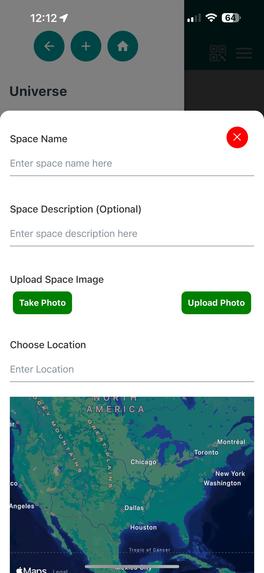
Add Space


Inspiration
ShelfSync was inspired by the challenges of managing belongings when frequently moving between locations, like home and college. Often, I find myself forgetting if I have certain items at one place or another, or I’ll spend unnecessary time searching for something I know I own but can’t quite remember where I stored it. I realized the value of a personal inventory management system that could help keep track of where things are and even remind me when it's time to restock. With ShelfSync, the goal is to eliminate the stress and time wasted in hunting for items—especially for people who lead busy, mobile lives.
What it does
ShelfSync is a smart inventory management app that helps users catalog, organize, and locate their belongings effortlessly. The app allows users to create and label "spaces" (like a dorm, closet, or garage) and then add "things" within each space. With features like QR Code Scanning, and geotagging, ShelfSync ensures users can always find their things or check if they already have something on hand.
How we built it
We built ShelfSync using a modern web stack for performance, flexibility, and scalability. The frontend is developed with ReactNative and Expo for a smooth, responsive, cross-platform user interface. The backend is powered by an Express.js server on AWS EC2, which handles API requests and communicates with a MongoDB Atlas database for secure and structured text-data storage and AWS S3 for image storage. We used Terraform to automate infrastructure provisioning, making it easy to scale up or down as needed.
Challenges we ran into
One of the initial challenges was designing the architecture to manage a large number of items and locations efficiently. Making sure the data model could scale without becoming cluttered or difficult to navigate was a top priority. We also ran into issues with integrating AWS S3 to handle image uploads and ensuring secure access while keeping the process straightforward for users. Working with Terraform for infrastructure as code was another learning curve, as it required ensuring all components were configured correctly and aligned with the rest of the tech stack.
Accomplishments that we're proud of
We’re proud of how ShelfSync has come together as a fully functional inventory management app that users can rely on to stay organized. Successfully implementing secure image uploads and making the app cloud-ready were key achievements. Additionally, setting up a system that can scale and adapt as the user’s inventory grows was an exciting accomplishment. The smooth, intuitive user experience and robust backend are products of thoughtful design and hard work, and we’re thrilled to see how well everything performs together.
What we learned
Building ShelfSync taught us a lot about organizing and managing data on a cloud-hosted app and creating a smooth API integration with storage services like AWS S3. We deepened our skills with DevOps tools, such as Terraform, and learned to handle common challenges around security and scalability. The process also emphasized the importance of clear communication within our team and regular testing to catch issues early and maintain quality.
What's next for ShelfSync
In the future, we plan to introduce advanced features like data insights, allowing users to see patterns in their inventory, such as frequently used items or low-stock trends. We also want to implement collaborative inventory management, so users can share access with family or roommates. With ShelfSync, we aim to expand our app’s functionality to make managing personal belongings even simpler and more intuitive.


Log in or sign up for Devpost to join the conversation.