-
-
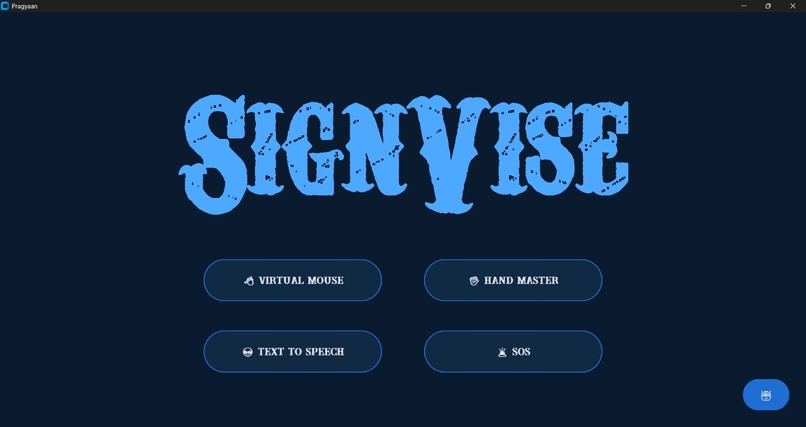
Our app dashboard
-
-
-
-
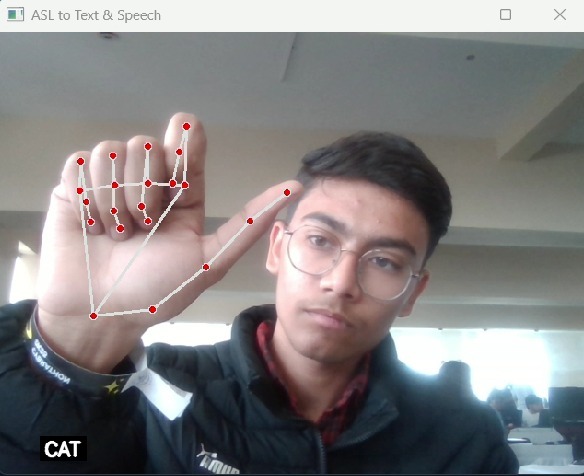
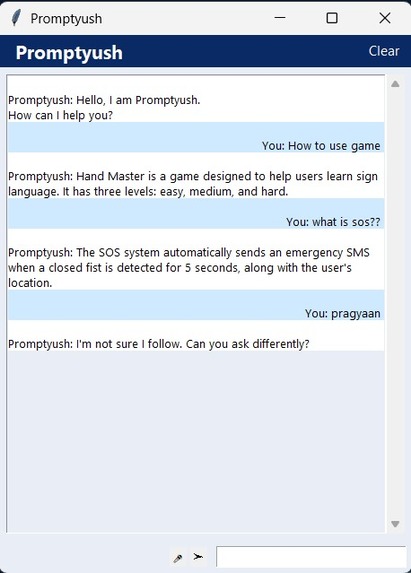
Text to speech


Inspiration
SignVise was inspired by the everyday communication gap faced by deaf and hard-of-hearing individuals. While sign language is powerful, most people don’t understand it, making interaction difficult. We wanted to create an AI-driven solution that makes learning sign language intuitive, engaging, and accessible to everyone.
What it does
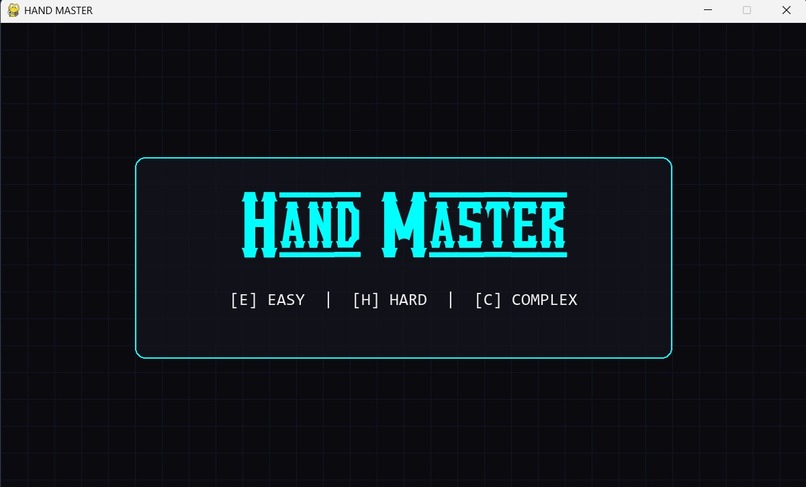
SignVise is a gamified sign-language learning platform that uses real-time hand-gesture recognition. It offers three difficulty modes — Easy, Hard, and Complex — allowing users to progressively learn and practice sign language with instant feedback through an interactive game experience.
How we built it
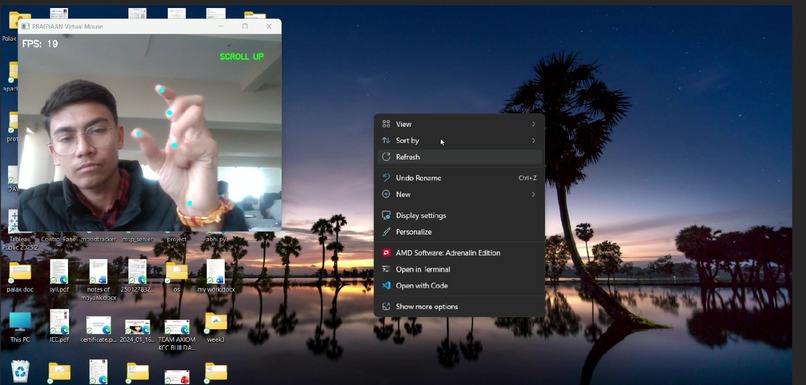
SignVise uses computer vision to capture hand landmarks from a webcam, followed by feature extraction and machine-learning-based gesture classification. The predicted gesture is matched against expected signs in a game interface.
The prediction logic is defined as:
[ \hat{y} = \arg\max_k P(y = k \mid x) ]
where (x) represents extracted hand landmark features and (y) represents the predicted sign class.
Challenges we ran into
We faced challenges with gesture variability, lighting conditions, real-time performance, and deployment as a standalone application. Ensuring accuracy without increasing latency was a key challenge, especially under hackathon time constraints.
Accomplishments that we're proud of
Successfully built a real-time AI system within hackathon limits Designed a progressive learning system with multiple difficulty levels Created an inclusive solution focused on accessibility and social impact Delivered a working, end-to-end product rather than a prototype
What we learned
This project helped us understand the practical challenges of deploying computer vision models in real environments. We learned how to balance accuracy and performance, design for accessibility, and collaborate effectively under pressure.
What's next for SignVise
We plan to expand SignVise by supporting more sign languages, improving model accuracy, adding voice and text feedback, and integrating it into educational and accessibility platforms to reach a wider audience.


Log in or sign up for Devpost to join the conversation.