-
-

-
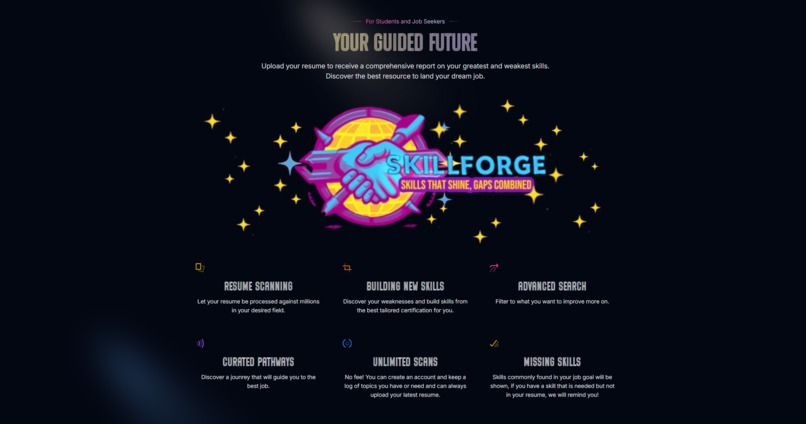
front end display of website
-
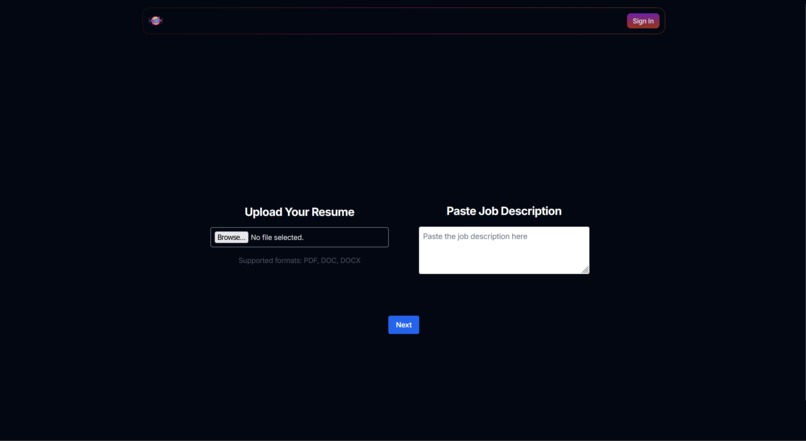
front end website display
-
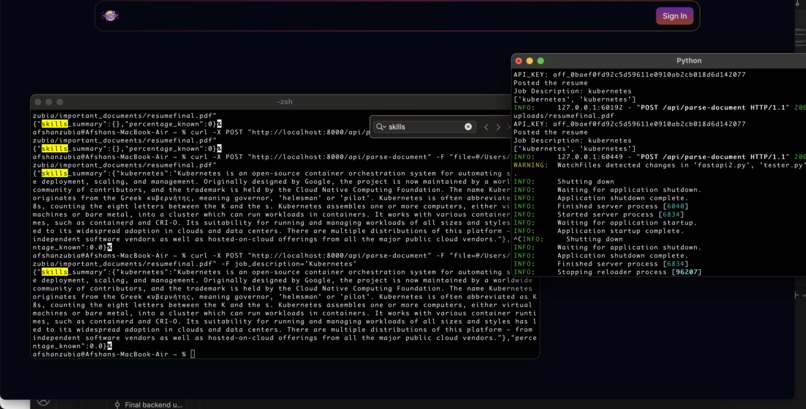
we are running the back end code in a terminal and it proves succesful


Inspiration
Initially, we planned a meal prep app, which uses an API to scan food barcodes so users can upload whatever ingredients are in the fridge or the cabinets and it will generate a list of recipes that can be made. We pivoted mid-pilot after a sponsor mentioned ‘bridging a gap between education and workforce.’ with an even better idea. What better way to bridge a gap between people and the workforce than to lead them to either low-cost or free solutions to their problems? We wanted to make a website where people fresh from high school, college or even changing careers can look for guidance on how to build the best version of themselves, or fill in the gaps on paper that seem to be missing the mark.
What it does
SkillForge is a website where users can search and compare jobs and job skill requirements. Users have the ability to upload their resume and compare its hireability to a job post description that they paste. It compares the two to show what percentage fits the job description and then highlights what skills are missing and generates links to access free or near cheap online certifications or classes for those skills, making said skills relevant, via open learning sources like Coursera, MIT, Upskillest, etc. So why SkillForge? Because job hunting is disheartening and SkillForge simplifies the process by giving job seekers instant feedback on how well their resume aligns with a specific job, helping them identify gaps and make targeted improvements.
Key Features
Resume Parsing: Using an advanced PDF Parser library, SkillForge processes uploaded resumes in PDF, DOC, or DOCX formats, extracting relevant keywords and skills. Job Description Matching: SkillForge allows users to paste job descriptions into the platform, which are then compared with the parsed resume to identify matching and missing skills. Data Storage: We utilize MongoDB for efficient data management, securely storing resume information and skills summaries. Authentication: To ensure secure access, SkillForge integrates Auth0 for seamless authentication and authorization. User Interface: The platform features a dynamic and responsive frontend built using Next.js, offering a smooth and intuitive user experience. Backend: The backend is powered by FastAPI and Python, ensuring fast, reliable API responses and seamless integration between the front end and the database.
How we built it
Frontend: Next.js Backend: Python (FastAPI) Database: MongoDB Resume Parsing: PDF Parser library Authentication: Auth0
Challenges we ran into
Implementing PDF parsing to accurately extract resume content in different formats. Integrating Auth0 for secure user authentication. Ensuring seamless communication between the Next.js frontend and the FastAPI backend while maintaining fast response times. Future Vision: In the future, we plan to expand SkillForge by integrating machine learning algorithms to suggest improvements to resumes based on the parsed data, as well as providing real-time job recommendations. Conjoining the front end and the back end codes
Accomplishments that we're proud of
We completed the installation of an Auth0, created a logo that fits the disco theme, constructed a resume parser and hosted a website.
What we learned
how to create a database, how to create and api, how to create a web domain, how to format web design, how to collaborate on github, team work division.
What's next for SkillsForge
The website technically has three pillars of functionality, the main one developed for this demonstration being its capability to compare a resumes missing qualifications or skills to online databases to close the gap. It would be a great tool as well for those who come straight from Highschool without an idea what they want to be. It has a database of jobs and general information about particular aspects like salary, degrees needed to obtain job, anticipated completion of said requirements or skills and it will list extra qualifications or certifications needed to be a stronger candidate. It will then lead to schools or certification/ license courses that are cheap or free if you choose to dig further into a job description from its first impression. The last peice of functionality relies on machine learning. the website actively learns with more users input, meaning if other people with similar positions, majors or experiences have a high percentage of learning a skill based on a shared experience, it will prompt the user to consider adding it if relevant to the job post description. For example, a pharmacy technician will apply to Mercks drug research and Development team and it will prompt the user to add “pill compounding” to their skills based on what other people learned as a hospital pharmarcy technician since it is relevant to drug capsule formulation.
Built With
- api
- auth0
- database
- fastapi
- html
- javascript
- mongodb
- porkbun
- python
- typescript


Log in or sign up for Devpost to join the conversation.