-

-
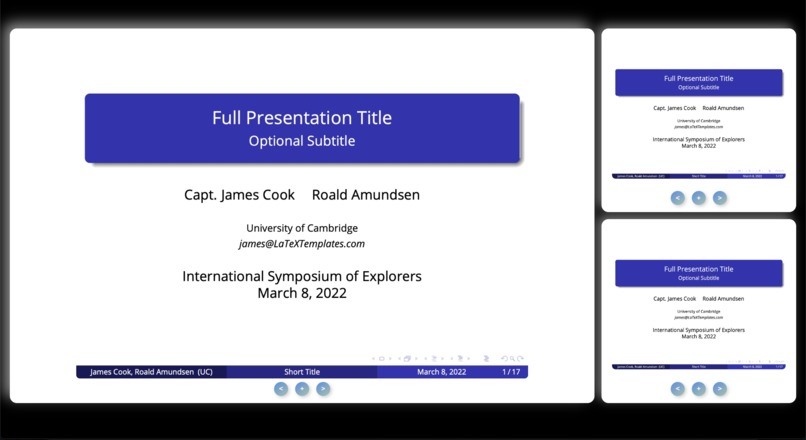
Presentation in Latex after Conversion
-
-


Inspiration
The idea for SlideForge came from the struggles researchers face when trying to convert complex academic papers into presentations. Many academics spend countless hours preparing slides for conferences, lectures, or public outreach, often sacrificing valuable time they could be using for research. We wanted to create a tool that could automate this process while ensuring that presentations remain professional, audience-friendly, and adaptable to different contexts.
What it does
SlideForge takes LaTeX-formatted academic papers and automatically converts them into well-structured presentation slides. It extracts key content such as equations, figures, and citations, then organizes them into a customizable slide format. Users can easily adjust the presentation based on the intended audience—whether it’s for peers, students, or the general public. The platform provides customizable templates, integrates citations, and minimizes the time spent on manual slide creation.
How we built it
We built SlideForge using a combination of Python for the backend and JavaScript with React for the frontend. The backend handles the LaTeX parsing, converting key elements into slides using Flask to manage the process. We also integrated JSON files to store and organize the structure of presentations, formulas, and images. On the frontend, React is used to create an interactive user interface where users can upload their LaTeX files, adjust presentation settings, and preview the output.
Challenges we ran into
One of the biggest challenges we faced was ensuring that the LaTeX parser could accurately extract and format complex equations and figures into slide-friendly content. Maintaining academic rigor while making the content accessible to different audiences also required a lot of trial and error with the customizable templates. Finally, integrating the backend and frontend in a way that made the process seamless and efficient posed technical hurdles that required collaboration and creative problem-solving.
Accomplishments that we're proud of
We’re proud of the fact that SlideForge significantly reduces the time required for researchers to create professional presentations. What used to take hours can now be done in minutes. We’re also proud of the adaptability of our templates, which allow users to target different audiences without needing to redesign their slides from scratch. Additionally, the successful integration of LaTeX parsing and slide generation is a technical achievement we’re particularly proud of.
What we learned
Throughout this project, we learned a lot about LaTeX and how to parse and handle its complex structures programmatically. We also gained a deeper understanding of user experience design, ensuring that our platform was both intuitive and powerful. From a technical standpoint, integrating the backend and frontend and ensuring smooth communication between the two taught us valuable lessons in full-stack development.
What's next for SlideForge
Next, we plan to expand SlideForge’s functionality by adding more customization options for users, such as advanced styling and animation features. We’re also looking into integrating cloud storage solutions so users can save and edit their presentations across devices. Additionally, we hope to support more document formats beyond LaTeX, making SlideForge a universal tool for academics and professionals alike.
Built With
- adobe
- cloudfare
- flask
- javascript
- node.js
- npm
- python
- react.js




Log in or sign up for Devpost to join the conversation.