-
-
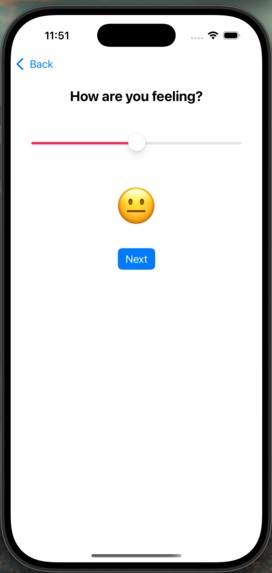
Mood Page
-
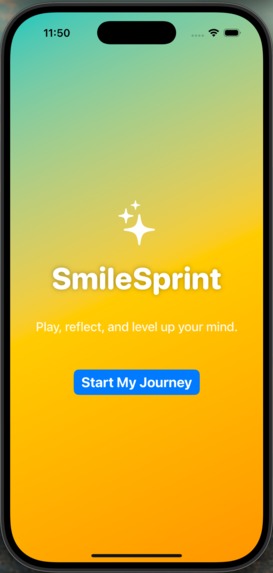
Home Page
-
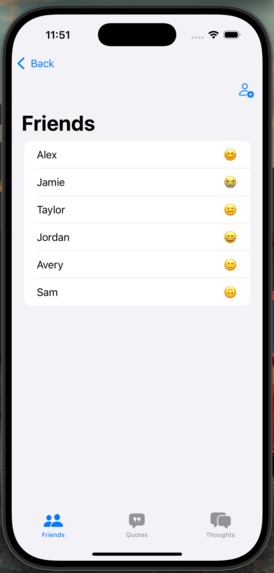
Friends Page
-
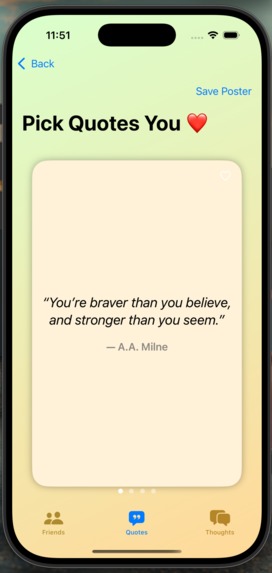
Quotes Page
-
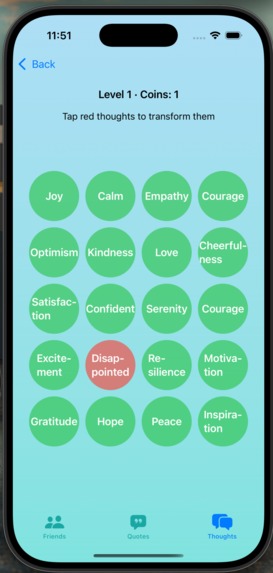
Thought Bubbles Page


Inspiration
A lot of adults and teenagers are stressed through school and work, so we thought this app would be a way to help with their mental health.
What it does
We created a 3-tab app with mood check-ins, emotional games, quote discovery, and social mood sharing.
How we built it
We built SmileSprint entirely in SwiftUI using Xcode, combining sleek UI design with simple state management to guide users through a mood-reflection journey.
Challenges we ran into
One of our biggest challenges was dynamically changing the thought bubble colors and behavior based on the user's mood score. Ensuring that the correct number of positive and negative thoughts displayed — and that only negative ones could be dismissed — took several iterations of logic and UI testing.
Accomplishments that we're proud of
We’re proud that we turned emotional reflection into a playful experience with the interactive Thought Bubbles game. Building mood-based logic that adapts the UI dynamically was both challenging and rewarding. We also loved creating a calming, aesthetic interface that makes users feel encouraged and understood.
What we learned
We learned how to use SwiftUI to build dynamic, multi-screen apps with @State, @AppStorage, and NavigationView. We gained experience designing responsive UI components like mood sliders, interactive grids, and tab-based navigation. Most importantly, we deepened our understanding of translating emotional wellness concepts into engaging digital experiences.
What's next for SmileSprint
Next for SmileSprint, we plan to integrate AI-powered journaling prompts and mood-based quote recommendations. We also want to let users add real friends, track shared emotional journeys, and personalize their growth over time. Eventually, we aim to turn SmileSprint into a smart emotional companion that learns and grows with its user.
Video: https://www.loom.com/share/914bc0356ae242e39d497bc73bbd7b27?sid=bb96bcb3-4995-4ffb-9e34-5f2d0c65bb9e


Log in or sign up for Devpost to join the conversation.