-
-
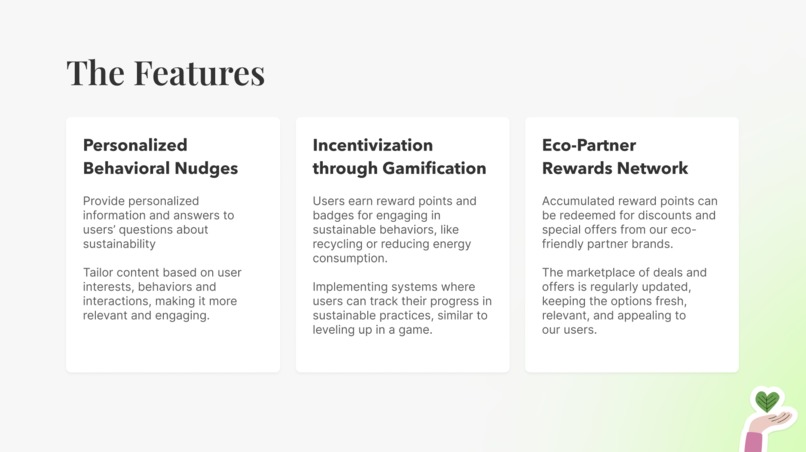
Features of our app
-
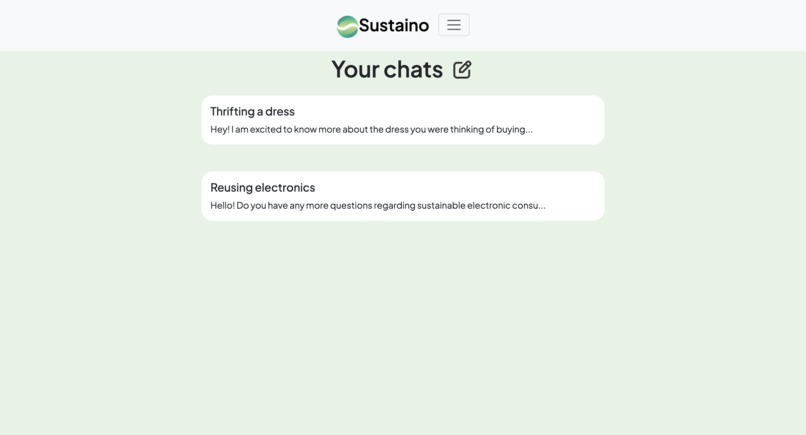
Home Screen of web app
-
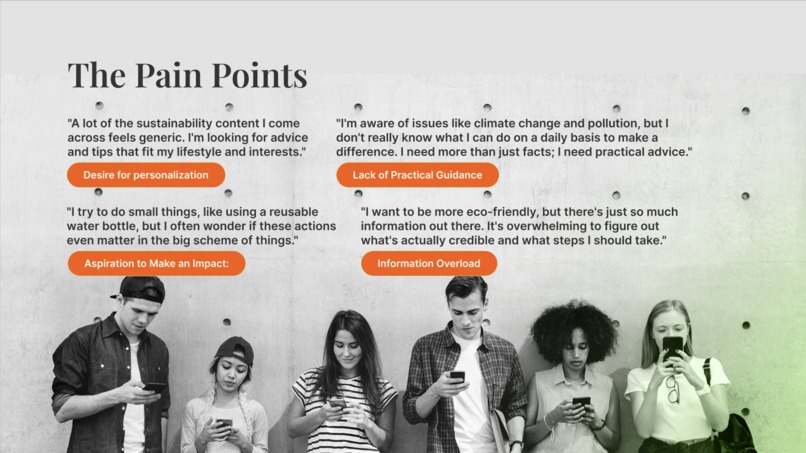
Obstacles that affect Gen-Z's ability to make sustainable choices
-
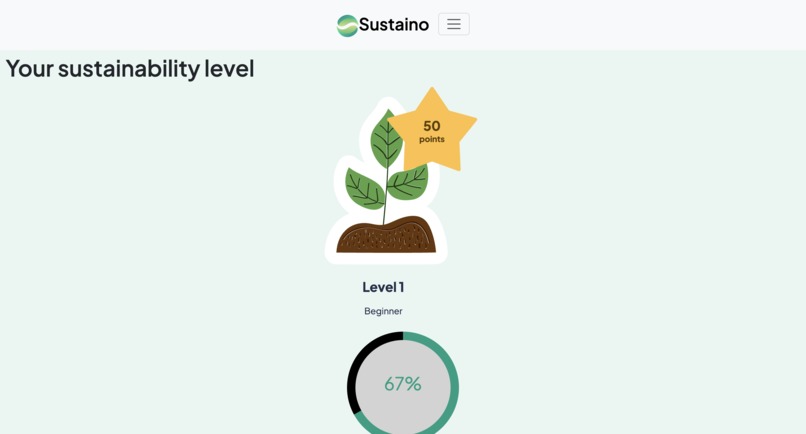
Progress screen displaying percentage of sustainablility level completed
-
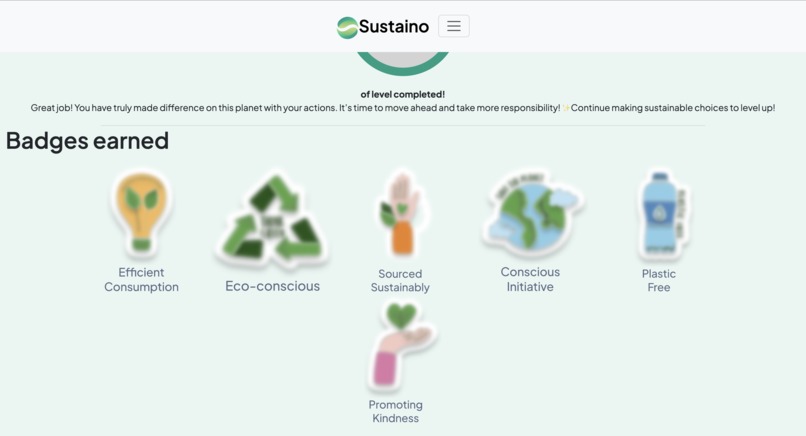
Unlocked rewards to encourage behavior building
-
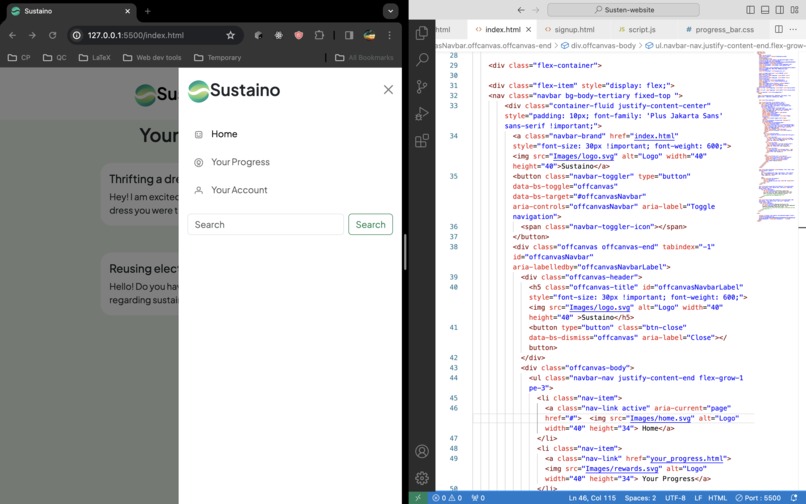
Website made responsive using bootstrap, JavaScript, and CSS
-
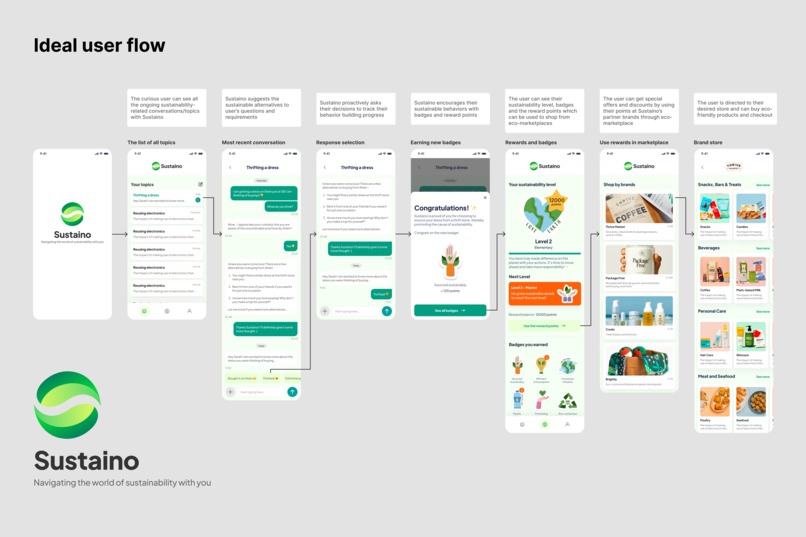
User workflow of app


Inspiration
At the TreeHacks hackathon, amidst the buzz of innovation and collaboration, our team found inspiration in an unlikely place: the trash bins. As we observed the overflowing landfill bins in stark contrast to the scarcely filled recycling and compost bins, a collective realization dawned on us. It highlighted a glaring, often overlooked issue in our daily practices — the gap between our intentions for sustainability and the reality of our actions.
This observation sparked a profound internal questioning: "Do we really understand what sustainability is? What impact do seemingly minor unsustainable practices have on our planet? Do we, as students and future leaders, genuinely prioritize our planet's well-being?"
Motivated by this insight, we saw an opportunity for meaningful change right at the heart of the hackathon. The situation with the trashbins was not just a practical challenge; it was a symbol of a larger issue that resonated deeply with us. This led us to the ask ourselves - how could we bridge the gap between sustainable intentions and actions, starting from our immediate environment at the hackathon to broader, everyday life scenarios?
What it does
At the heart of every action lies a mindset, and it's this mindset that our platform - Sustaino seeks to transform. Sustaino goes beyond imparting sustainable literacy; it actively reshapes behavioral patterns, fostering a culture of responsible consumption.
By engaging with Sustaino, users learn not just the 'what' and 'why' of sustainability, but also the 'how.' From making informed choices about daily consumption to understanding the ripple effects of their actions on the global ecosystem, Sustaino guides users in building behavior that leaves a positive imprint on the planet.
The key features of our platform are:
Personalized Behavioral Nudges
- Provide personalized information and answers to users’ questions about sustainability
- Tailor content based on user interests, behaviors and interactions, making it more relevant and engaging.
Incentivization through Gamification
- Users earn reward points and badges for engaging in sustainable behaviors, like recycling or reducing energy consumption. - Implementing systems where users can track their progress in sustainable practices, similar to leveling up in a game.
Eco-Partner Rewards Network
- Accumulated reward points can be redeemed for discounts and special offers from our eco-friendly partner brands.
- The marketplace of deals and offers is regularly updated, keeping the options fresh, relevant, and appealing to our users.
How we built it
In order to provide personalized and accurate sustainability recommendations, we needed to construct our own dataset. This was done by selecting multiple internet forums and filtering all threads searching for quality, highly-argumented answers to sustainability problems. We combined information from three major fields relevant in our everyday lives (however we did not limit ourselves to just these) - food, consumerism and travel. For each of these, the most relevant posts were selected in order to arrive at the final, concatenated database. This was then used to fine-tune a LongLlama 7B large language model so that it could reasonably answer any questions or remarks of the users, while providing sensible and creative responses. The model was both fine-tuned and deployed through MonsterAPI and is available as open-source. We also trained additional models for cross-compatibility with less powerful systems (also with MonsterAPI). The models can then be accessed by the webapp (built in Django) through the Python API and provides both a response for the user, as well as a classification and ranking of the user's actions necessary for the gamification component. Furthermore, historical data about the user's actions is fed into the model to provide a reasonable (and not too strict) approach to sustainability, focusing on educating, rather than penalizing the person. This progress can also be viewed in a visually appealing frontend (built in JS/HTML/CSS) through sustainability levels!
Challenges we ran into
We faced a key challenge in meeting the diverse needs of Gen Z. We quickly realized that a 'one size fits all' approach would not suffice for our Gen Z audience. A generic approach wouldn't work. Our solution: a platform that customizes responses based on individual user interactions. This personal touch is crucial for an audience that values individuality and personalization.
Motivating users to consistently engage in sustainable practices was another hurdle. We recognized that while many individuals aspire to lead more sustainable lives, various challenges can impact their motivation. To address this, we introduced incentivization through gamification. This makes the sustainability journey enjoyable and aligns well with Gen Z's preference for interactive digital experiences.
We also identified that a major pain point for our users was the overwhelming amount of information available on sustainability.Our strategy: simplify and clarify. We focused on providing straightforward, digestible content, making sustainability more accessible and less intimidating.
Accomplishments that we're proud of
We are especially proud of the dataset creation described in detail in "How we built it". We really put a lot of effort into selecting and later filtering, as well as cleaning the data so that it only concerns positive and realistic examples of sustainability. Interestingly, we were able to collect even more data than the model could compute in the limited time we had, so there is a lot of potential in future developments!
We are also extremely proud of how we were able to use MonsterAPI - not only to fine-tune our model, but also to deploy it, repurpose the available LLM's and robustly use them in our webapp, utilizing the most out of this technology!
Lastly, we are extremely happy with the collaboration inside of our team - all coming from very different places and with diverse experience, we managed to identify a common problem and work towards a solution, while maintaining a positive attitude. Coming here, we thought that it is simply not possible for us (having met on Friday evening) to compete with pre-established teams, yet now we're certain we can!
What we learned
We realized that although most people know what sustainability is and have a general overview of how to practice it, they usually do not implement it in their lives (or at least do so poorly). This might be due to the fact that they do not realize the implications of their actions, do not fully understand the arguments behind some sustainable options or simply are confused. Although surprising, this realization helped us create a better product tailored to all of these people and helping them live better, both for themselves and the planet.
We also learned that a slightly different outlook on a problem can really make a difference and help solve many challenges. However, understanding this would not have been possible without such a multidisciplinary team!
What's next for Sustaino
When a group of passionate individuals comes together to build a project, the sky’s the limit. We are grateful for this opportunity, and have outlined the following steps to bring our vision for this product to its full potential:
User Testing and Feedback
- Conduct beta testing with a diverse group of users, particularly from Gen Z, to gather feedback on usability, content, and features.
- Use this feedback to refine and improve the application, focusing on user experience and the relevance of the sustainability content.
Accessibility and Inclusivity
- Ensure the app is accessible to a diverse range of users, considering voice integration, different languages, cultural contexts, and abilities.
- Include content and features that address a variety of sustainability challenges faced by different communities.
Scalability and Expansion
- Plan for scalability, both in terms of technological infrastructure and content.
- Consider expanding the application's reach to new regions or demographics over time.
Built With
- ai
- bootstrap
- data-mining
- django
- figma
- javascript
- llm
- monsterapi
- openllama
- python


Log in or sign up for Devpost to join the conversation.