-
Welcome to TailorMatched, a modern solution for consumers looking for automated clothing selection.
-
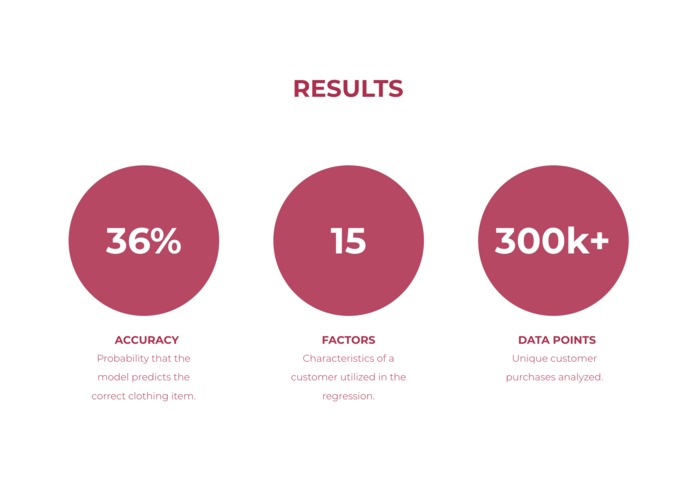
The numbers behind the magic—accuracy, factors, and data points used.
-
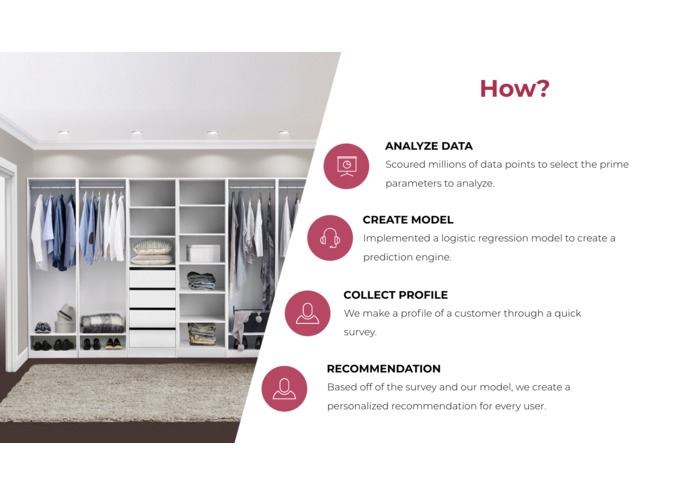
A basic rundown of what we do, including data analysis and providing recommendations.
-
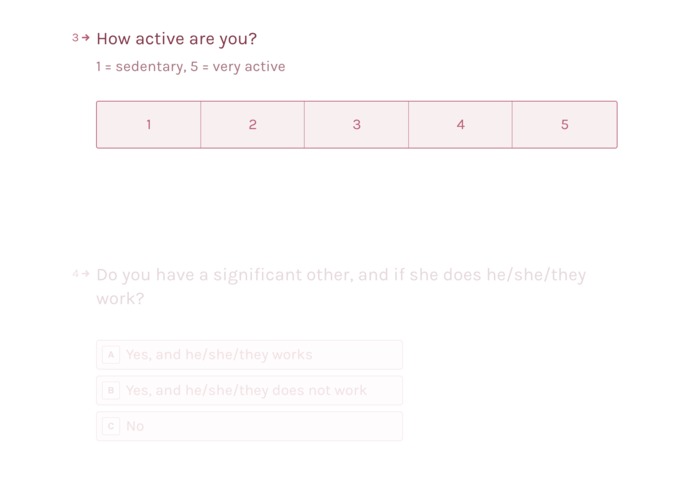
An example of collecting customer demographics.
-
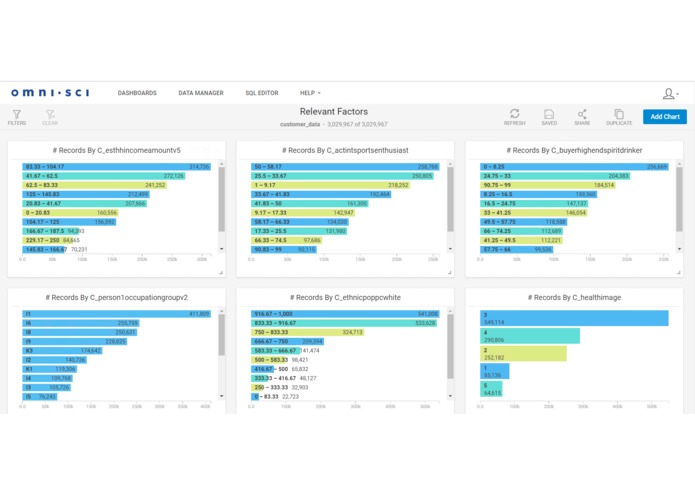
A visualization of the influential data of the machine learning model.
-
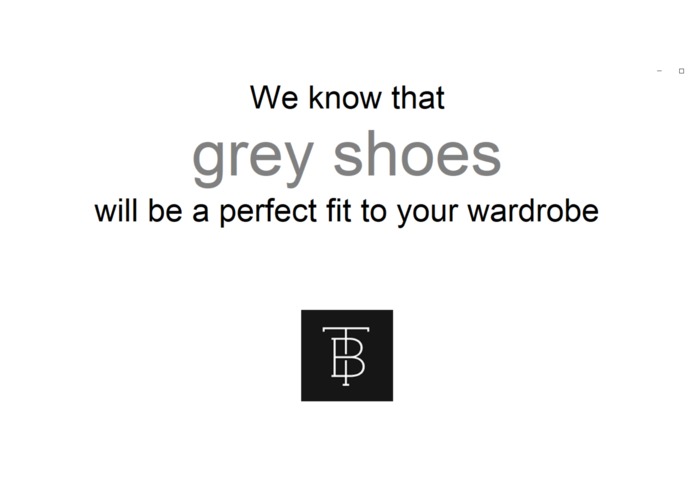
A sample recommendation from the application


Inspiration
Buying clothes is hard. We've all had that dreaded feeling of walking into a store and being overwhelmed by the endless options of things to buy. Others of us don't even have the time to spare to go shopping. TailorMatched takes care of all this by automatically recommending the next product for TailorMatched to ship to a customer on a subscription model. Say goodbye to struggles finding clothing!
What it Does
TailorMatched takes the profile of a customer and accounts for a lot of different factors about the customer. There's a lot of factors that you'd usually expect like a customer's age and wealth, but also others, such as a location, sports interests, and alcohol consumption. We take these factors, run them through our engine, and give a recommendation for a clothing item that we feel would be a fantastic match for the customer.
How We Built It
We began the project by using OmniSci to get an understanding of the dataset provided to us. After scanning through several categories using simplified statistic analysis, looking especially for separation between categories, we settled upon some initial parameters for the model. With this done, we began implementing a robust system to take in a few characteristics about a customer in order to suggest the next article of clothing that should be sent to the customer. At this stage, we realized that some of our original parameters were flawed and we reviewed the original data set with the regression in order to find better characteristics to use. Upon a close analysis using Omni Sci's GPU visualization technology to look at the data that was evenly distributed and indicative of products.
We tested a plethora of models, ranging from basic linear regression to more advanced decision trees and recurrent neural networks. However, we settled on a logistic regression model, and are now able to suggest a relevant product match with an accuracy of up to 36%. This accuracy is very impressive considering our ability to take in seemingly arbitrary customer profile data in order to output a very specific clothing product for a customer. We can now confidently use this tool in order to create a solid foundation for a clothing subscription model.
Challenges
A model is only going to be as strong as its data. Thus, we had to spend a significant amount of time cleaning our data and selecting what to use as the parameters for our model. This was an arduous task, as we were provided a ton of data. We were also using the pandas data format for the first time, so we had to clear many initial hurdles related to getting familiar with the library.
What We Learned
Through working on this project, our team learned a lot about utilizing new technologies—especially foreign APIs and machine learning models. We also learned the importance of holding back on programming until we were finalized with our research. By finding relations between certain aspects of a customer's demographic and the clothing they purchased, we were able to save ourselves a lot of time with the data fitting part of the project. More importantly than the technical aspects, though, our team especially learned how to work together as a cohesive unit. We created an efficient way to divide up the project into separate parts of both the backend and the frontend, which made the project much easier to conquer.
What's Next for TailorMatched
The next step for us is to incorporate customer purchase history into our algorithm. This will allow us to create a lasting subscription model that accounts for items that have already been recommended and sent before. Through doing this, we will be able to expand upon the existing model by adding sustained support for returning customers, which is very important for the growth of the company. This is something that TailorBrand will be able to adopt in order to expand on their idea for a futuristic clothing subscription model.
Built With
- jupyter-notebook
- matplotlib
- numpy
- omnisci
- pandas
- python
- scikit-learn




Log in or sign up for Devpost to join the conversation.