


Family doesn't let family hit the ground.
Inspiration
Safety shouldn't feel like a medical sentence. It should feel like a bond.
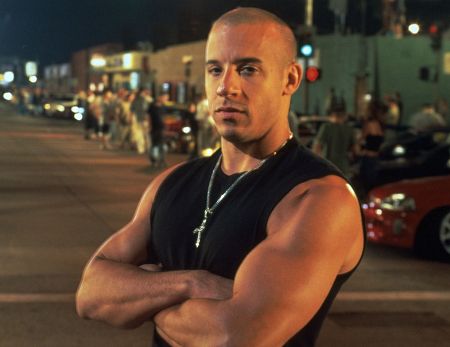
Inspired by the ultimate protector, Dominic Toretto, we built this app on one core principle: Family doesn't let family hit the ground. Every year, 1 in 3 seniors experience a fall, often leading to a loss of independence or worse. We realized that technology shouldn't just be a sensor; it should be a digital bodyguard. We chose the Toretto name to replace clinical anxiety with unshakeable loyalty, creating a high-performance safety net for the people who matter most.
What it does
Toretto is a high-performance safety network that turns a standard smartphone into a sophisticated guardian. By leveraging the built-in precision of mobile accelerometers and gyroscopes, Toretto provides a non-intrusive alternative to expensive, "clinical-looking" medical pendants.
Core Features:
- Intelligent Fall Detection: Using custom signal processing, Toretto distinguishes between everyday "noise" (like dropping your phone on the couch) and high-impact "hard falls" that require immediate intervention.
- The "Crew" Alert System: When a fall is detected, Toretto doesn't just ping a random call center. It instantly rallies "The Crew"—a pre-selected circle of family and caregivers—sending them the user's precise GPS coordinates and a live status update.
- Passive Movement Monitoring: Caregivers can view a "Liveliness Feed" to ensure their loved ones are active and moving throughout the day, providing peace of mind without the need for intrusive check-in calls.
- Zero-Hardware Deployment: Unlike traditional systems that require $500+ in proprietary hardware, Toretto lives on the device they already carry. It’s safety that fits in a pocket, not a necklace.
- The "I'm Good" Override: To eliminate "false alarms," the app features a quick-response override. If the user is okay, they can dismiss the alert with a single tap before the Crew is deployed.
How we built it
We engineered Toretto to be as lean and reliable as a tuned-up Charger, focusing on a stack that prioritizes real-time performance and cross-platform accessibility. At its core, the application is built using React Native, which allowed us to bridge high-level UI logic with hardware-level access to the device's Inertial Measurement Unit (IMU). By tapping into the Accelerometer and Gyroscope APIs, we were able to process raw G-force and angular velocity data directly on the device. This "edge processing" ensures that fall detection happens locally and instantly, without needing to wait for a round-trip to a server while someone is on the ground.
On the backend, we deployed a FastAPI (Python) relay server designed for high-concurrency and low-latency alert routing. When the mobile client confirms a fall, it hits a secure webhook that triggers a "Crew Alert" sequence. This backend manages the "The Crew" (the user's emergency contacts) and integrates with Google Maps and Geolocation APIs to provide caregivers with an exact, real-time map of the incident. We focused heavily on a "Dignity-First" UI, using dark mode and high-contrast typography to ensure the dashboard looks like a high-performance tool rather than a clinical medical monitor.
Challenges we ran into
The most significant technical hurdle was solving the "False Positive" problem. In the real world, a phone being tossed onto a bed or dropped on a carpet creates a G-force spike that can look remarkably like a human fall to a simple algorithm. We had to move beyond basic threshold detection and implement a multi-stage verification logic. Our system now looks for a specific sequence: a high-impact spike, followed by a rapid change in orientation, and finally, a period of total stasis. Differentiating between "the phone fell" and "the person fell" required dozens of controlled test drops and manual data logging to find the "sweet spot" where the app is sensitive enough to save a life but quiet enough to stay out of the way.
Accomplishments that we're proud of
We are incredibly proud of the work we put into training and validating our fall-detection model. Rather than relying on static, hard-coded thresholds, we gathered and labeled a custom dataset of simulated falls and "activities of daily living" (ADL). By feeding this raw IMU data into our processing pipeline, we were able to train a model that recognizes the unique "signature" of a human fall—specifically the parabolic arc of a descent followed by the sharp, high-magnitude deceleration of impact. Fine-tuning the weights of our algorithm to minimize "crying wolf" while maintaining a near-perfect detection rate for genuine emergencies was our biggest technical victory.
What's next for Toretto.
Create a small, non-invasive IoT device such as a ring or bracelet so that the phone does not need to be on at all times.

Log in or sign up for Devpost to join the conversation.